













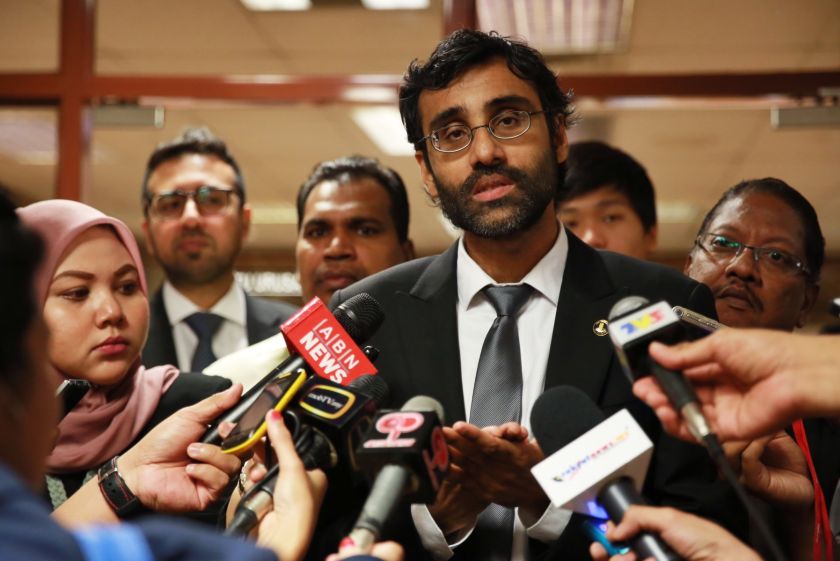


KUALA LUMPUR, Feb 13 ― PKR leader N. Surendran said today it is unconstitutional to act on those who criticise the government through social media, news portals and other websites, amid proposed law amendment that would crackdown on alleged “slandering” of Putrajaya.
Surendran also reminded Barisan Nasional leaders of Article 10(1)(a) of the Federal Constitution, which guarantees freedom of speech to the people, including the right to criticise the government in “the strongest terms”.
“Any attempt by the ruling party to use its majority in Parliament to criminalise criticism of the government, whether the criticism is well-founded or not, is unconstitutional and unacceptable in a democratic system.
“Any democratic government that attempts to criminalise criticism of itself is lurching towards authoritarianism,” the PKR vice-president said in a statement here.
He said that shutting the people from speaking up about the “truth” of the government or leaders was never the way forward, pointing that in other countries such as United Kingdom had imposed a rule whereby the government does not even have rights to sue individuals in a civil court for defamation.
“The rationale is that the people have the right to criticise the government which is paid for by the taxpayers, even though the criticism is false or defamatory.
“Here, in Malaysia, criticism of the government is being criminalised,” he added.
The Padang Serai MP was commenting on Communications and Multimedia deputy minister Datuk Jailani Johari’s proposal to amend the Communications and Multimedia Act 1998 which might prevent news portals, websites and social sites against criticising the government.
On Thursday, Jailani said his ministry had held talks with 350 interested parties as well as conducted studies on the proposed amendments to the Act which is expected to be tabled in Parliament in March.
Although news portals and websites put up disclaimers which said they are not responsible for any comments published, Jailani said this did not warrant them exemption from the current laws under the act.
“It is no business of a democratic government to ensure 'truth' in the social media or cyberspace,” Surendran said.
“In a democracy like ours, the people must be allowed to judge what is true or false. No resort must be made by government to the criminal law in order to control what is being said on social media or cyberspace.”