


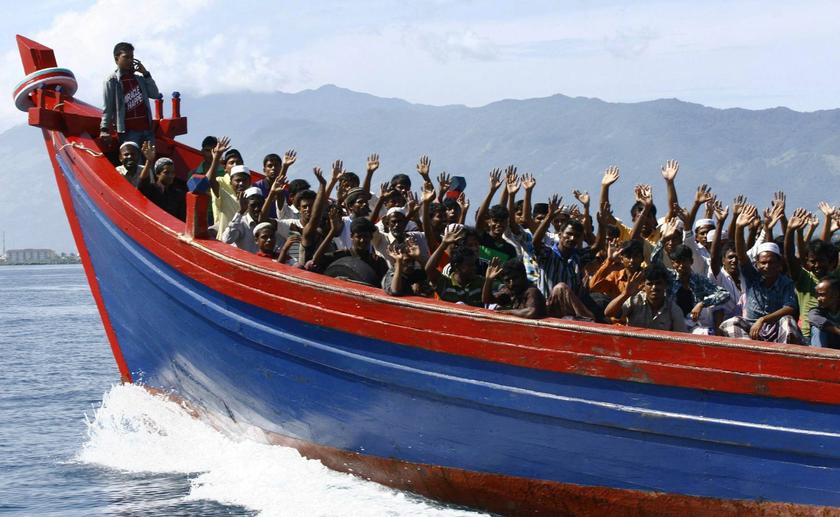
KUALA LUMPUR, Oct 23 ― Several United Nations (UN) special rapporteurs today expressed grave concerns about Malaysia’s alleged “push back” policy of migrants coming into the country on boat and asked that Putrajaya to address the claims.
The four UN special rapporteurs added that policy of pushing back migrants who arrive at Malaysian waters, if true, is detrimental to their lives, especially if it forced them to return to their oppressive home countries.
“Particular concern is expressed regarding the impact of this policy on the health and personal safety of irregular migrants whilst at sea.
“Additional concern is expressed at the push back policy in instances where some may be asylum seekers leaving a country where they may face violence, persecution, torture or other cruel, inhuman or degrading treatment or punishment or other serious human rights violations,” the statement read.
The remarks were part of a letter Special Rapporteur on the human rights of migrants François Crépeau, Special Rapporteur on extrajudicial, summary or arbitrary executions Christof Heyns, Special Rapporteur on torture and other cruel, inhuman or degrading treatment or punishment Juan E. Méndez and Special Rapporteur on trafficking in persons, especially women and children Maria Grazia Giammarinaro to Putrajaya in May.
The letter was publicly released now after Putrajaya did not respond.
They added that a “push back” policy also went against Article 3 and Article 14 of the Universal Declaration of Human Rights, which protect and guarantee the rights of asylum seekers.
“While we do not wish to prejudge the accuracy of these allegations, they appear to be in contravention of Articles 3 of the Universal Declaration of Human Rights which guarantees the right of every individual to life and security of person.
“We would also like to refer to the Universal Declaration of Human Rights and its article 14 that states the right to seek asylum, and the Convention on the right of the child ratified by Malaysia on the 17 February, which ensures to children to receive an appropriate protection and humanitarian assistance in case of asylum or asylum seeking,” they said.
According to the statement, allegations of the policy arose in May 2015 after boatloads of migrants appeared on the waters of Malaysia, Indonesia and Thailand after being denied entry into various countries.
Nearly 3,000 migrants who left adrift in boats in Southeast Asia’s seas had to swim to shore or be rescued off Malaysia, Indonesia and Thailand in May after a Thai crackdown prompted human traffickers to abandon their human cargo.
Malaysia and Indonesia later, however, agreed to provide humanitarian assistance to the 7,000 migrants that were adrift at sea, including offering temporary shelter, provided that the international community takes steps to repatriate them within a year.
The special rapporteurs have also asked Putrajaya to explain the terms with led to their offering asylum to the 7,000 migrants, the condition of the migrants now as well as the person who gave the initial orders to naval ships to deny the migrants entry into Malaysia.


