


KUALA LUMPUR, Oct 23 — Prime Minister Datuk Seri Najib Razak today unveiled what is surely a balanced and practical budget that offered a slew of incentives to stimulate domestic investments, energise small and medium enterprises and invigorate the capital market.
The Budget 2016 also includes multi-billion ringgit projects that provide ample opportunities for infrastructure and construction companies, a move that would surely provide an impetus to the business sector over the long term against a backdrop of a challenging external environment.
Najib, who is Finance Minister, also announced a RM11 billion development of the Cyber City Centre in Cyberjaya, RM7.0 billion KLIA Aeropolis township and the RM320 million rubber city in Kedah, all of which were bound to trigger increased corporate activities, including for the Bumiputera sector.
A major project within Kuala Lumpur, worth RM900 million, is the Jalan Tun Razak traffic dispersal project through a strategic public and private partnerships, which obviously would be good news for the construction firms.
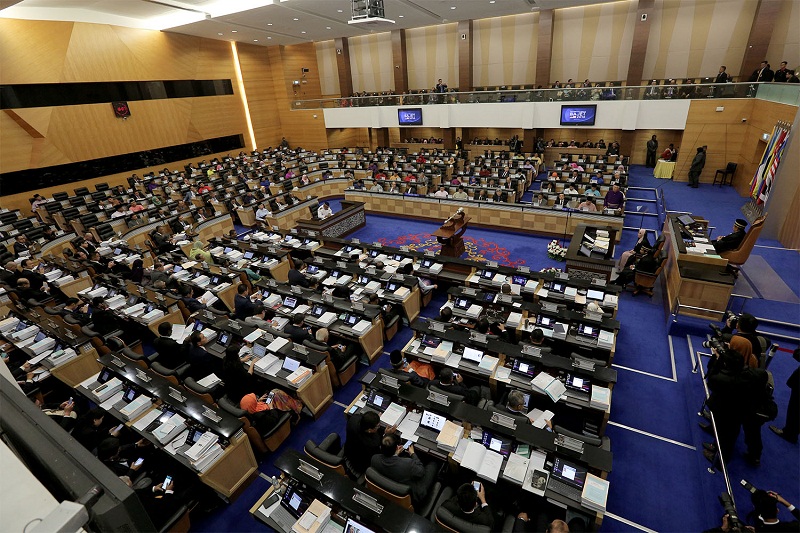
Najib also told the Dewan Rakyat that Khazanah Nasional Bhd was investing RM6.7 billion in nine high-impact domestic projects in various sectors, as well as allocating RM500 million as venture capital and private equity fund.
To attract more private investments and ensure the benefits also accrue to all states including Sabah and Sarawak, RM142 million was allocated to develop the Samalaju Industrial Park in Sarawak and the Palm Oil Jetty in Sandakan, Sabah valued at RM20 million.
Besides this, RM42 million would be spent to develop the Mukah Airport in Sarawak as well as upgrade airports in Kuantan and Kota Bharu while a feasibility study would be undertaken to extend the runway in Batu Berendam in Malacca.
The budget, themed “Prospering the Rakyat”, and valued at RM267.2 billion compared to the revised RM260.7 billion in 2015, comes amid immense challenges including the sharp drop in crude oil prices, global economic slowdown and decline in the value of the ringgit.
However, the broad-based Goods and Services Tax (GST) has emerged as a saviour in boosting revenue via the efficient collection of taxes from some 400,000 companies representing 90 per cent GST-complaince.
The GST collection in its first full-year implementation is expected to be significantly higher at RM39 billion which will offset the fall in oil revenue.
“As announced several times, the rakyat can be assured that revenue from GST collection will be returned to benefit them, in addition to clarifying how the GST will be spent. This is the real intention of the government and there is no hidden agenda,” he said.
The Prime Minister said the Opposition parties, which vehemently criticised and opposed the GST before, were unashamedly adopting the GST in their Budget documents.
Under development expenditure, the economic sector would receive the highest share of RM30.1 billion.
For next year, the Federal Government revenue collection is expected at RM225.7 billion, an increase of RM3.2 billion from 2015.
He also said that focus would be given to chemical, electrical and electronics, machinery and equipment, aerospace and medical devices industries and services.
“For this, RM730 million is allocated to funds under the Malaysia Investment Development Authority,” Najib said.
Next year, Najib said, domestic investment activity to be intensified with its contribution to GDP estimated at 26.7 per cent, driven by the increase in private investment at RM218.6 billion and supported by public investment of RM112.2 billion.— Bernama


