


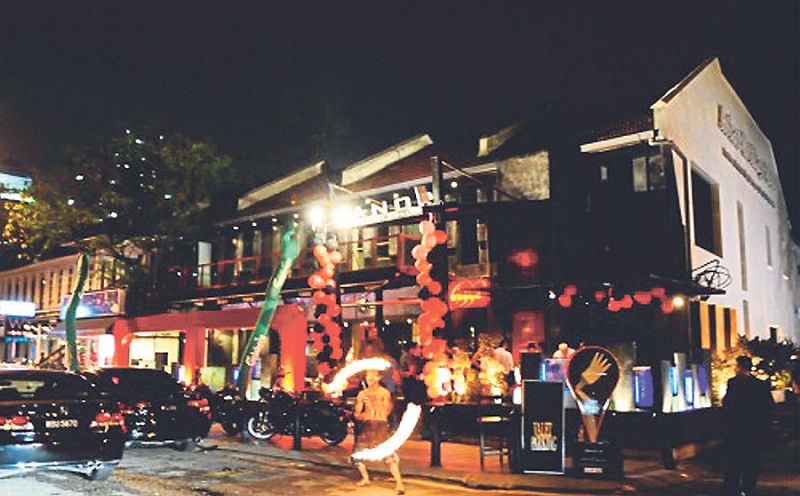


KUALA LUMPUR, July 6 — With the heritage restoration efforts taking place at Asian Heritage Row, Malay Mail spoke to Badan Warisan Malaysia executive director Elizabeth Cardosa to find out how heritage is retained within a city in vast development.
She explains that essentially all change is development, and heritage conservation is as much an act of development as putting up a new building.
Q: Efforts are being carried out by government agencies and corporations to maintain the heritage of buildings. How good are these efforts and what do they contribute?
A: It is always a good thing when there is recognition that history, culture and heritage have a role in the identity and character of a place. It is not just a heritage perspective. When you talk about where you come from, if it is just a series of modern structures, it is difficult to make the connection. When you see the cross-section pattern of settlement — from the small urban townhouses and shophouses to the mansions and big buildings, modest post offices and other institutional buildings — it gives enrichment. Keeping them around and showcasing them give the community and place a distinctive character, like Ipoh and Kuala Lumpur.
Q: How does it contribute to communities?
A: The resurgence is generally a good thing, not just for the heritage but also the community. They may think, “Our roots are more modest. We are not beauty queens but just a rakyat.”
Now, we have Touch ‘n Go, internet banking and other technology compared to snail mail or sending a telegram in the past. It shows the way of development. It makes us appreciate the things we take for granted. The value in the historic environment demonstrates this as well, but in a subliminal way.
Q: Is it possible to achieve balance between development and heritage conservation?
A: When we talk about development, it is about change. What should we be looking at? How do we manage that change to bring out the best in us and in our environment? We need to look at settlements and how human beings interact with the environment.
What is development? It is about renewing something old and making it sustainable, putting it into context, giving it dignity and character. You build new buildings for a purpose, not just for the sake of building. When you conserve an old building or a street, you look around that area.
By conserving a two-storey building, for example, you are acknowledging that it has a story from many layers of history. One can use the building and capitalise on it, make money out of it — not just to earn a profit but to appreciate its cultural and architectural significance.
Q: Should the option be “either heritage or development”?
A: It is all part of one trajectory. The building was once new and represented something to its maker. There is always a balance, and it should be decided on collectively. The decision should be a thoughtful and informed one. You need to know something about the place before you do anything to it. It becomes the community’s responsibility and not just “because I have a lot of money so I can do whatever I want”.
Q: How is the success and value of heritage preservation judged?
A: It is judged by how many people use it and how economically and financially sustainable it is. Heritage, history and culture are wonderful values that can be added into the whole idea of the capital. The wall mural phenomenon in George Town started off as one thing and has now spread to Ipoh, KL and Johor. It may or may not work or is sustainable, some of it can be quite destructive.
If it was done out of nostalgia, then it did not give the respect due in terms of heritage.
Are you doing it because it is fashionable and it makes you look sophisticated or is it because it is important to keep so you don’t want to lose it?
Why is it important to keep? Do you throw out parts of history that you don’t want to talk about or not proud of?
Q: Should the government implement policies to encourage people to retain historical and heritage value of buildings?
A: If the government was serious about retaining the historic environment, then yes, there should be clear policies and guidelines and hopefully, incentives as well as educational and training programmes.
The incentives and policies should be based on strong principles on our culture and heritage.
For example, if I have to spend more money on my old shophouse because of the guidelines, then the government should support me by giving me a tax relief.


