


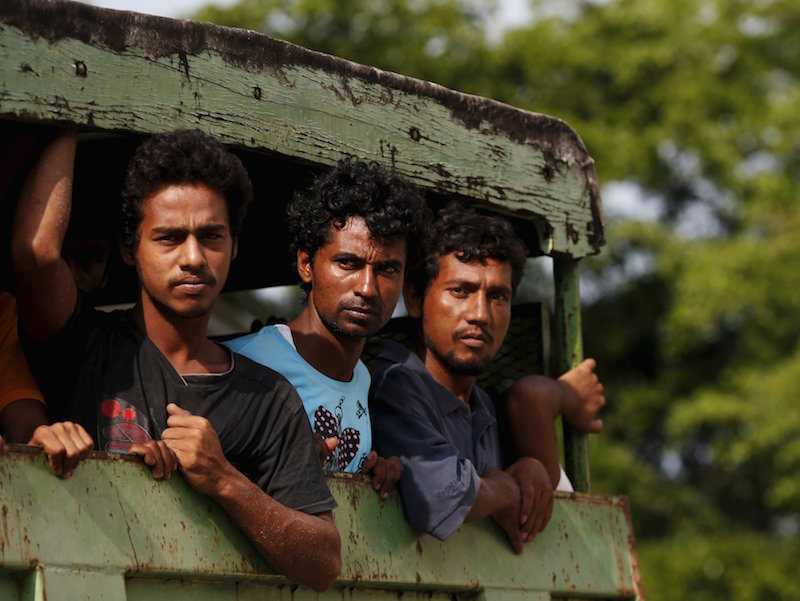


KUALA LUMPUR, June 20 — While keeping an open door to refugees and asylum seekers, Malaysia appears to be sending cross signals to this growing population over their right to work here.
Although Malaysia is not a signatory to the 1951 Refugee Convention, Deputy Home Minister Datuk Dr Wan Junaidi Wan Ahmad has said refugees registered with the United Nations High Commission for Refugees (UNHCR) can be legally employed in the country.
“As long as they are being sent by UNHCR to the company and inform us, this name with this card, employed by this company, then they can work.
“We will not disturb them,” he told Malay Mail Online in a recent phone interview, adding that the decision was made late last year.
But just one week later, Home Minister Datuk Seri Dr Ahmad Zahid Hamidi gave conflicting answers when questioned in a news conference in Putrajaya.
“No, they have no right to work here, not even with the UNHCR card. They are not allowed to work here by law, by right,” he said, with Wan Junaidi seated next to him.
Ahmad Zahid also said the government will not consider allowing refugees to work while on Malaysian soil.
The minister’s latest assertion also ran counter to previous news reports dating back two years ago, when he said the Defence Ministry—which he was then heading—was working with UNHCR and the Immigration Department to provide training and job opportunities to the refugees so they could work here.
Going back further, a news report by government-run news agency Bernama on March 19, 2009 quoted Rohingya Islam Pro-democracy Organisation (Cripdo) president Mustafa Kamal Abu Basir as saying 4,800 Rohingya refugees were given the illusion that they will be granted 1M13 work passes which they had applied from the Immigration Department in 2006.
Mustafa claimed that the Rohingyas here made the application after receiving approval from the Prime Minister’s Department’s National Security Division (BKN).
Bernama reported that the UNHCR cards will be upgraded to include radio frequency identification (RFID) technology so refugees can be tracked via satellite and would serve as a debit card as well as to prevent forgery.
It is unclear what made Ahmad Zahid and the government backtrack on their decision.
There are some 152,830 refugees and asylum-seekers registered with UNHCR in Malaysia, according to data on its website.
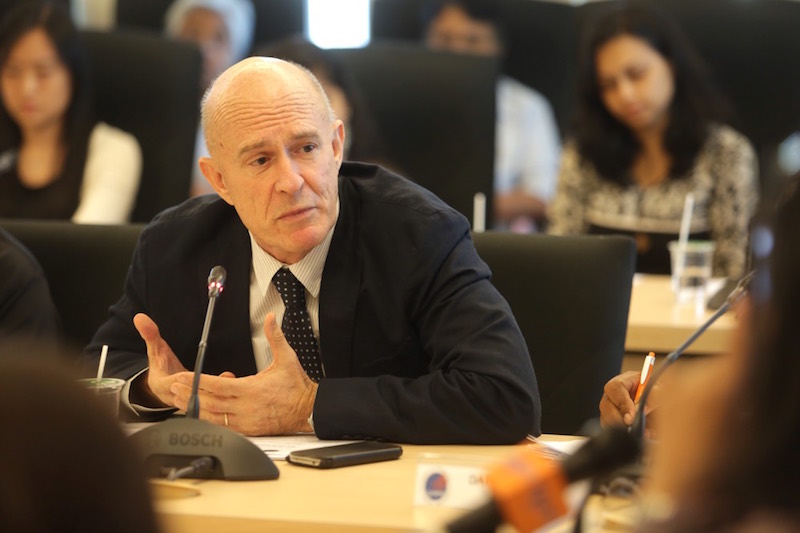
UNHCR representative in Malaysia Richard Towle had said that even if the country isn’t a signatory to the 1951 convention, it can still have a policy to allow refugees to work, and provide proper documentation, including biometrics security data, for those here.
“This is necessary in order to address states’ legitimate concerns around law and order, security, and criminality which pervades the underworld of illegal migration and the refugee reality,” he said.
Towle also stressed that it was important for civil society to understand that refugees are not travelling by choice but because of the serious security situation in their countries of origin.
“They are, in character, different from any other kind of migrant and need, as they do under international law, a special level of protection both from the United Nations and from States,” he said.
He also said that it was important that refugees in any country of asylum be given an opportunity to support themselves.
“We found elsewhere that refugees who are allowed to work by law are more self-sufficient and resilient in coping with the stress of displacement.
“If refugees are unable to work lawfully, this tends to drive them into the underworld of illegal labour with all of the criminality and exploitation that surrounds this.
“We believe that a regularised labour opportunity, carefully-controlled, can emancipate refugees towards self-sufficiency and also provide an important security check for States in managing law and order and criminal issues of concern,” he said.
Malaysia’s refugee situation is unlikely to be resolved anytime soon.
“Resettlement is made available to some refugees who cannot return home or stay in the host country, but it is not a right or an automatic solution for all refugees,” another UNHCR Malaysia representative said.
However, the official said the option is available to fewer than 1 per cent of the total refugee population worldwide, based on the availability of places offered by third countries, and for those with the highest level of vulnerability and who are unable to cope in the host country.
“Other long term solutions include return home when it is safe to do so, and local solutions in host countries,” said the representative who declined to be named.
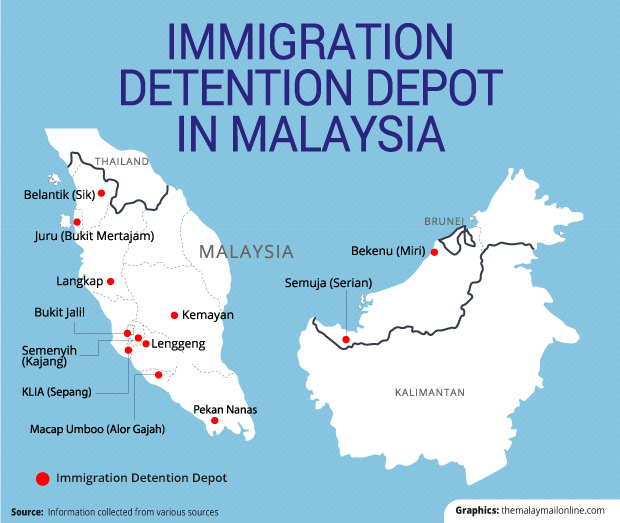 Nationals from over 50 nations, including Myanmar, Sri Lanka, Pakistan, Somalia, Syria, Iraq and Iran, have made their home in Malaysia.
Since 2005, it added that over 100,000 refugees have been resettled out of Malaysia, due to the generosity of resettlement countries like Australia, Canada, Czech Republic, Denmark, New Zealand, Sweden, and the United States.
UNHCR said it will continue to work with resettlement countries and with host countries to find the best solution for all refugees, including the 45,000 Rohingya refugee communities registered with UNHCR in Malaysia.
*Today is World Refugee Day.


