


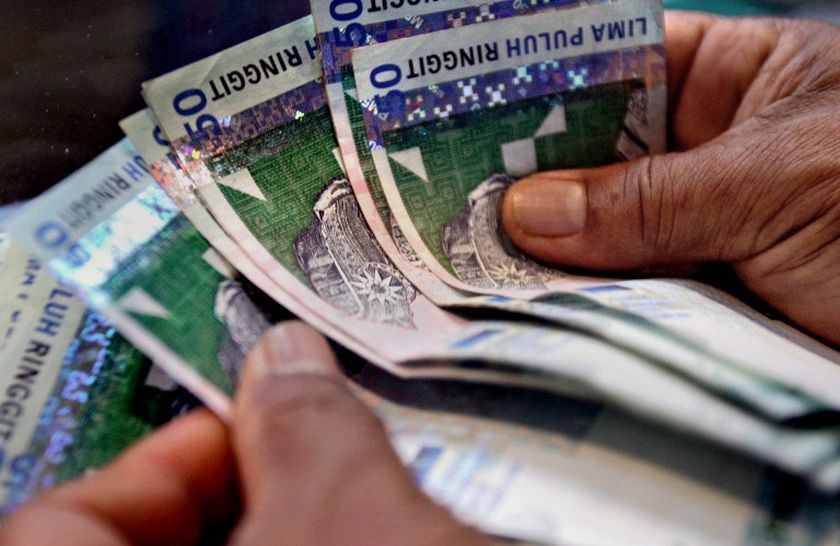


KUALA LUMPUR, Jan 9 ― Malaysia’s banks are charging one another the most to borrow in six years as the oil-price slump, a falling ringgit and default concerns dent confidence.
The three-month Kuala Lumpur interbank offered rate, a gauge of funding availability, rose to 3.87 per cent in December, 62 basis points more than Bank Negara Malaysia’s benchmark rate and the biggest gap since January 2009, data compiled by Bloomberg show. The premium was 61 yesterday, compared with an average of 22 for the past decade. The ringgit slid 6.2 per cent against the dollar last quarter as crude oil plunged 42 per cent.
A cash squeeze in Southeast Asia will weigh on lending and make banks vulnerable to global financial turmoil as a US rate increase approaches, according to a December report from HSBC Holdings Plc. The impact of the oil decline on Malaysia, concern over state investment company 1Malaysia Development Bhd’s debt and a possible downgrade in the sovereign rating aren’t helping, according to Malayan Banking Bhd.
“To compensate for the depreciation in the ringgit, banks need to lend at a higher rate,” Saktiandi Supaat, Singapore-based head of foreign-exchange research at Malayan Banking, the nation’s largest lender, said by phone January 6. “This suggests liquidity could remain tight in the current stress period and may be negative for bond markets.”
1MDB debt
Opposition lawmakers Rafizi Ramli, Tony Pua and Lim Guan Eng have expressed concern about 1MDB’s debt. The Edge Financial Daily said this week the fund had missed a RM2 billion loan repayment on December 31. It has been given until January 30 to settle the debt, which was first due on November 30, the article said, citing people it didn’t identify.
The ringgit is the worst performing currency in Southeast Asia in the past six months, having lost 11 per cent. It fell to a five-year low this week on concern a decline in oil revenue will make it harder for the government to achieve its fiscal deficit target and will reduce the current-account surplus. The nation is Asia’s only major crude exporter.
Global funds cut holdings of government and corporate debt in November by 5.8 per cent, the most since September 2011, to RM236.5 billion, according to the central bank. They sold a net 3 billion of stocks last month, exchange data show. Investors held 44 per cent of conventional Malaysian government bonds in November, compared with 39 per cent in Indonesia and 18 per cent in Thailand.
Record spread
Malaysia’s sovereign bonds are the sole losers in Southeast Asia in the past three months with a drop of 0.5 per cent, according to a Bloomberg index. Indonesian debt gained 6.3 per cent, Thailand’s securities 4.5 per cent and Philippine notes 3.5 per cent. The extra yield investors demand to hold Malaysia’s 10-year bonds over US Treasuries has climbed to 230 basis points, the highest since at least 1998, when regional markets were reeling from the Asian financial crisis.
The impact on the ringgit from the drop in oil prices was “amplified by the heavy foreign presence” in bonds and equities, UBS AG wrote in a report yesterday. “Conditions were ripe for a currency selloff,” they said.
“We expect tight onshore liquidity conditions to persist, which will continue to keep interbank borrowing costs elevated relative to the policy rate,” Vivek Rajpal, a strategist at Nomura Holdings Inc. in Singapore, said in a January 6 e-mail. Higher costs for borrowing to buy bonds will be negative for the market, he said.
Compounding pressure
Prime Minister Datuk Seri Najib Razak is seeking to reduce the fiscal shortfall to 3 per cent of gross domestic product this year from 3.5 per cent, having run a deficit since 1998. The current account surplus, the broadest measure of trade, shrank to RM7.6 billion in the third quarter, the least since June 2013.
1MDB ran up debt of RM41.9 billion in the year to March 31,up from RM36.2 billion previously, it said in November. Fitch Ratings has expressed concern about the “contingent liabilities” on the country’s A-credit rating, the fourth-lowest investment grade.
Fitch is monitoring developments in light of the media reports, Andrew Colquhoun, Hong Kong-based head of Asia-Pacific sovereigns, said in a January 6 e-mail, adding that it’s watching for any spillover effects.
The three-month interbank rate also climbed to 0.6392 per cent in Singapore, the highest level since 2010. The city’s banks and those in Malaysia are raising funds to comply with stiffer Basel III capital requirements, the HSBC report said.
“Competition for deposits to comply with liquidity coverage requirements under Basel III rules is the main factor driving up interbank rates,” Chua Hak Bin, an economist at Bank of America Merrill Lynch in Singapore, said by phone yesterday. “Falling oil prices, concerns over the fiscal position and 1MDB may be compounding the pressure on both the ringgit and interest rates.” ― Bloomberg


