


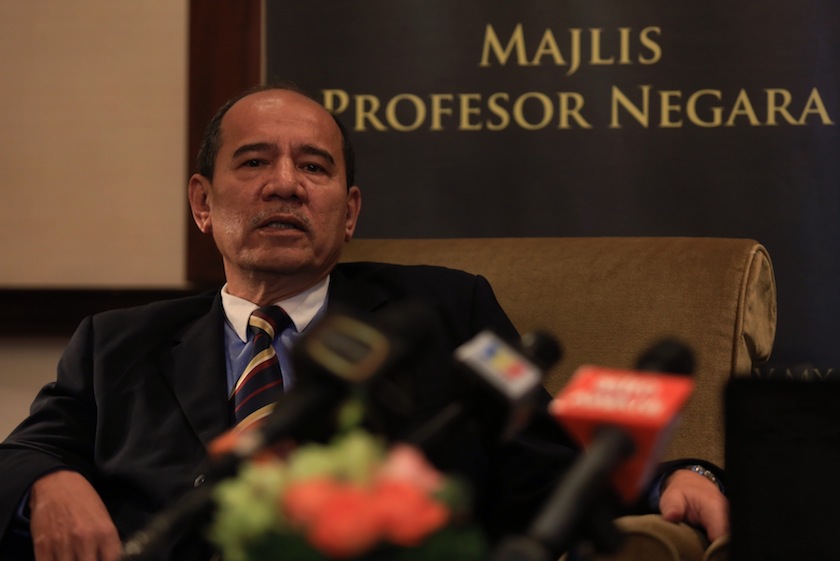


KUALA LUMPUR, Dec 16 — Putrajaya needs an overarching policy similar to that used by the US Department of Homeland Security to consolidate disparate agencies if it hopes to rein in the problem of illegal immigration here, a senior police officer said today.
Senior Assistant Commissioner of Police (SAC) Datuk Mohd Sofian Md Makinuddin said law enforcement is hampered by the propensity of separate bureaus to keep their information to themselves, even if they are dealing with the same issue.
“There is a tendency for the different enforcement agencies not to share what they know, and this happens when everyone operates within their own silos,” he said on the sidelines of a conference on foreign workers.
“We should look at the US’ Twin Towers report, which said they can no longer apply (a) Need To Know (policy). Now it is ‘Need to Share,’” he said, referring to the September 2011 attack by the al-Qaeda on the World Trade Center in New York.
Sofian said the National Blue Ocean Strategy adopted by Putrajaya to promote greater inter-agency cooperation "could be improved", stressing that more could be achieved if enforcement agencies shared their databases.
Earlier when speaking in the conference organised by the National Professors Council, Sofian said there has been a steady decline in the total number of reports lodged on criminal activity involving foreign migrants, dropping to 147,062 reports in 2013 compared to 166,295 in 2011.
He stressed, however, that there has been an increasing number of violent crimes involving foreign migrants, with nearly 30,000 reports lodged in 2012 for crimes ranging from murder to rape, assault and robbery.
Sofian said one of the problems faced by the police when clamping down on illegal immigrants is the alleged abuse of refugee cards issued by the United Nations' High Commissioner on Refugees (UNHCR), which he claimed was sometimes "more powerful" than a passport.
He said there have been many occasions where they had to release illegal immigrants after they produced a UNHCR card, though he admitted that this was only one of the many obstacles faced by the authorities.
Sofian noted that Malaysians themselves are part of the problem, especially the lack of integrity among the rank-and-file of enforcement agencies manning the country's entry points.
Taking the example of a spot check he conducted at a border checkpoint, he said the personnel diligently checked the bags of every single person passing through when he was physically present, but almost immediately slacked off when he left to monitor them discreetly.
"The problem with Malaysians is their attitude... you can have a machine that costs RM100 million at your disposal, but what matters is the man behind the machine," he said.


