




PUTRAJAYA, July 23 — The Federal Territories Ministry will conduct an assessment on the standards of cleanliness maintained by soup kitchens operating within central Kuala Lumpur before enforcing the ban barring their social work, according to NGOs involved.
Dapur Jalanan Kuala Lumpur, which operates a mobile soup kitchen in the capital city, said the ministry’s policy planning division secretary Azizi Ahmad Termizi informed the NGOs that they will conduct an assessment before August 16, when the ban comes into force.
However, apart from the assurance that the ban will be delayed, little was resolved during the consultations with the Federal Territories Ministry, related Dapur Jalanan coordinator Hadi Khalid.
“Soup kitchens on wheels, stationary and those that are operating out of a premise can carry on,” Hadi told reporters after the three-hour long meeting with Azizi and several other representatives from the Women, Family and Community Development Ministry, today.
On July 8, the Federal Territories Ministry had postponed their decision to ban soup kitchens operating within the 2km zone of the Lot 10 shopping mall, until after Hari Raya, which is next Monday.
The Federal Territories Ministry had initially prohibited the NGOs from feeding the homeless within the area. This caused uproar among NGOs, which deemed the decision inhumane and inappropriate.
It was then decided that soup kitchens with their own premises could continue operating while mobile ones could operate until the ban, which had been deferred, kicks in on August 16.
Prime Minister Datuk Seri Najib Razak had also said a shelter to house homeless people and beggars in the capital was expected to be ready within six months, equipped with sleeping cubicles, bathrooms and lockers.
Meanwhile, the NGOs have been maintained that they will continue handing out meals to the homeless.
“We had stated our other requests today but they did not give us an answer,” said Hadi.
Some of the NGOs demands include an appeal to call off Ops Qaseh — an anti-vagrant operation; to release the homeless detained under the Destitute Persons Act 1977 from Pusat Sehenti Bina Diri in Sungai Buloh; to waive fines for those seeking for replacement identification cards; and, to dismantle dividers on public benches in Kuala Lumpur.
Hadi pointed out that despite having engaged in consultations and promised to hold town hall sessions, the ministry and the Kuala Lumpur City Hall (DBKL) are persistent in doing everything it takes to rid the city of its homeless.
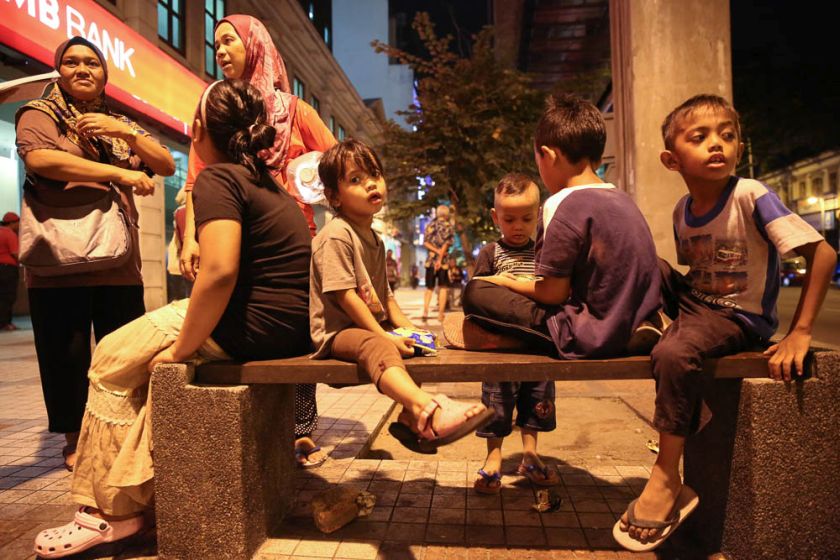
Yesterday, long benches located along Jalan Tuanku Abdul Rahman were spotted with steel bench dividers.
On checks with the local enforcement authority, The Malay Mail Online was informed that the dividers were installed to prevent the homeless from turning “the benches to beds”.
Persatuan Kesederan Komuniti Selangor (Empower) programme officer Wong Kar Fai, who was also present at the meeting, said the measures that are being taken shows the authorities are “insincere”.
“Consultation and oppression are taking place in tandem,” said Wong.
“Fitting the bench dividers is an aggressive move... we need a gesture of goodwill that they are really serious about engaging the homeless,” said Mandeep Singh, who is also from Dapur Jalanan.
When approached for comments on DBKL’s clandestine measures, Datuk Seri Tengku Adnan Mansor brushed off all questions saying “you ask them”.


