


KOTA KINABALU, Dec 7 — The ancient tradition of the Kadazan Dusun community of burying bones along with personal belongings in a large tanjau or urn, which symbolises the soul’s journey to the afterlife, is no longer practised today and is increasingly rarely told to the younger generation.
Although the traditional practice is no longer practised, this historical element is still introduced to visitors at the Mari Mari Cultural Village (MMCV) in Inanam, about 25 minutes from here, which acts as a cultural preservation centre to ensure that the heritage of Sabah’s various ethnicities continues to be known by the younger generation and tourists.
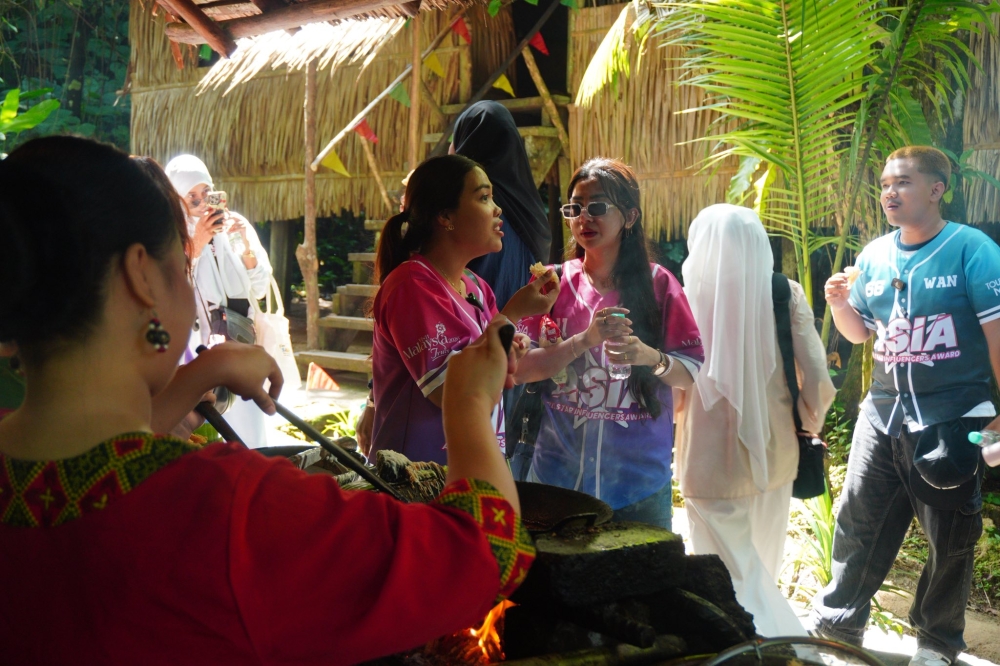
At the cultural village, visitors can not only see the homes of various Sabah communities, but also have the opportunity to enjoy cultural performances and traditional dishes from the five main ethnicities of the Land Below the Wind, namely Dusun, Rungus, Lundayeh, Bajau and Murut.
According to MMCV tour guide Mohd Aidil Pulian Abdullah, 38, since it began operating in 2009, the centre has become an important platform for the local and international community to understand Sabah’s culture as a whole in one visit because it showcases the practices and traditions of Sabah’s ethnicities, some of which are becoming extinct.
Speaking to Bernama here recently, he said among the cultures that are rarely seen outside include the traditional technique of lighting a fire using bamboo and the traditional game of ‘lansaran’, a bamboo floor in the shape of a trampoline used to welcome the return of warriors.
In the game, a prize will be hung on a ‘kinkilat’, a tall structure used as a place to hang a target object and participants must jump as high as they can from the ‘lansaran’ floor to reach the prize.
“The higher the jump, the greater the chance of winning. So we here try to introduce these traditions to tourists every day. Many of the younger generation no longer know their own culture, which is why we record and learn directly from the elders before passing it on orally to visitors,” he said.
The cultural village now has 26 permanent tour guides, while outside guides including those from Korea, China, Russia and Japan act as translators for their respective tourist groups.
Commenting on the number of visitors, he said the number depends on the season, with the highest influx usually in June to July when tourists from China and Korea are on holiday for the summer.
“The highest we have ever received is around 3,000 to 4,000 visitors a month. There are certain days when the morning session alone can reach 250 to 300 people,” he said.
He said MMCV also serves as an educational platform for young workers aged 18 to early 20s who serve as guides or dancers in cultural performances.
“If they themselves do not understand the culture, they cannot explain it to visitors. This is where they learn and can eventually share that knowledge with the outside community,” he said.
Apart from the cultural exhibition and traditional houses, the main attraction at the cultural village is the cultural performances held twice a day, at 12 noon and 4 pm.
The performance includes five types of dances that alternate weekly, including the Limbai dance of the Bajau community and the popular Anggalang Magunatip dance of the Murut tribe where dancers have to dance between two bamboo sticks that are tapped according to a certain rhythm.
The Limbai dance is a traditional dance of the Bajau community in Sabah that is performed to welcome the arrival of the groom, using the waving of the shawl as a symbol of welcome and inviting the groom to go up to the house for the wedding ceremony.
As a Dusun, Mohd Aidil Pulian acknowledged the importance of the centre in helping the Sabah community maintain its cultural identity despite facing the tide of modernisation.
“In other museums or exhibitions, there may be no one to answer visitors’ questions, but at MMCV, we try to provide the best information possible and become a reference centre on Sabah culture,” he said, encouraging people to visit MMVC to understand Sabah’s ethnic diversity in a short time without having to travel all over the state. — Bernama


