















PUCHONG, March 13 — Food enthusiasts are often picky about how authentic traditional foods are outside of their homeland. The general rule of thumb to spot a genuine place is when it is filled with people speaking the country’s language and it’s packed to the rafters with patrons who also hail from the same country.
And that is exactly what you get at Mimi Nguyen Cafe in Kinrara, Puchong.
The moment you step into this unassuming cafe you can hear the gentle lilt of Vietnamese being spoken. Started since November 2014, it’s run by Mimi Nguyen and her Malaysian husband.
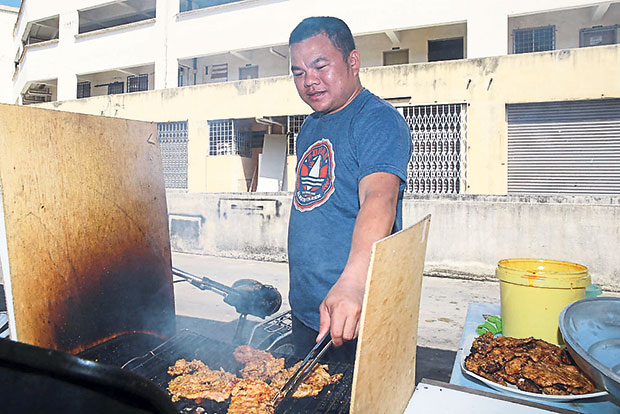
The couple met in Singapore as her husband is from Johor Bahru. The Mandarin-speaking Mimi hails from a small town in Đồng Nai province that is about two to three hours away from Ho Chi Minh City, the largest city in Vietnam.
When Mimi decided to venture into the F&B business, the couple relocated here as friends suggested there was a gap in the market for authentic Vietnamese eateries to cater to homesick expatriates.
We suggest multiple visits here to try everything on their extensive menu — think of it as a whirlwind tour of Vietnam without getting on an airplane. You can order Bánh mì for a quick snack, a bowl of noodles or even rice with their dishes.
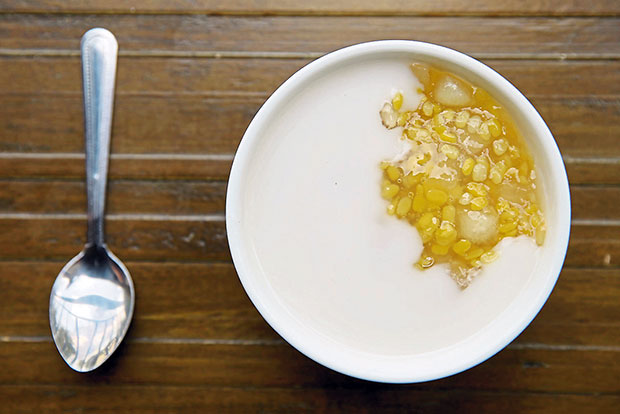
There are also daily dessert specials written up on a blackboard to satisfy your sweet tooth. The day we visited, we tasted Chè Bưởi — an unusual dessert made with the spongy white pith of pomelo skin, mung beans and starch. It’s all sticky and gooey but incredibly refreshing.
According to Mimi, the food is prepared using up to 90 per cent Vietnamese ingredients. Her family members are the cooks here so quality is maintained. Paramount to the success of the restaurant is the incredible freshness of their ingredients, as none of their meats or seafood are kept overnight.
This satisfies the fussy Vietnamese palate which can detect anything amiss when it comes to their food. Moreover, the cooks are just as fussy since they believe only the freshest ingredients should be used. You also find a fair share of locals here following word-of-mouth recommendations.
They appreciate the authentic flavours they first experienced during trips to Vietnam.
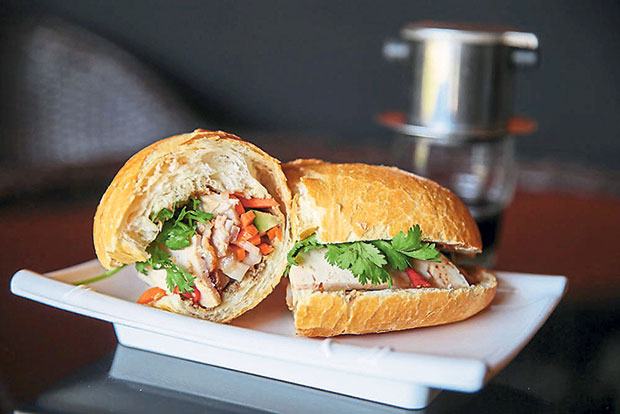
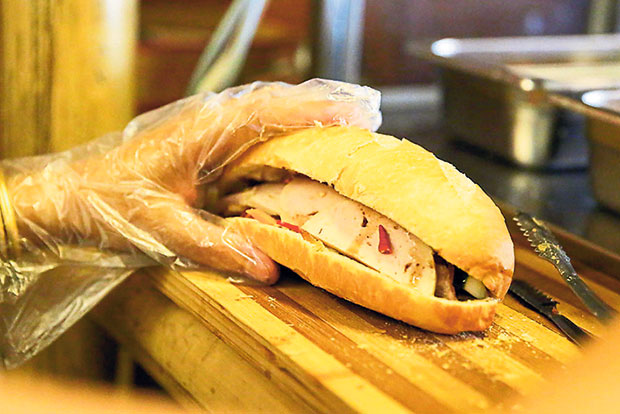
You will find incredibly superior Bánh mì here, a favourite of Mimi’s husband who insisted they serve it. The baguettes are made in-house — with crackly brown crusts and a soft fluffy interior that is hollowed out for the ingredients.
There’s a nice selection of Bánh mì to chose from — nine varieties including the traditional way dipped in condensed milk, eaten with beef stew or filled with Bò lá lốt that is grilled beef wrapped with wild betel leaves. Our favourite is the most classic version with roast pork, ham and pâté or the Bánh mì thit nuong chả lụa. It’s a delicious combination where the pickled daikon and carrot together with sprigs of fresh coriander lighten the whole thing up.
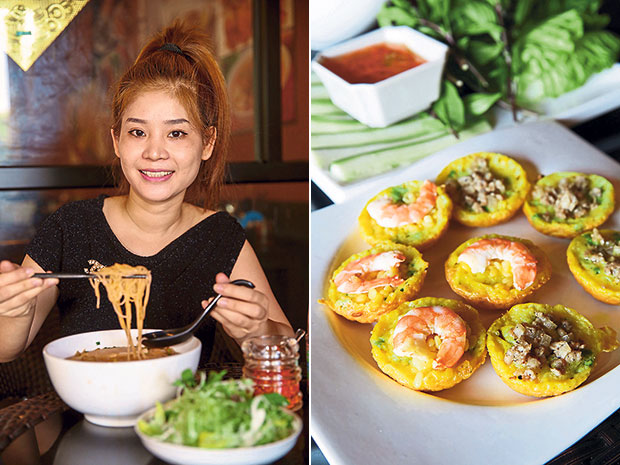
As you wait for your main dishes, nibble on Bánh khọt or mini-sized crispy pancakes made with rice flour, turmeric and coconut milk. Using the similar ingredients for the bigger savoury crêpe or Bánh xèo, these small pop-in-the-mouth nuggets are topped with mung beans, prawns or diced pork.
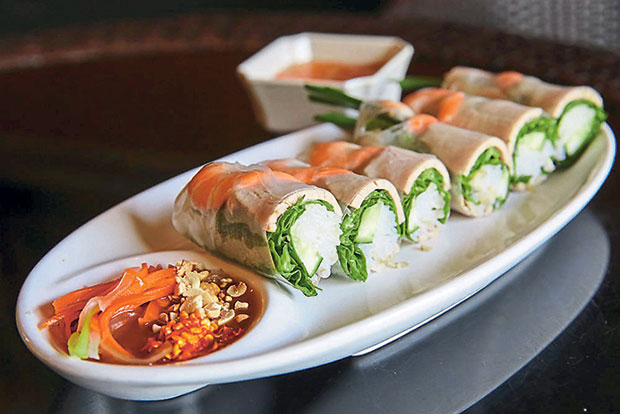
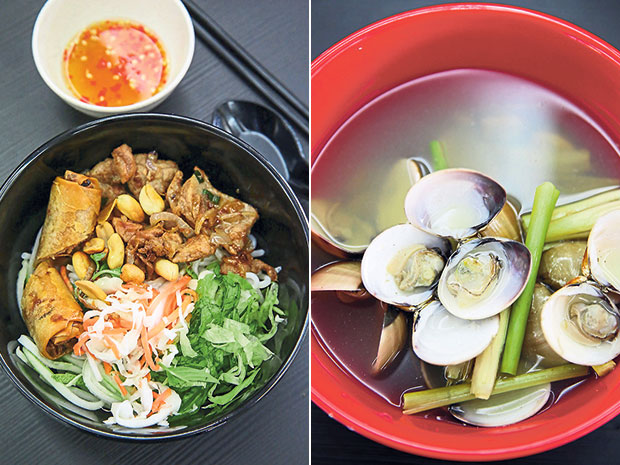
Even their Gỏi chuồn or the fresh Vietnamese spring rolls are prepared a little differently here. Rather than just stuffing it with prawns, you will find a piece of pork stuffed together with the rice vermicelli. Dip it into the sweet tasting hoisin peanut sauce or Nước lèo.
A popular dish is their Cơm tấm Suon Bi Cha. In Vietnam, broken rice is used but they prefer to use normal rice grains here. The substantial dish is served with grilled marinated pork chop, finely shredded pork mixed with pork skin, a piece of steamed egg and meat custard, vegetables and a fried egg.
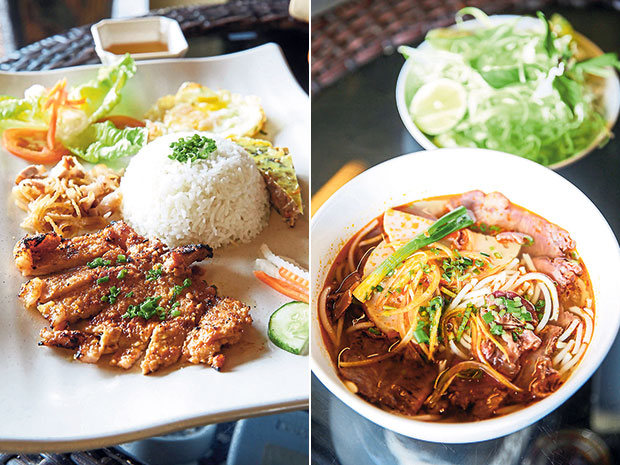
Even though there’s the usual Phở noodles, opt instead for the spicier Bún bò Huế. The more robust broth has a nice balance of spiciness that is enhanced with a spoonful of a nutty and spicy tasting paste made with the red coloured annatto seeds and shrimps.
If you prefer pork noodles, the Bún riêu with its tomato based broth is a good choice. It is served with pork trotter and meat slices, a slice of Chả lụa and coagulated blood cubes. What gives the light tasting broth incredible depth and umami is the addition of the bright purple coloured and incredibly pungent shrimp paste or Mắm tôm. Think of the use of cincaluk or even belacan to give oomph to the dishes and you will understand why you need to add just a small portion to the broth.
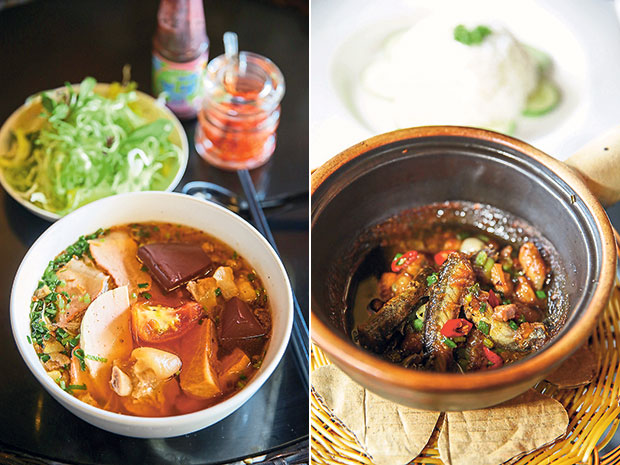
For those with stronger stomachs and brave hearts, the eatery also serves exotic fare here such as Hột vịt lộn, the half hatched duck egg often eaten for sustenance. Order it plain or pair it with tamarind sauce. The eatery also serves goby fish, the freshwater and sweet tasting fish known as Cá kèo. It’s cooked two ways; in a hot sour soup or braised with pepper and thinly sliced onions that gives it a sweet underlying taste.
In the next few weeks, the place is expanding as they will be opening up a retail store that stocks all kinds of products specially brought in from Vietnam. With regards to the restaurant, there will be a special BBQ menu every night.
Its key feature is imported seafood from Vietnam. There will also be meats. According to Mimi, most of the seafood is unique to her country like octopus or the different types of clams. The items will be placed out in skewers and laid out in a style similar to your lok-lok vans. This allows their diners to choose the freshest ingredients for their BBQ.
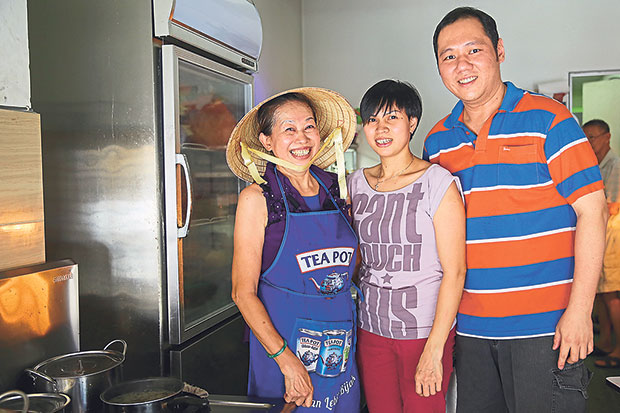
Over in Petaling Jaya, you have Ara Vietnamese Noodles located at the quieter part of Damansara Jaya. It’s run by Andrew Goh and his Vietnamese wife who is simply known as Ah Yim. It’s very much a family affair here; Andrew’s parents help him with the operations while Ah Yim’s mother Thi Lang heads the kitchen.
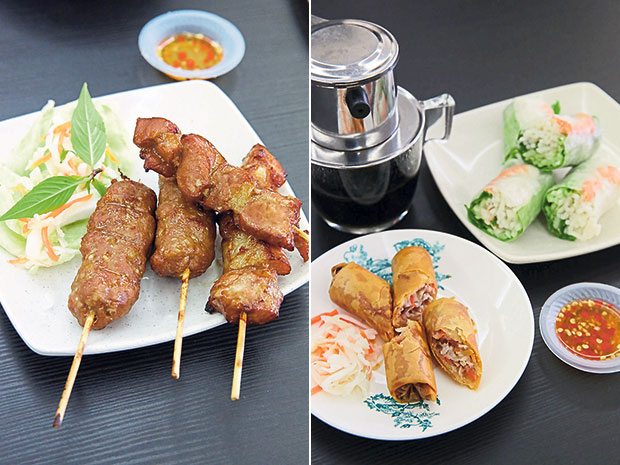
Previously in the pharmaceutical industry, Andrew was often a visitor to Thailand and Vietnam. He met his wife in Ho Chi Minh City. Being an avid food lover, he had always wanted to open his own F&B business. In December 2013, he decided to open a small stall in a coffeeshop at Ara Damansara — a good way to get one’s feet wet. “I dare not jump into it until I got the taste approval for one year,” explained Andrew. Confident with his customers who have learnt to appreciate his home cooked Vietnamese cuisine, he decided to open this place last December.
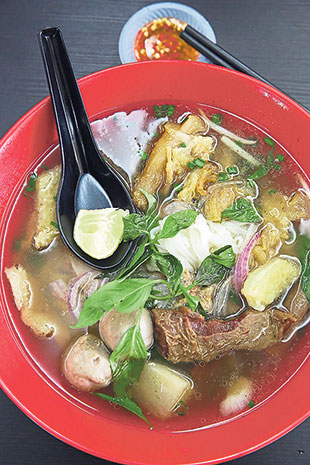
Andrew feels that the cuisine is under-represented here in Malaysia. “Vietnamese food is unique and special. Moreover it’s not as saturated here like Thai food.” One of their most popular dishes is Phở — simple aromatic beef broth paired with herbs, spices and rice noodles — the Vietnamese staple.
The restaurant serves two variants; the typical Phở bò and a ramped up version known as Phở bò dặc biệt with beef brisket, tendon and tripe. The key to its deliciousness — slowly boiling the broth with bones and meat for at least four hours and allowing it to steep overnight. As Andrew affirms, no stock cubes were used to make the clear aromatic broth. Our favourite part of the noodles is the simple white radish that has absorbed all the sweet aromas of the beef and spices.
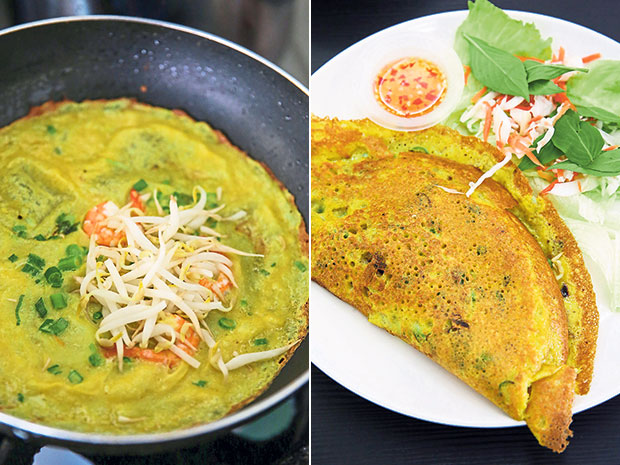
Some dishes on the menu have a family link. Take for instance their Vietnamese BBQ pork rice or Cơm tấm. Andrew reveals that it’s based on his brother-in-law’s recipe; he runs a roadside stall in Ho Chi Minh city and this dish pulls in the crowds. Usually served with broken rice grains in Vietnam, they use normal rice grains here. The eatery also offers grilled pork skewers and their homemade pork sausages. Andrew prefers using pork cheek for the skewers since it gives it more texture versus pork belly cuts.
As the menu tends to be different compared to the usual items served in other Vietnamese restaurants, more education is also needed for diners to understand their dishes. For instance, the braised pork and egg with coconut water or Thịt kho nước dừa is a ubiquitious Vietnamese dish often served during Chinese New Year. “It’s their comfort food.” Families would often cook up a large pot of this dish and eat it throughout the festivities.
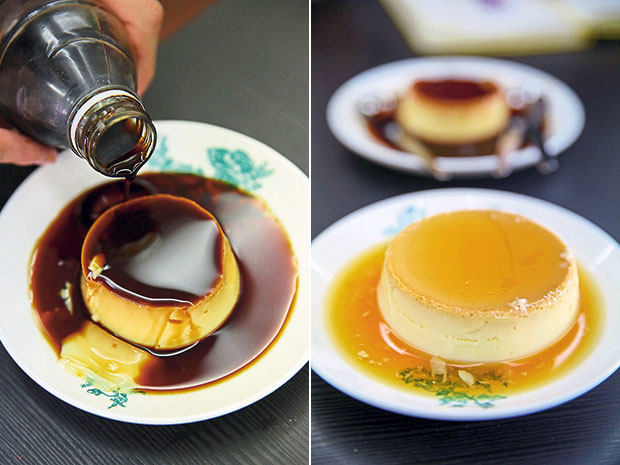
Leave room for dessert too, as their crème caramel dessert or Bánh flan is superb. It has a richer egg taste compared to say, Ipoh’s crème caramel version. Traditionally it’s paired with Vietnamese coffee. That edge of the bitter coffee balances out the sweetness from the pudding — making it a luscious end to your meal here. Texture-wise, it’s a little firmer but dig into the middle part and you will discover it’s silky smooth with an almost tau fu fah like texture.
Later in April, they will unveil a new menu that boasts about four to five new rice and noodle dishes. Andrew hopes to also introduce more Vietnamese desserts. However, as his customers are mainly locals, he admits that he will have to tweak their sweetness since most Vietnamese desserts are often laden in sugar. In the future, he also hopes to make their homemade pork roll wrapped in banana leaf or Chả lụa that can be eaten as cold cuts.
Mimi Nguyen Cafe
J-01-04, Jalan PPK 1
Pusat Perniagaan Kinrara
Persiaran Kinrara, Section 3
Puchong, Selangor
Tel: 03-8062 0686
Open: 10.30am to 10.30pm. Closed every second Monday of the month.
Restoran Ara Vietnamese Noodles
45, Jalan SS22/11
Damansara Jaya
Petaling Jaya
Tel: 03-7733 0312
Open: 10am to 3pm, 5.30pm to 9pm. Closed on Mondays.