KUALA LUMPUR, Aug 31 — In the old days, a car’s cubic capacity, or in simpler terms, the engine size was mostly all that mattered when measuring the power — the bigger the capacity, measured commonly in cubic centimeters or cc, the more powerful the engine was, with little variations of power here and there based on the camshaft profiles, etc, but generally the engine size said it all.
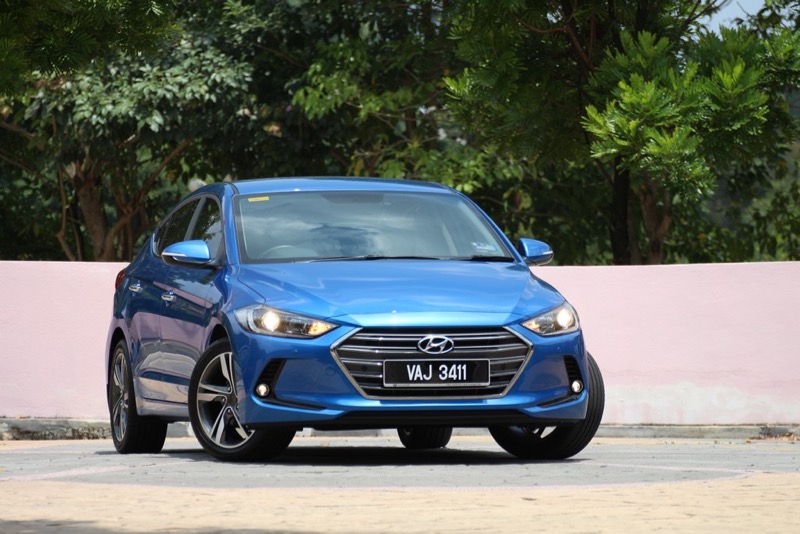
Well, I have just come from testing not one, but two variants of the Hyundai Elantra – I started with the 1.6 litre Elantra ,and followed up with the 2.0 litre Elantra — and guess what, the more expensive and the more powerful of the two is actually the 1.6 litre variant.
The 1.6 litre Elantra pulls 204 PS and 265 Nm of torque — it also comes with a Direct Clutch Transmission (DCT), plus some suspension tuning for higher performance — yes, it does come with some other little bits and pieces, but it sells for RM131+K, whereas the two variants that have the 2.0 litre engine pull only 152 PS and 192Nm of torque. It is no secret of course, that the 1.6 litre variant gets its power from the little turbocharger, and as a side benefit, torque comes in very early — in fact the maximum torque is available in full from as low as 1,500 rpm all the way through to 4,500 rpm. This translates into some very responsive driving, and if you are a ‘driver’, you will enjoy pushing the Elantra 1.6 to its fullest.
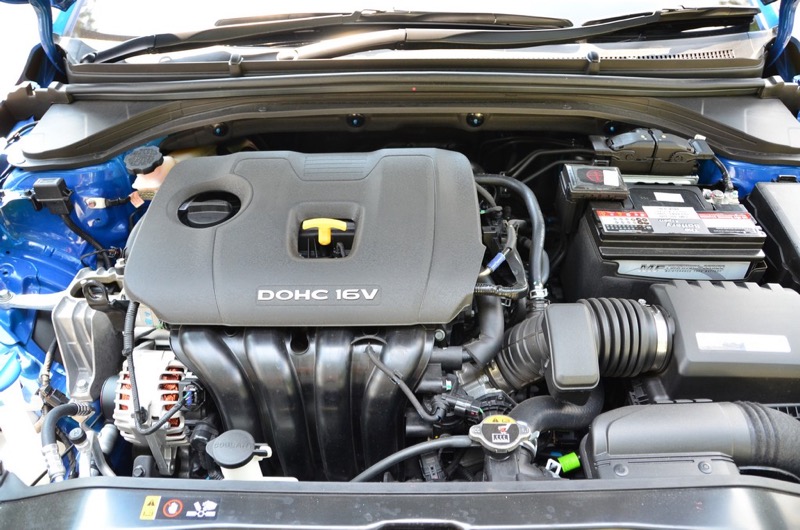
The 52 PS (roughly 50 horsepower) does make a difference when push gets to shove, but the question is, does one really need that extra power? Consider too, that the 2.0 litre variants, depending on the trim level, cost between RM116+K and RM120+K, while the 1.6 litre turbocharged Elantra costs RM131+K.
In my opinion, there are basically two categories of drivers in Malaysia — the bulk would be made up of 80 to 85 per cent of all Malaysian people from all walks of life— and this group are generally people who just regard a car as a piece of machinery that gets them from one place to another. Some of these people may also consider the car to be somewhat of a status symbol and so they may still go out and buy a more ‘powerful’ variant of any make or model that may please them. However, most people in this group do not know much about the mechanicals of their cars.
I have tested the naturally aspirated sibling of the Elantra, and 152 PS with 192Nm of torque are quite respectable numbers insofar as the power game goes. The Honda Civic 2.0 of the previous generation had 157 PS, and that was enough. The Elantra carries a 6-speed automatic transmission, which does have some transmission slip as all automatic transmissions do, but it drives decently as well.
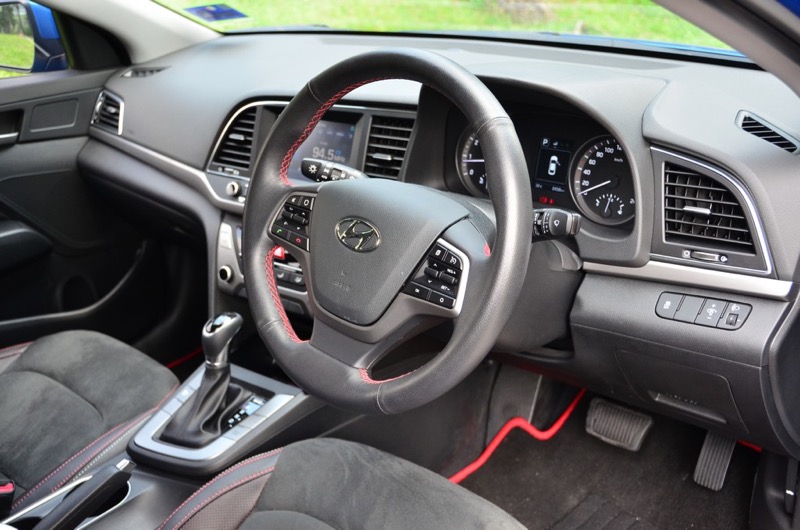
In terms of specifications, there is very little difference between the mid-range 2.0 litre and the top range 1.6 litre variant save for some minor trim pieces. The real differences are in the transmission (DCT) that has little or no slip, is quick to change up or down, and a difference in the way the suspension is tuned, which includes replacing the torsion beam rear suspension with a fully independent rear suspension with a multi-link arrangement. The suspension differences do contribute quite a bit to the driving dynamics, thus the turbocharged 1.6 Elantra would have an advantage during corners, but having said that, it only makes a difference when the car is pushed to its limits — in normal road driving conditions and speeds, there is nothing much between the two.
I did some exuberant driving with the naturally aspirated Elantra just to check it out, and I am happy to say that it is pretty well set up as it is — I went at speeds around corners that are well in excess of the expected speeds of the average driver, and the car was still ‘predictable’ and very easy to manoeuver. Translated to the everyday driver, the 2.0 litre Elantra is good enough, both in terms of power and road handling. In the area of fuel economy, the 2.0 would give good fuel consumption if driven ‘normally’.
Thus, if you consider yourself a ‘normal’ type of driver, i.e., one who is seldom in a hurry to get someplace, likes to observe the speed limits, (perhaps exceed it a little bit once in awhile) and seldom goes at high speeds, the Elantra 2.0 would be just right.
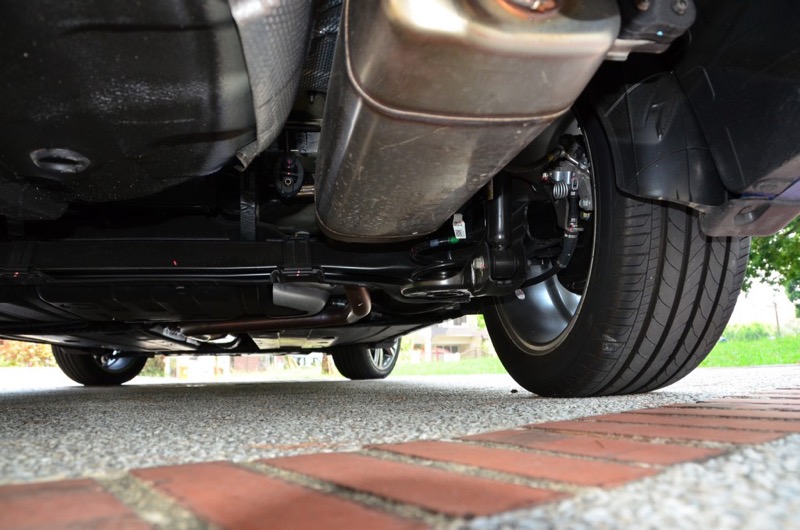
However, if you are one who is always in a rush, and drive ‘aggressively’, overtaking people all the time, and generally go ‘fast’, you might want to consider the additional power from the 1.6 litre turbo unit. The higher specifications for the suspension would be helpful to you when you do high speed cornering, and you will appreciate the positive ‘bite’ of the DCT when you are going through the gears.
In terms of fuel economy, with the turbocharged unit, you have a choice — the additional torque actually means you do not have to throttle as hard when you are driving normally. When you are stopped by the road while your partner goes to ‘ta pau’ some food, you will burn less fuel, because at idle, your turbo is not working and you are a 1.6 litre engine. However, if you constantly floor the throttle, you will most likely burn more fuel than the 2.0 litre naturally aspirated Elantra, but the beauty of it is, you actually have a choice. In other words, you have a choice whether to drive conservatively to be fuel efficient, or drive fast, (and burn more fuel) just because you can.
There you have it — you should know yourself, the kind of driver you are, and if you have to choose one, you will know which one to pick. For me, it will be the turbo, of course, but that’s just me.