


- Investigators seek motive in shootings at Brown, of MIT professor
- Links between shooter and Brown, MIT professor stretch back 25 years
- Gunman likely dead for two days before police found his body
PROVIDENCE (Rhode Island), Dec 20 — A quarter of a century ago, Claudio Neves Valente was briefly enrolled as a promising young doctoral student in the physics department at Brown University before dropping out of the school in Rhode Island.
Yesterday, police were still trying to figure out why Valente returned to the Ivy League school nearly a week ago, armed with at least one handgun. He killed two students and injured several others, police say, before fleeing from the building where he once studied.
Searching for a motive, investigators were examining Valente’s earliest days in academia, which took him from the University of Lisbon to the US Northeast.
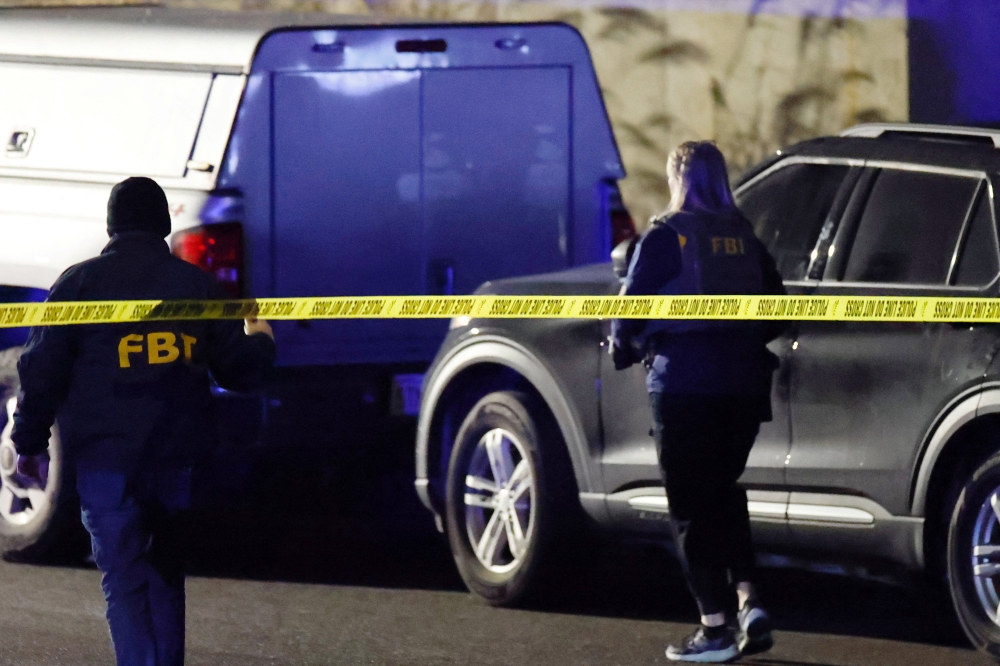
Two days into the manhunt for the Brown University attacker, a physics professor at the Massachusetts Institute of Technology was fatally shot in his home outside Boston: Nuno Loureiro, who had been Valente’s classmate as physics students at Lisbon’s elite Instituto Superior Tecnico in their native Portugal in the late 1990s.
Valente likely took courses building where shooting occurred
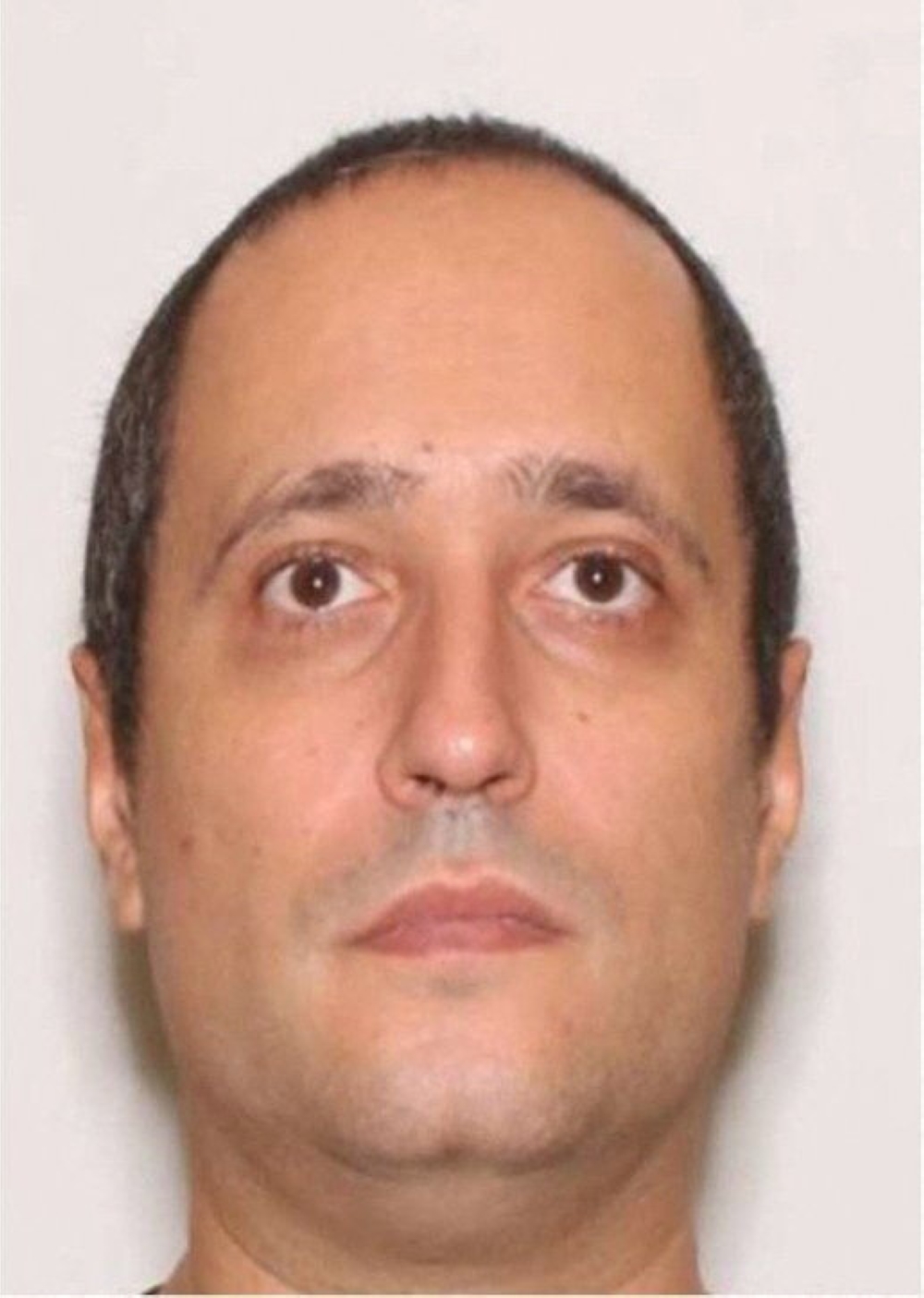
Investigators announced on Thursday night they believe both attacks were committed by Valente, 48, whom they found dead on Thursday in a storage locker he had recently rented in Salem, New Hampshire.
An autopsy conducted by the state’s Office of the Chief Medical Examiner performed yesterday found that Valente shot himself in the head and that he had likely been dead since Tuesday — the day after authorities say he killed Loureiro.
Two 9mm pistols were recovered with Valente’s body and were determined by a forensic laboratory to be positively correlated with the Brown University mass shooting and Loureiro’s murder, the FBI and the Bureau of Alcohol, Tobacco, Firearms and Explosives said late yesterday.
MIT, one of the world’s preeminent scientific research universities, mourned Loureiro, 47, calling him “an incredible scientist, colleague, mentor, and friend” in a statement.
His former classmate and suspected murderer, Valente, was not known at all by the international community of physicists. Investigators have not said what Valente did in the decades after abandoning his physics studies.
“It’s quite shocking to even think that someone who studied with (Loureiro) may have had some kind of anger that comes from the period” when they attended school together, Bruno Goncalves, the director of Lisbon’s Institute of Plasmas and Nuclear Fusion, where Loureiro once worked, said in an interview.
Brown University President Christina Paxson wrote in a message to the campus yesterday that Valente was enrolled in a physics PhD programme for a few months in 2000 to 2001. She wrote that “it is likely that he would have taken courses and spent time at the site of the shooting, Barus & Holley, where the vast majority of physics courses take place in classrooms and laboratories.”
Any affiliation Valente had with Brown ended in 2003, when he dropped out after a long leave of absence, according to university officials and investigators. There was no sign of any recent contact. No Brown employee spoken to so far has any memory of him, Paxson wrote.
Hospitalised survivors of Saturday’s attack in the Brown classroom also appear not to have known their assailant, but later recognised Valente when shown images of him by investigators.
One victim told investigators she got a look at the shooter, and, upon seeing Valente’s photo, she “froze, physically pushed back, and became emotional,” according to a police affidavit.
Aside from perhaps using the same classrooms in different decades, there were no known ties between Valente and the two young students killed at Brown: Ella Cook and Mukhammad Aziz Umurzokov.
Pursuing physics from Lisbon to the US
Valente won the US green card lottery and became a lawful permanent resident in 2017, according to a police affidavit. He listed Brown’s Barus & Holley building as the address of his “institution” in his immigration paperwork, despite also noting there that he had dropped out more than 15 years earlier.
Outside the building yesterday, Rahul Mani, a graduate student in computer science, stood in the pelting rain soaking a largely deserted Brown campus, where the semester was ended early. Nearby, a food truck run by a local charity was feeding first responders and investigators.
“I had to come here to see it for myself,” Mani said. “I am glad they found the shooter but it is still a very, very unnerving feeling to be here.”
Valente grew up in Torres Novas, a town an hour north of Lisbon, and was good enough at physics as a high school student that he competed in a Physics Olympiad. As a 17-year-old, he went on a trip to the Australian capital, Canberra, with other students and teachers, according to local media.
Loureiro, the murdered MIT professor, studied engineering physics alongside Valente at Lisbon’s Instituto Superior Tecnico. It was unclear whether the two men knew each other.
Valente became a teaching assistant at the institute, before his contract was terminated in February 2000, according to Diario da Republica, Portugal’s official state gazette.
A few months later, Valente would enroll at Brown.
Loureiro, meanwhile, went on to Imperial College London, getting his physics PhD and working in theoretical physics and its applications in fusion. In 2009, he became a researcher at Lisbon’s Institute of Plasmas and Nuclear Fusion, before moving to the US in 2016 to become a professor at MIT in Cambridge, Massachusetts.
Physicist Luis Batalha, who now lives in San Francisco, wrote on social media that Loureiro was a “rare local hero” to Portuguese physicists.
“He was a role model we could truly relate to,” he wrote, “someone who once sat in the very same classrooms we did and proved that it was possible to reach the absolute pinnacle of the field.” — Reuters


