


MAY 28 — The circular economy has emerged as one promise to decouple economic growth from resource consumption. But how do we know when a company has actually achieved circularity? Who draws the line between genuine change and sophisticated greenwashing? According to Jianming Yang’s analysis, the answer, for many, lies in standards and certification. In his chapter, “Circular Economy Standard and Certification,” Yang dissects the emerging landscape of frameworks—from the various ISO efforts — designed to do for the circular economy what LEED did for buildings. On the surface, this seems like a necessary and inevitable step toward maturity. But beneath the technical language of auditors and conformance lies a more troubling question: In our rush to certify circularity, are we commodifying a revolution?
Standards can create a common language and a level playing field. They offer a shield against accusations of inaction. But this is where the danger lies. The very act of certification risks reducing a complex, systemic philosophy to a bureaucratic exercise. As noted, these standards often struggle to balance two competing imperatives: the need for rigid, auditable metrics and the need for systemic, context-specific innovation. A company can earn certification by optimising its internal recycling processes. On paper, this is a triumph. Yet, if that same company’s business model relies on planned obsolescence, or if its “recycled” products end up in a waste stream in a developing country with no municipal recycling infrastructure, have we truly advanced a circular economy? Or created a more efficient linear economy?
That points to a critical tension at the heart of this standardisation movement: the battle between incrementalism and transformation. Most existing standards are voluntary management frameworks. They ask organisations to consider circularity principles, to map their material flows, and to engage stakeholders. They do not, and arguably cannot, mandate a fundamental shift in business models. This creates a perverse incentive structure. For a multinational corporation, pursuing certification is a form of risk mitigation. It allows the company to continue its core business—selling more stuff, faster — while layering a veneer of sustainability over its operations. The certification becomes a destination rather than a milestone. Once the plaque is on the wall, the urgent work of rethinking product design, supply chain ownership, and customer relationships can be indefinitely postponed.
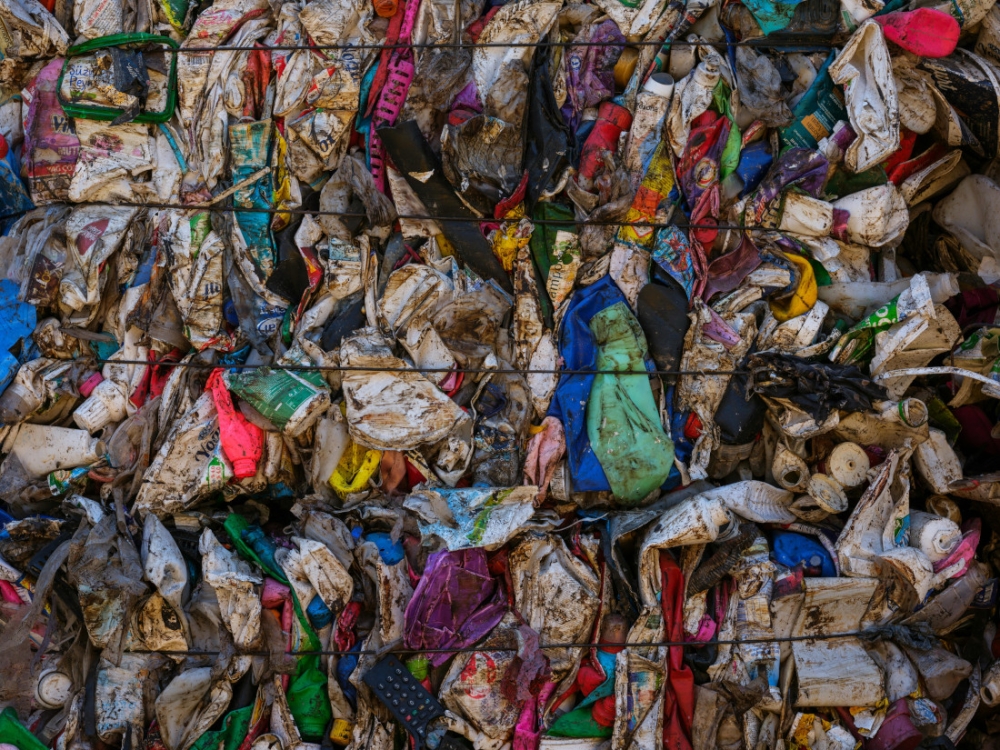
A circular economy cannot exist within a single factory or even a single corporation. It requires a network — a symbiosis of suppliers, recyclers, repairers, and consumers. Yet, certification is typically awarded to individual entities. We risk creating a landscape of “circular islands” — pockets of excellence surrounded by oceans of linear waste. A certified smartphone manufacturer is only as circular as the cobalt miner in the DRC and the informal e-waste recycler in Lagos who handles the device at the end of its life. A standard that focuses solely on the internal operations of the brand owner ignores the systemic externalities that define the modern economy.
This is not to argue that standards and certifications are futile. Yang is correct to identify them as crucial tools for scaling the circular economy from niche to norm. Without them, we are left with marketing jargon and unverifiable claims. The solution, however, lies in how we wield these tools. We must stop treating certification as a badge of honour and start treating it as a baseline for a much more demanding conversation. The standards that will matter are not those that simply audit processes, but those that mandate outcomes — like true material circularity rates that account for downcycling, or product-as-a-service models that fundamentally alter the producer’s relationship with waste.
The current generation of standards is a starting point, not a finish line. The real work is political and economic. It involves using the data and transparency that standards provide to underpin stronger regulations: extended producer responsibility laws that hold companies financially accountable for their products’ end-of-life, and procurement policies that refuse to accept “certified circular” as a substitute for genuine dematerialisation.
If we are not careful, the circular economy will go the way of carbon offsets — a well-intentioned idea that was co-opted by the very system it sought to replace, allowing business-as-usual to persist under a greener banner. The standards are being written now. If we allow them to be designed for the convenience of certifiers and the public relations departments of large corporations, we will achieve nothing more than a certified collapse. The only standard that ultimately matters is not the one printed on a plaque, but the one measured in a radical reduction of virgin resource extraction and the restoration of ecological systems. Until our certifications reflect that reality, they are merely a more sophisticated form of waste.
* Professor Datuk Ahmad Ibrahim is affiliated with the Tan Sri Omar Centre for STI Policy Studies at UCSI University and is an Adjunct Professor at the Ungku Aziz Centre for Development Studies, Universiti Malaya. He can be reached at [email protected]
** This is the personal opinion of the writer or publication and does not necessarily represent the views of Malay Mail.


