


APRIL 22 — For a child going to school on an empty stomach, an economic crisis is not a statistic – it is hunger, fatigue, and lost opportunity.
Malaysia is navigating one of its most complex economic shocks in a generation and across the country, more families are being pushed into harsh realities as economic pressures intensify.
Since the conflict in West Asia closed the Strait of Hormuz in late February, fuel prices have surged and food costs have risen. Formal-sector job losses in the first quarter of 2026 reached 24,100 – a 47 per cent jump over the same period last year.
The federal government has moved to shield Malaysians from rising fuel costs through the BUDI 95 subsidy, while extending diesel subsidies to key groups, including farmers, smallholders, selected public transport operators, and goods and logistics vehicles.
At the state level, Selangor has introduced a RM130 million resilience package that includes free breakfasts for children in all 873 government schools, while Sarawak has expanded basic needs assistance and extended electricity subsidies to over 700,000 households.
These are meaningful acts of political will to protect the Rakyat, and they deserve full recognition.
But these efforts point to a critical reality: children are absorbing a disproportionate share of this crisis, and its effects will outlast the conflict itself.
Malaysia’s data show that households with children are more likely to live in poverty than those without. As food prices rise – driven by higher costs across the supply chain, including fertiliser and transport – families’ incomes take a direct hit.
With no cushion for emergencies, even drastic decisions, such as cutting back on essentials such as food, become reality.
It is a child who gets a smaller breakfast before school – or none at all.
It is a Grab driver who cannot repair his motorcycle chain when it snaps and loses precious workdays.
It is a small fruit or vegetable farmer in Kedah or Sabah, struggling with rising fertiliser costs that squeeze the profit that keeps the family afloat.
What concerns me most however, is the long-term impact on a generation of children and what it means for the future of Malaysia.
Let us focus on one critical impact channel: the reduction in the quantity and quality of food – particularly concerning in Malaysia, where 1 in 5 children are stunted.
When families cut back on food, children pay the highest price. Nutritional deficits weaken immunity and physical growth in the short term. They disrupt brain development and learning over time, ultimately reducing educational attainment, productivity, and lifelong health.
When this happens early – especially in the first 1,000 days – the effects can be irreversible, perpetuating cycles of poor health, poverty, and underdevelopment across generations, and deepening inequality from a young age.
These risks are not hypothetical. Unicef Malaysia’s Living on the Edge study, based on research in Kuala Lumpur’s low-cost flats, documented how families respond to increased cost of living by cutting back on food and other essentials – even before the oil crisis began.
Malaysia has a strong social protection system, with STR, SARA, school feeding programmes, universal healthcare, and Perkeso insurance systems at the forefront.
But the system is not yet designed with children at its centre.
For example, the unemployment scheme provides the same payout for a person with three children under their care as it does for someone with no dependents.
Furthermore, SARA excludes fresh fruits and vegetables – critical for a child’s healthy development – and the one-off version excludes children altogether.
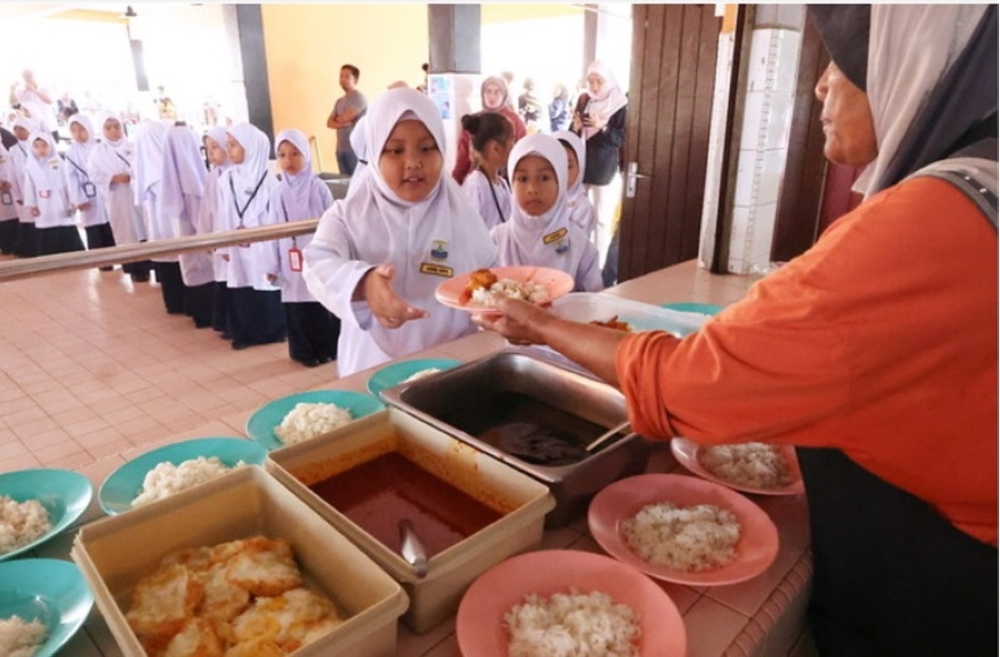
Finally, the RMT school meal programme, which reaches 870,000 children, has not been adjusted for inflation since 2022, nor expanded to cover more children beyond those in hardcore poverty, many of whom still need support.
These shortcomings require urgent attention – not a new programme, nor a new agency, but a child-sensitive recalibration of the system as a whole.
That means fine-tuning existing design rules, benefit levels, eligible items, and coverage to reflect the real costs and vulnerabilities of raising children, and to protect their nutrition and development during shocks.
Encouragingly, good practices already exist. A good example is the Bantuan Makanan Prasekolah programme, which ensures that all preschoolers in the Ministry of Education and Kemas preschools receive school meals regardless of income – so every child starts the day well-fed and ready to learn, even when crisis hits.
Selangor's free school breakfast initiative is exactly the right approach, and credit belongs to the state for moving fast. Sarawak's long-standing universal investment in newborn endowments and maternal support shows that state governments can lead on child welfare.
Child-responsive social protection systems are possible when they are prioritised.
The federal government is managing real fiscal constraints. Choosing between subsidising fuel for all and protecting the most vulnerable is genuinely hard.
But the evidence consistently shows that investments in children – through school meals, child healthcare, and income support for families – are among the most cost-effective forms of social investment a government can make.
The Global Nutrition Report estimates that every ringgit invested in preventing child stunting can yield returns of up to 16 ringgit through better health, higher productivity, and increased lifetime earnings.
Yet the current BUDI 95 subsidy architecture is regressive, benefiting richer households to a larger extent, as they drive more and bigger cars.
Early poverty analysis shows that removing subsidies and instead providing direct cash to 80 per cent of the population would be more effective in reducing poverty, while costing significantly less.
At current elevated oil prices, replacing the BUDI 95 subsidy with a monthly cash transfer of RM300 would leave B40 households better off, reduce inequality, and create fiscal space to strengthen a child-sensitive social protection system.
Economic shocks do not hit everyone equally. They fall hardest on those with the least resources to absorb them – and within that group, they fall hardest on children, who are least responsible yet carry the consequences the longest.
Through Ekonomi Madani and the 13th Malaysia Plan, the Government has committed to building human capital from the earliest years and raising the floor for every family.
As Malaysia charts its response, and as state and federal governments decide where limited resources go, one question must remain at the centre: How does this benefit children?
The federal budget discussions ahead are a critical moment. The question of whether to introduce a universal child allowance, add a child supplement to EIS, or enhance STR and SARA to better respond to the needs of children will shape how this crisis is felt across households.
These are not technical choices; they are decisions about whether children are protected or left behind. This is where Ekonomi Madani must deliver for children and their families.
* Juanita Vasquez-Escallon, Chief of Social Policy, Unicef Malaysia.
** This is the personal opinion of the writer or publication and does not necessarily represent the views of Malay Mail.


