


MARCH 5 — Europe had hoped that the widening war between the United States, Israel and Iran would remain confined to the Middle East. That hope has now been shaken.
The island of Cyprus—an established member of the European Union—has already been struck by an Iranian-linked drone attack, raising serious concerns that the conflict may begin to spill into Europe itself.
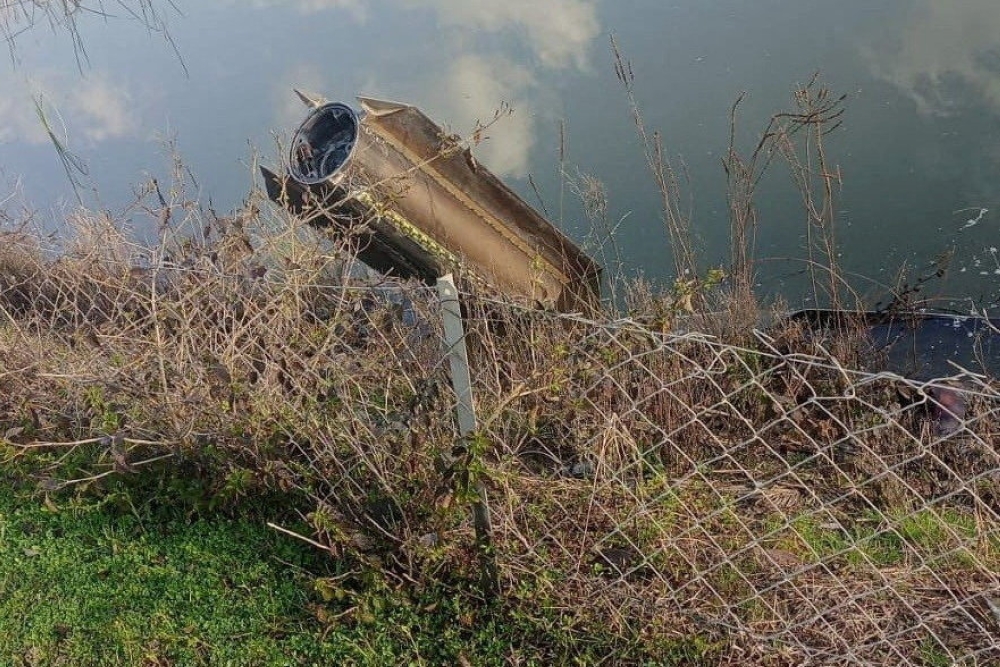
In the early hours of March 1, a Shahed-type drone believed to be linked to Iran or its proxy forces struck the Royal Air Force base at Akrotiri on the Mediterranean island of Cyprus.
The attack caused limited damage but forced evacuations and triggered an immediate regional security response.
Although the base itself belongs to the United Kingdom as a sovereign military territory, the strike nonetheless occurred on Cypriot soil.
Cyprus is a full member of the European Union, and the incident therefore represents one of the first moments in which the expanding war against Iran has touched European territory.
The strategic symbolism of this development cannot be underestimated.
For decades Cyprus has served as a logistical and intelligence hub for Western military operations in the Middle East.
The RAF base at Akrotiri has long supported surveillance missions, humanitarian operations and coalition air campaigns across the region. It sits barely a few hundred kilometres from the Levant.
Once the United Kingdom allowed the United States to use British facilities in the eastern Mediterranean for defensive operations connected to the war against Iran, the base inevitably became a potential target.
Tehran and its affiliated forces appear to have responded quickly.
The drone strike on Akrotiri marked the first time in decades that Cyprus had been directly hit by hostile military action linked to a broader regional conflict.
British forces intercepted additional drones approaching the island later the same day, demonstrating how quickly the situation could escalate.
European governments immediately recognised the danger.
France, Greece and other European states began reinforcing Cyprus with additional air-defence systems and naval deployments.
The European Union itself started discussions about the possibility of invoking its mutual defence mechanisms if attacks on Cyprus continue.
The underlying fear in Brussels is clear.
If the conflict continues to expand geographically, European territory could increasingly become entangled in the war.
Cyprus occupies a uniquely sensitive position.
Geographically it lies closer to Syria, Lebanon and Israel than it does to continental Europe.
Strategically it sits at the crossroads between the Middle East and the Mediterranean.
Because of this proximity, any regional war in the Levant inevitably places Cyprus within range of missiles and drones.
The island has already become nervous terrain.
Local residents near the Akrotiri base fled their homes after the drone impact, highlighting the very real human consequences of a war that many Europeans hoped would remain distant.
But Cyprus may not be the only European territory at risk.
The larger danger lies further north.
Iranian missiles have already approached Turkish airspace, forcing Nato defence systems to intercept at least one projectile near the Turkish border.
Turkey is not merely a regional power. It is a full member of the North Atlantic Treaty Organization.
This is where the conflict could become truly global.
Under Article Five of the Nato treaty, an attack on one member state is considered an attack on all members of the alliance.
Nato now consists of thirty-two countries, including the United States, the United Kingdom, France, Germany and most of Europe.
If Iran were to strike Turkish territory directly, the legal and political consequences would be profound.
Such an action could immediately legitimise a collective Nato response against Tehran.
In other words, what currently remains a war between Iran and a US–Israeli coalition could transform overnight into a confrontation between Iran and the entire Nato alliance. European leaders understand this risk very clearly.
That is precisely why many EU countries are trying to avoid being drawn deeper into the conflict.
Even as they support diplomatic pressure on Iran and provide defensive assistance to partners in the region, they are wary of crossing thresholds that might turn the war into a global confrontation.
At the same time, Europe must prepare for the consequences if escalation continues.
The European Union is already bracing for multiple strategic shocks.
One of them is migration. Any prolonged war in Iran or the wider Middle East could generate new refugee flows toward Europe, potentially echoing the migration crisis that followed the Syrian war.
Another is energy security.
Europe remains heavily dependent on energy flows that pass through the Persian Gulf and the Strait of Hormuz.
If Iranian retaliation disrupts shipping routes or oil infrastructure, global energy prices could surge dramatically.
Finally, there is the question of European citizens in the region.
Hundreds of thousands of Europeans live or work in Gulf countries.
If the war spreads further, EU governments may be forced to conduct large-scale evacuations under extremely dangerous circumstances.
Yet the most urgent challenge remains strategic restraint.
Iran must carefully consider the implications of striking European or Nato-linked targets. Actions that appear tactically useful in the short term may ultimately legitimise a broader coalition against Tehran.
Similarly, the United States and Israel must assess whether further escalation serves their long-term objectives or risks dragging additional powers into the conflict.
History is filled with wars that expanded beyond the intentions of those who started them.
The drone strike on Cyprus is a warning that this conflict may already be moving in that direction.
If further attacks occur—especially against Nato territory such as Turkey—the war could enter a completely different phase.
And once the collective defence mechanisms of Nato come into play, the path back to peace may become far more difficult.
* Phar Kim Beng is professor of Asean Studies and director of the Institute of International and Asean Studies, International Islamic University of Malaysia.
** This is the personal opinion of the writer or publication and does not necessarily represent the views of Malay Mail.


