


FEBRUARY 8 — According to the Fast Fashion Statistics 2025, the global fast fashion industry is worth more than US$163 billion.
Brands like Shein, which now controls close to half of the global fast fashion market, alongside household names such as Zara and H&M, have reshaped how people shop in the 21st century.
New collections appear online daily, prices stay irresistibly low, and trends move at breakneck speed.
But this convenience comes at a steep cost.
The rapid pace of production and consumption has far outstripped the ability of international laws to regulate the industry effectively.
While consumers in Europe and North America enjoy cheap clothing, the environmental damage and labour exploitation behind those garments are largely shifted to manufacturing hubs in Asia.
Unlike Europe, many of these countries operate under weaker regulatory frameworks and face jurisdictional gaps under international law.
In simple terms, as Western markets tighten environmental and labour rules, fast fashion companies exploit legal loopholes in the East to keep profits flowing worldwide.
The hidden environmental cost of your clothes
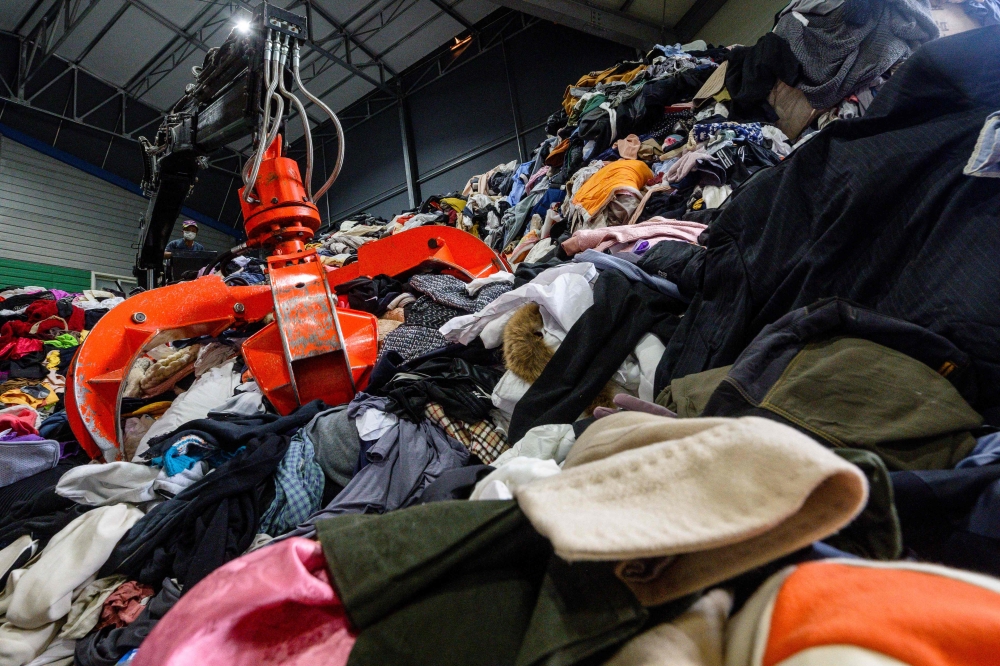
The scale of clothing production has triggered a global sustainability crisis.
This concern has been repeatedly highlighted by the European Environment Agency (EEA), which identifies textiles as one of the most resource-intensive and polluting consumer sectors.
According to EEA reports on textiles and the circular economy, almost everything we wear carries a heavy environmental footprint.
Natural fibres such as cotton and linen require enormous amounts of land, water, fertilisers, and pesticides.
Synthetic fibres like polyester depend heavily on energy and chemical inputs.
The environmental damage does not stop at the factory gate.
The EEA documents how everyday activities such as washing, drying, and ironing consume electricity and water, while releasing harmful chemicals and microfibres into rivers and oceans.
What makes the problem more troubling is its unequal geography.
The European Environment Agency notes that the most damaging stages of textile production are concentrated in Asia, where most of the world’s garments are manufactured, while the impacts of consumption fall mainly on Europe and North America.
Fast fashion is also a significant driver of climate change.
A regional study published in the International Journal of Research and Innovation in Social Science shows that ultra-fast fashion production in Malaysia, China, and Bangladesh is highly energy-intensive and heavily reliant on fossil fuels, particularly coal.
This dependence drives up greenhouse gas emissions and puts enormous pressure on national energy systems.
The relentless pace of production, fuelled by constant consumer demand, only escalates energy use from raw material extraction to manufacturing, transport, and disposal.
As both the EEA and Jimmy and colleagues emphasise, this undermines regulatory efforts to reduce carbon emissions.
In the end, buying clothes feeds an energy-hungry, polluting cycle – one responsible for roughly 10 per cent of global carbon emissions and massive water consumption.
For consumers, the most immediate solution remains simple: buy fewer clothes, choose better-quality items, and support sustainable alternatives.
How fast fashion exploits legal loopholes
Despite its environmental and social impacts, fast fashion remains poorly regulated at the international level.
Legal scholars writing in the journal Transnational Legal Theory argue that global frameworks such as the United Nations Guiding Principles on Business and Human Rights lack binding enforcement mechanisms.
As a result, companies face little legal consequence for environmental harm or labour abuse.
Environmental law experts share similar concerns.
In the Pace Environmental Law Review, Alexandros Maratos explains how the Basel Convention classifies most textile waste as non-hazardous.
This technical categorisation allows fast fashion waste to be exported with minimal oversight, often ending up in developing countries ill-equipped to manage it safely.
Research published in Human Rights Review further highlights the limitations of the UN Guiding Principles, describing them as “soft law”.
Because compliance is voluntary, accountability is weak and enforcement inconsistent.
Regulatory fragmentation adds another layer of complexity.
While countries such as France and the United Kingdom have introduced domestic laws addressing forced labour, energy use, and supply chain transparency, these measures stop at national borders.
Research on global supply chains, including work discussed by Anna Guido in the Undergraduate Journal of Global Citizenship, shows that multinational fast fashion brands frequently outsource production to Asian countries to avoid stricter regulations.
As the Global North tightens its rules while continuing to promote trade liberalisation, manufacturing countries in Asia remain subject to weaker enforcement.
European legal research on fast fashion supply chains confirms that this imbalance allows brands to systematically profit from regulatory gaps across borders.
Asia’s dominance as the world’s fast fashion production hub is rooted in structural inequalities.
Labour studies on the Asian garment sector consistently show that garment workers earn far below a living wage.
In countries such as Bangladesh and India, weak labour protections, low compliance costs, and corruption leave workers highly vulnerable to exploitation.
Even within Asia, labour and safety standards vary widely and are poorly enforced, while a lack of transparency across complex supply chains makes effective monitoring extremely difficult.
A two-part plan to green the garment industry
Addressing the fast fashion crisis requires action on two fronts: strong national reforms and binding international rules.
Major manufacturing countries such as Malaysia, China, and Bangladesh must strengthen domestic regulations urgently.
Studies stress the need for tougher environmental laws targeting hazardous textile pollutants, supported by consistent monitoring and meaningful penalties.
Transitioning to renewable energy and adopting energy-efficient technologies is essential to shrinking the industry’s carbon footprint.
At the same time, labour laws must be reinforced to guarantee fair wages, safe working conditions, reasonable working hours, and the right to unionise.
Equally important is the shift towards a circular economy.
Policy recommendations from the Asia–Europe Foundation (ASEF) and the European Environment Agency emphasise eco-design standards, product durability, expanded second-hand markets, and sustained public education campaigns to change consumption habits.
At the global level, binding international agreements are needed to standardise labour and environmental rules across supply chains and close existing loopholes.
Transparency must become mandatory, with legally required supply chain disclosures supported by digital tracking tools.
Legal and policy researchers also argue that developed countries have a responsibility to support technology transfer and provide financial assistance to help developing nations adopt cleaner production methods.
Finally, internationally recognised ethical certification and fair-trade systems must be expanded to reward companies that operate responsibly.
By combining strong domestic reforms with enforceable global standards, the garment industry can move towards a fairer, cleaner, and more sustainable future – one that ends the environmental destruction and labour exploitation driven by the relentless speed of fast fashion.
* Audrey Kang Nian, Jelina Teoh, and Mohd Istajib Mokhtar are from the Department of Science and Technology Studies, Faculty of Science, Universiti Malaya and may be reached at [email protected]
** This is the personal opinion of the writer or publication and does not necessarily represent the views of Malay Mail.


