


FEBRUARY 5 — Sitting at the intersection of medicine and engineering lies healthcare innovation. With developments in recent years — from wearable sensors and medical imaging systems to artificial intelligence–driven diagnostics and implantable devices — advancing engineering expertise continuously drives modern healthcare solutions. However, despite rapid technological progress, many healthcare innovations fail to translate effectively into real clinical impact.
I often refer to biomedical engineering as the only engineering discipline that sits on the fine line between cold, heavy machinery and soft, human flesh, which translates into the need to close the communication gap between engineers and doctors. For healthcare innovation to truly succeed, engineers and doctors must learn to speak the same language — not only in terms of technical vocabulary, but also in understanding each other’s priorities, constraints, and ways of thinking.
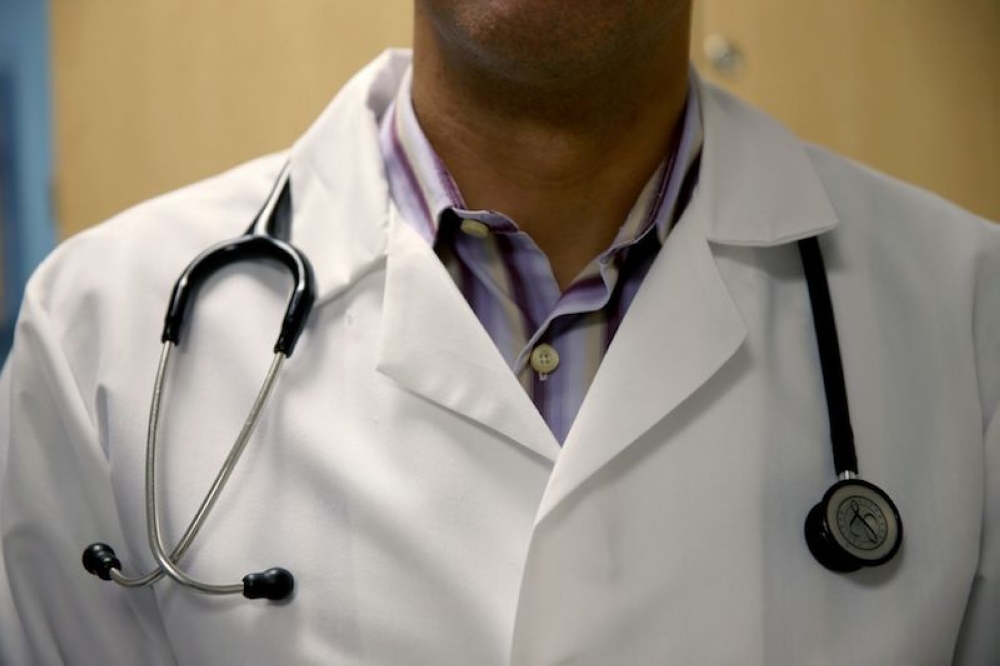
When we speak about doctors, the image that comes to mind is that they are laser-focused on patient safety, clinical outcomes, and evidence-based practices, with knowledge and skillsets that often expand with experience. Clinical decisions are guided by years of medical education, clinical guidelines, and real-world patient interactions. Engineers, on the other hand, are trained to solve problems using mathematical models, systems-level design thinking, and various optimisation techniques, where efficiency is often prioritised alongside results, performance, scalability, and innovation.
While both professions aim to improve human well-being, their different training backgrounds can lead to misunderstandings when they collaborate. Without a shared language, even the most advanced technology may fail to address real clinical needs. This makes the issue of speaking a common language more pressing, as technological advancements will not translate into real-time clinical impact without proper understanding and collaboration.
In healthcare innovation, or any innovation overall, the project and plan begins with problem definition. As engineers, it is common for solutions to be designed based on assumptions and calculations that may not fully reflect clinical realities. A highly accurate diagnostic algorithm could be developed, which needs to be trained using large amounts of high-quality data and long processing times — which might not be practical for healthcare practitioners such as doctors, despite being impressive from a technical standpoint.
With doctors accustomed to hospital workflows, they may need more rapid, interpretable results that can be immediately adopted, where the needs, wants, and circumstances of each party may vary drastically. This makes it clear that if engineers and doctors do not communicate clearly at the early stages of development, the final product may be technically sound but clinically impractical. Healthcare innovation will stagnate, and technological advancements will not be fully utilised to revolutionise clinical outcomes and nationwide developments.
Another challenge in bridging the gap between doctors and engineers lies in terminology and interpretation. Medical language is often human-centric, where doctors focus on qualitative, patient-based conversations. On the flip side, engineering language is quantitative and systems-focused. A doctor may describe a problem using symptoms, risk factors, and clinical outcomes, whereas an engineer may think in terms of inputs, outputs, and performance metrics. For instance, when discussing “accuracy,” a doctor may be concerned about false negatives that could endanger patients, while an engineer may focus on overall model accuracy or error minimisation.
Without aligning these definitions, both parties may believe they agree while actually prioritising different outcomes. Many healthcare innovations demonstrate the value of this approach: the development of medical imaging technologies such as MRI and CT scanners required close cooperation between clinicians, who understood diagnostic needs, and engineers, who designed hardware and algorithms. Similarly, AI applications in healthcare benefit most when doctors define clinically meaningful targets, select relevant features, and interpret results, while engineers ensure robustness, scalability, and technical feasibility.
In these cases, a shared language enables mutual respect, productive teamwork, and innovations that are both technically sound and clinically relevant. Speaking the same language as doctors does not mean engineers must become clinicians, nor do doctors have to become engineers. It is a path to cultivate empathy, curiosity, adaptability, and the ability to understand that a perfectly optimised algorithm or device is meaningless if it cannot be integrated safely into patient care.
It is not a show or competition of who is more professional, nor a race of knowledge, but the recognition that both fields’ perspectives are equally essential to achieve the best outcomes in patient care, ethics, workflow optimisation, realities, and innovation scalability. I have witnessed firsthand during internships that when perspectives as diverse as these are aligned, the results can be transformative — such as the development of infusion systems that prevent medication errors, cochlear implants that genuinely improve lives, and AI systems that augment rather than complicate diagnosis.
In conclusion, healthcare innovation is not just about engineering brilliance in a silo, nor solely about strong medical expertise, but about connection, dialogue, and empathy. It has been demonstrated time and time again that doctors and engineers speaking the same language is the key to unlocking transformative healthcare innovations, moving from a collection of technologies into a system that truly serves humanity.
As a soon-to-be engineering graduate and aspiring student, I hope to deepen my ability to bridge this divide so that the next generation of healthcare solutions is not only cutting-edge, but meaningful, practical, and life-changing.
* The author is a final year student of biomedical engineering at Faculty of Engineering, Universiti Malaya, and may be reached at [email protected]
** This is the personal opinion of the writer or publication and does not necessarily represent the views of Malay Mail.


