


JANUARY 19 — For decades, trans-Atlantic relations rested on a fragile but enduring assumption: disagreements between Europe and the United States would be managed quietly, within the boundaries of alliance politics, Nato solidarity, and mutual restraint.
That assumption is now dangerously close to collapse. It is an existential crisis of EU and Nato combined since the two are entwined.
The renewed tensions surrounding Greenland — and the European Union’s readiness to deploy its so-called “trade bazooka” — mark a decisive moment.
Once such a weapon is used against the United States, the trans-Atlantic relationship will not merely strain; it will rupture.
Greenland is the trigger, not the cause:
Greenland’s strategic importance to Washington has never been in doubt.
Its location in the Arctic, relevance to missile defence, proximity to emerging shipping routes, and access to critical minerals make it a prize in twenty-first-century geopolitics.
What is unprecedented is the method now being used to secure leverage over it.
By tying tariffs and economic pressure to strategic compliance, Donald Trump has blurred the distinction between allies and adversaries.
Trade tools are no longer instruments of negotiation; they have become weapons of coercion.
Europe’s response — openly contemplating retaliation through the EU’s anti-coercion instrument — signals that diplomacy has entered a more dangerous phase.
From partnership to economic warfare:
When French President Emmanuel Macron called on the EU to consider using its most potent trade weapon, he was not merely posturing.
He was acknowledging a reality Europe has long avoided: economic interdependence can be weaponised, even within alliances.
The danger lies in escalation.
Once tariffs are used as geopolitical punishment, counter-tariffs become inevitable.
What begins as pressure over Greenland risks spiralling into broader trade warfare — damaging supply chains, undermining trust, and hardening political attitudes on both sides of the Atlantic.
Alliances are not designed to survive sustained economic hostilities. They are built on consultation, not coercion.
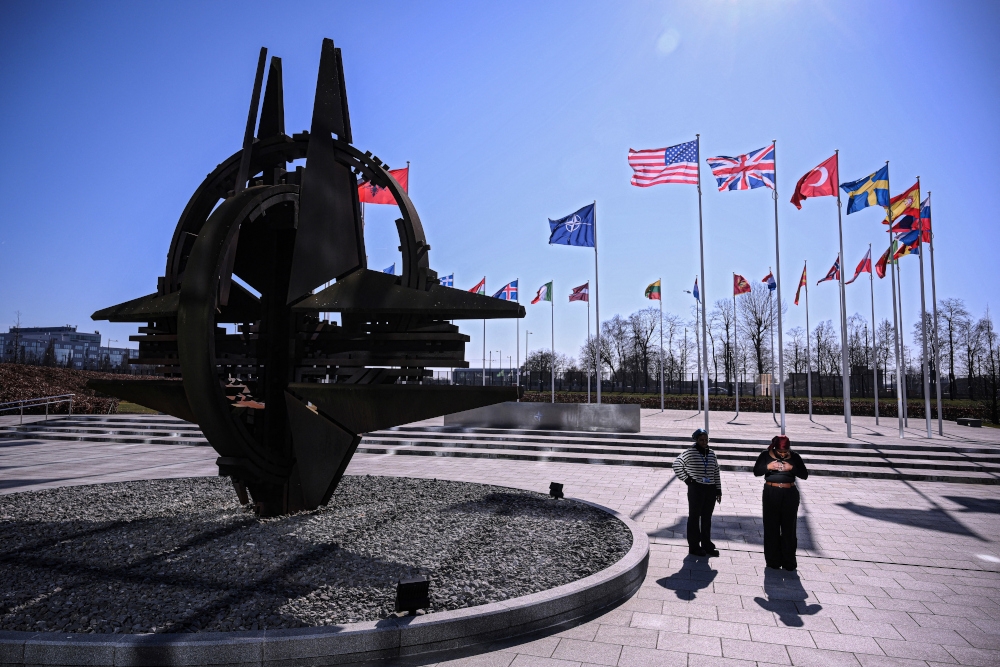
Nato’s silent yet loud crisis
The use — or even serious consideration — of trade weapons between Nato partners exposes a deeper crisis. It has internal disunity of the most serious form.
Nato functions on trust, predictability, and the assumption that security disagreements will not be settled through economic intimidation.
The Arctic should have been a space for deeper allied coordination. Instead, it has become a symbol of mistrust.
If one Nato member threatens others economically to extract strategic concessions, the alliance’s moral foundation erodes.
This is why European debates about “strategic autonomy” are no longer abstract. They are responses to lived vulnerability.
Europe’s strategic crossroads:
Europe now faces a choice with long-term consequences.
It can absorb pressure and preserve a semblance of unity with Washington, or it can retaliate and accept that the trans-Atlantic relationship has entered a more adversarial phase.
France seems to believe that it has, which is why retaliation is needed. Ironically a trade retaliation bill that was approved by the EU to handle China. Instead it is now being aimed at the US.
Deploying the trade bazooka would demonstrate resolve, but it would also shatter illusions.
Once used, it cannot be easily put back on the shelf. The relationship would be redefined — not as a partnership of equals, but as a managed rivalry between unequal powers.
For smaller European states, the lesson is stark: silence today invites pressure tomorrow. Yet Transatlantic unity remains elusive, and hesitation to call the bluff of Trumpism may indeed prove costly.
Lessons for the Global South:
For Asean and the wider Global South, this episode is sobering. If Europe — wealthy, institutionally dense, and militarily allied with the United States — can be subjected to open coercion, then no state can rely solely on norms or goodwill. Asean has to buck up its own intra regional trade which lingers at 23 per cent when EU has crossed 67 per cent.
Medium sized powers in Asean and GCC even must diversify partnerships, strengthen regional mechanisms, and prepare for a world where power speaks more loudly than principle.
The fact the EU has just concluded a MERCOSUR free trade deal last week is excellent but this is not enough to replace the US all in one fell swoop.
A rupture, not a reset:
The deployment of the trade bazooka would not “reset” trans-Atlantic relations.
It would rupture them. Even if negotiations later stabilise ties, the psychological damage will linger. Trust, once broken, is not easily restored.
Greenland may fade from headlines, but the precedent will endure.
The Atlantic world is entering an era where alliances are tested not by shared values, but by who can impose costs on whom.
When that moment arrives, the Atlantic will no longer bind — it will divide.
* Phar Kim Beng, PhD is the Professor of Asean Studies at International Islamic University of Malaysia and Director of Institute of International and Asean Studies (IINTAS).
** This is the personal opinion of the writer or publication and does not necessarily represent the views of Malay Mail.


