


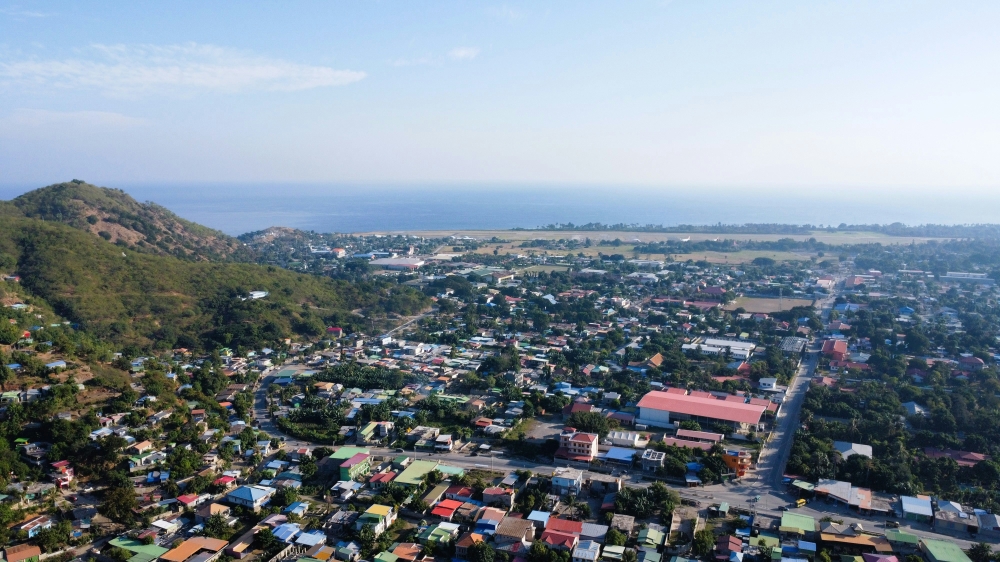
SEPT 27 — In mid-September 2025, Dili’s streets became the stage for one of Timor-Leste’s most significant protests since independence. Over a thousand students gathered to denounce two controversial parliamentary moves: the acquisition of brand-new SUVs for every legislator and a lifetime pension scheme for former MPs and top officeholders. These decisions were not just policy missteps; they symbolized the persistence of elite privilege in a country still grappling with poverty, limited infrastructure, and fragile state institutions.
The symbolism was hard to miss. In a nation where more than 40 percent of the population struggles under the poverty line, politicians awarding themselves luxury cars and pensions for life struck many as a brazen insult. That the measures were passed in parliament without much resistance revealed how normalized entitlement has become in Timor-Leste’s political class. But what elites underestimated was how visible and emotive these privileges were: cars and pensions are tangible, unlike the quiet deals, patronage networks, or opaque tenders that often slip under the public radar.
Students, many of whom were born after the country’s 2002 restoration of independence, refused to accept such excess. They saw it not only as wasteful but also as a betrayal of the sacrifices made by earlier generations. Their mobilization carried echoes of Timor-Leste’s own history, where youth were central to the independence struggle. Only this time, the enemy was not an occupying force but an unresponsive state captured by its own perks.
The government’s reaction was telling. Police fired tear gas and rubber bullets at protesters, a reminder that while Timor-Leste is celebrated as Southeast Asia’s youngest democracy, dissent is still precarious. Yet the repression did not silence the movement. Instead, the scale and determination of the protests forced the ruling coalition to retreat. Within days, parliament voted to cancel the SUV plan and repeal the pension law, with all parties, including those who initially supported the measures, scrambling to appear aligned with public sentiment.
It was, on the surface, a stunning victory. The students had forced the institution in the country to reverse course. International media hailed it as a triumph of youth activism, evidence that democratic accountability is still alive in one of Asia’s smallest states. But beneath the celebrations lie more difficult questions about the durability of this win, the risks of selective activism, and what this moment means for the broader region.
Beyond Timor-Leste: A regional mirror of privilege and protest
The episode resonates far beyond Dili. For Malaysians, the story of Timor-Leste’s student protests feels uncomfortably familiar. Across Southeast Asia, questions of political privilege, elite entitlement, and the shrinking patience of younger generations echo with striking similarity.
Malaysia itself has not been immune. From debates over allowances and perks for politicians, to controversies surrounding government-linked contracts, the tension between public service and private enrichment has long haunted our politics. Each time austerity bites ordinary citizens, whether in the form of higher living costs, limited job opportunities, or underfunded education, the spectacle of political privilege becomes sharper, more intolerable. Just as Timorese students saw SUVs and pensions as symbols of betrayal, Malaysians have often questioned why those in power seem shielded from the sacrifices expected of everyone else.
The parallel goes deeper. In both countries, youth movements have been pivotal in challenging entrenched power. Malaysia’s own Reformasi movement in the late 1990s was driven by student and youth energy, while more recent mobilizations around Bersih and climate justice reflect a generational impatience with business-as-usual politics. Timor-Leste’s protests show that even in a newer, smaller democracy, students continue to act as society’s moral compass.
But the Timorese case also offers cautionary lessons. First, symbolic victories, while important, do not necessarily translate into systemic change. Cancelling SUVs and pensions addresses the most visible forms of privilege, but it does not dismantle deeper structures of elite capture. In Malaysia too, public anger often forces leaders to retreat on highly visible issues, but without institutional reforms, such as stronger oversight bodies, transparent procurement, and limits on discretionary spending, similar practices resurface in subtler forms. The challenge is to ensure that protest leads not just to short-term backtracking, but to durable reforms.
Second, the response to dissent matters. Timorese students achieved their goal despite facing tear gas and rubber bullets. That victory demonstrates the power of organized resistance, but it also exposes the fragility of democratic space. In Malaysia, where laws such as the Sedition Act and the Peaceful Assembly Act still constrain freedom of expression and assembly, the lesson is sobering. A democracy cannot claim resilience if it treats dissent as disorder rather than as an essential mechanism of accountability.
Third, there is the generational question. In Timor-Leste, as in Malaysia, younger citizens are increasingly detached from the legitimacy narratives that sustained older elites. Timorese veterans draw on the independence struggle; Malaysian leaders often lean on post-Merdeka history or past reform struggles. But for youth facing economic precarity and disillusionment, these narratives are wearing thin. The protests in Dili underscore that legitimacy must be continually renewed, not by invoking past glories, but by delivering fairness, transparency, and responsiveness in the present.
Finally, the regional context cannot be ignored. Southeast Asia is marked by a paradox: rapid development in some areas, yet persistent governance deficits. From Indonesia’s debates over corruption and democratic backsliding, to Thailand’s youth-led challenges to monarchy and military power, to the Philippines’ struggles with political dynasties, the issue of elite privilege resonates across borders. Timor-Leste’s protests are not isolated, they are part of a regional pattern where young citizens are asserting that democracy cannot coexist indefinitely with unchecked entitlement.
For Malaysia, watching Timor-Leste should spark self-reflection. If a small, resource-scarce democracy can produce a youth movement powerful enough to force parliament’s retreat, what excuse do larger, more established states have for ignoring their young citizens? The events in Dili remind us that democracy is not maintained in parliamentary chambers alone but is continually negotiated in the streets, classrooms, and public squares where citizens demand accountability.
The story of Timor-Leste’s student protests is not just about SUVs and pensions. It is about a generation insisting that privilege without accountability has no place in a fragile democracy. It is about the risks of repressing dissent in societies where legitimacy is already strained. And it is about the possibility, rare but real, that power, when confronted by the organized will of the young, can still be forced to listen.
For Southeast Asia, and for Malaysia in particular, this moment carries a challenge: will governments treat such protests as threats to be contained, or as warnings to be heeded? The answer will determine whether democratic space contracts further or whether it finds renewal through the voices of those who will inherit it.
* Khoo Ying Hooi, PhD is associate professor at Universiti Malaya.
** This is the personal opinion of the writer or publication and does not necessarily represent the views of Malay Mail.


