


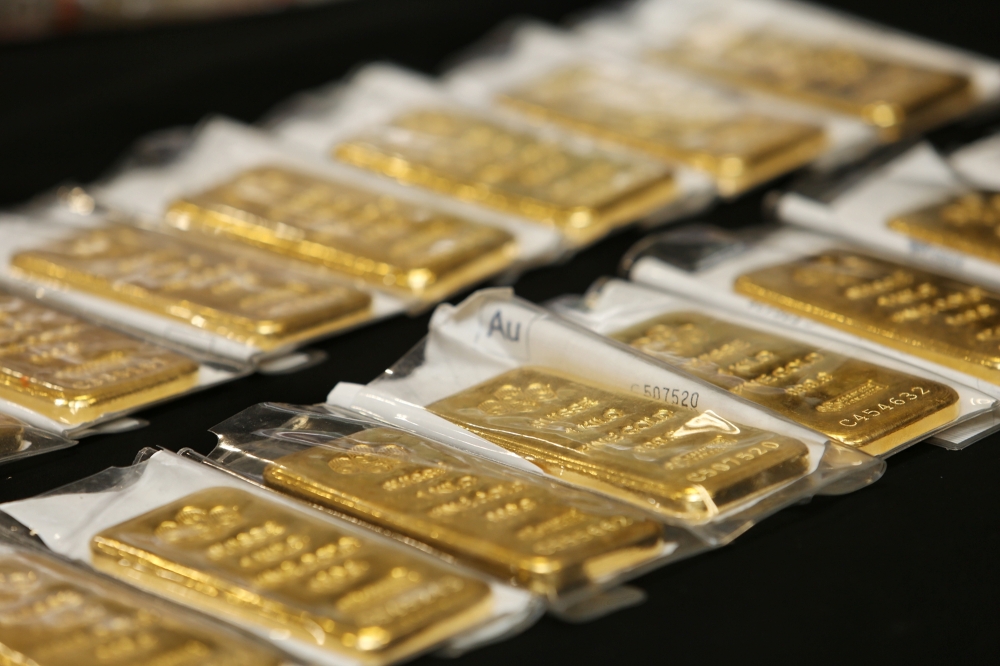
JULY 11 — Amid trade wars, shifting alliances, and a resurgence of unilateralism, a quiet financial rebellion is unfolding in Europe. It is not led by protestors in the streets or fiery parliamentary speeches. Instead, it is taking shape deep in the vaults of global finance — through gold.
In recent months, both Italy and Germany have revived efforts to repatriate significant portions of their gold reserves from the United States.
Although this movement has received little attention in mainstream Western media, its implications are profound.
These actions reflect growing mistrust — not only of the US financial system — but of Washington’s willingness to weaponise it, especially under the administration of President Donald J Trump.
A history of gold and mistrust
This is not the first time Europe has questioned US custodianship of its monetary sovereignty.
In 2013, under President Barack Obama, Germany’s Bundesbank repatriated more than 300 tonnes of gold — worth approximately US$18.6 billion (RM79 billion) at today’s prices — from New York and Paris. That move, although couched in technical justifications, was a symbolic assertion of financial independence.
Yet today’s repatriation push is markedly different. It is unfolding under vastly altered geopolitical circumstances, where Trump’s second term is marked by aggressive rhetoric, erratic policy swings, and punitive economic measures — including tariffs that have disproportionately targeted the European Union.
Furthermore, Trump’s repeated attacks on Federal Reserve Chair Jerome Powell have cast doubt on the independence of America’s central bank, raising red flags for European policymakers.
As noted by the TAE (The Automatic Earth), this behaviour undermines confidence in US financial stewardship and prompts urgent reassessments of where Europe’s wealth should be stored.
The significance of sovereign gold
Gold, in this context, is no longer just a commodity or hedge. It has become a tangible symbol of sovereignty. That Germany and Italy are actively pursuing the return of their gold reserves — currently valued at a combined US$245 billion, according to the Financial Times — signals a shift in the geopolitical trust that once undergirded the postwar transatlantic alliance.
Indeed, gold was once central to the Bretton Woods system. Until 1971, the US dollar was convertible to gold by the Federal Reserve, anchoring international monetary stability.
During the Cold War, many European nations stored their bullion in the US as a precaution against a potential Soviet invasion.
But historical memory has its own gravitational pull.
In the mid-1960s, President Charles de Gaulle of France ordered the transfer of nearly all French overseas gold reserves back to Paris, having lost confidence in the Bretton Woods system.
This early repatriation foreshadowed today’s deeper anxieties — only now, the mistrust is rooted less in East–West confrontation than in Western disunity itself.
Germany’s repatriation drive
Germany provides a clear illustration of how grassroots pressure and institutional decisions have combined to alter gold policy. Beginning in 2010, a popular movement known as “Bring Our Gold Home” gained traction across German civil society.
As a result, the Bundesbank announced in 2013 that it would store 50 per cent of its gold reserves within Germany, relocating 674 tonnes — worth roughly US$41.8 billion today — from New York and Paris to Frankfurt.
That operation, which cost about US$9.5 million, marked a turning point in how Europe viewed US financial custodianship.
Currently, 37 per cent of the Bundesbank’s gold reserves remain in New York — a number now under renewed scrutiny amid the shifting winds of global diplomacy.
Italy’s growing scepticism
Italy, too, has begun intensifying calls to retrieve its gold from American vaults. While its holdings are smaller than Germany’s in absolute terms, the political messaging is just as sharp.
In Rome, populist and nationalist voices have increasingly questioned why Italian wealth should remain under the indirect control of a foreign central bank — especially one seen as operating under an increasingly politicised US executive.
These concerns are compounded by Trump’s aggressive tariff policy, which has treated European allies as if they were adversaries. NATO, once the bedrock of Euro–American defence cooperation, has been repeatedly devalued rhetorically by the US President.
The European Union is being treated less as a strategic partner and more as a transactional entity, to be bent to Washington’s will.
A slow unravelling of trust
What is emerging is not a dramatic rupture, but a gradual erosion of confidence.
Should France or the Netherlands decide to follow Germany and Italy in removing their gold from US storage, it could mark the beginning of the end of American custodianship over Europe’s monetary assets.
Such a shift would carry symbolic and systemic consequences.
It would signal that Europe no longer trusts the United States to safeguard the financial pillars of the postwar liberal order.
More critically, it would suggest that Europe is preparing for a future where US power is neither as benign nor as stable as it once seemed.
Gold repatriation, therefore, is not merely about logistics or portfolio diversification.
It is about hedging against a future in which financial systems are no longer neutral, but weaponised — used to coerce compliance, punish dissent, and enforce geopolitical hierarchy.
Conclusion: A quiet but strategic revolt
The renewed gold repatriation efforts by Germany and Italy reflect a quiet but growing revolt against the unpredictability of Trump-era diplomacy and the perceived decline in US institutional reliability.
Should this trend continue, the very architecture of transatlantic financial trust — built painstakingly since 1945 — could slowly crumble.
The message from Europe is clear: in a world where alliances are questioned and financial tools are increasingly wielded as weapons, sovereignty must be made tangible again — and there is no more enduring symbol of that than gold.
* Phar Kim Beng is a professor of Asean Studies and director of the Institute of Internationalization and Asean Studies at the International Islamic University of Malaysia
** This is the personal opinion of the writer or publication and does not necessarily represent the views of Malay Mail.


