


JULY 19 — For the umpteenth time, Attorney General (AG) Tan Sri Idris Harun Azizan has had to deny that he was being biased in exercising his powers to prosecute.
In a statement on Wednesday, he said the decision to lay charges against any individual was based on the evidence and facts resulting from an investigation, rather than the insistence of any party or other factors.
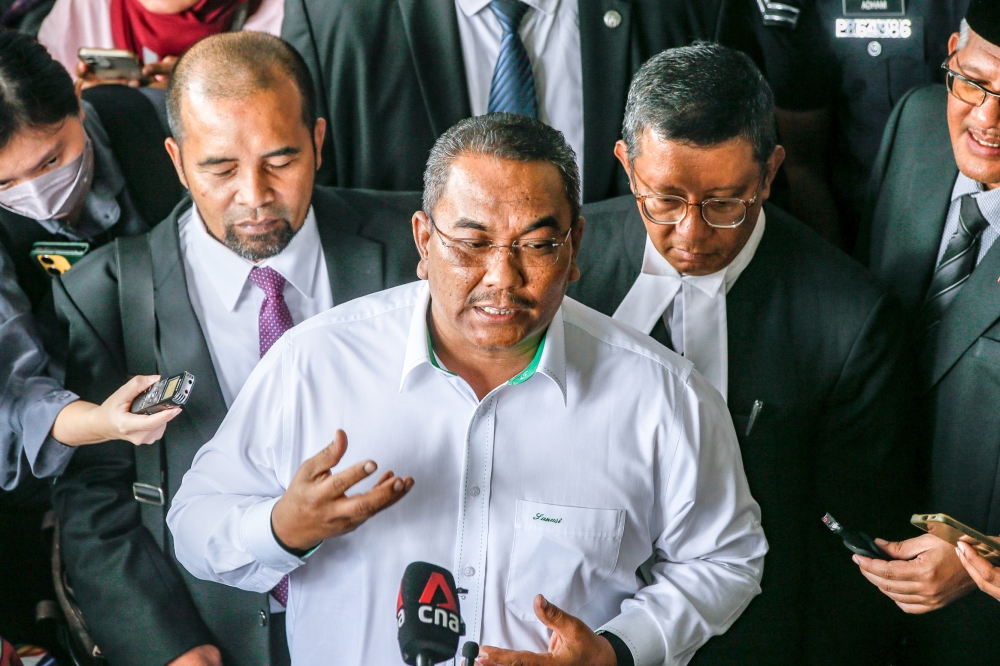
One may recall that the AG made a similar statement in March following allegations the AG's Chambers (AGC) engaged in selective prosecution and persecution, after charges were proferred against Parti Pribumi Bersatu Malaysia (Bersatu) leader Tan Sri Muhyiddin Yassin.
Perhaps we should recall that two years ago on June 1, 2021 a member of Sarawak PKR Iswardy Morni was charged under Section 4(1)(a) of the Sedition Act 1948 for allegedly issuing a statement on his Facebook page which was deemed seditious and allegedly insulting the Yang di-Pertuan Agong.
Iswardy was earlier arrested and remanded for two days to assist in the investigations into the statements he made.
He was arrested at his house in Kajang at 11pm.
In a statement following reports of the arrest, then home minister Datuk Seri Hamzah Zainudin said that the act of insulting the King “is unpatriotic and irresponsible and a crime that can lead to public unrest.”
“The Home Ministry has asked the police to monitor the situation and to take stern and swift action against any individual who commits such offences so as to protect the Royal Institution, the rule of law and to maintain public order,” Hamzah said.
So why now selective prosecution?
Successive governments, including the current one, have vowed to abolish or repeal the Act. However, it is also the avowed main principles and policies of every government, past and present, to uphold the sovereignty and nobility of the Malay rulers as constitutional monarchs.
Until the Act is repealed and a new law is passed, it is understandable that the Public Prosecutor has fallen back on the Act to address issues that could possibly lead to disharmony and disunity.
If stern and swift action against any individual who committed such offences were necessary so as to protect the Royal Institution, the rule of law and to maintain public order, why not now?
*This is the personal opinion of the writer or publication and does not necessarily represent the views of Malay Mail.


