


NOVEMBER 16 ― According to the Department of Statistics Malaysia (DoSM), the labour force in the first quarter of 2022 has reached 16.32 million people, an increase from 16.14 million during the final quarter last year.
The number of people who were employed in the first quarter of 2022 rose by 0.9 per cent, or 15.57 million from 15.44 million in the fourth quarter of 2021.
This is good news as Human Resource Minister M. Saravanan stated that almost 156,000 people have lost their jobs since the beginning of the Covid-19 pandemic. Even though we are still recovering from the pandemic and the employment rate has only returned to its pre-pandemic level, the health crisis has brought about significant changes, particularly in the way things are done at work.
Work flexibility was introduced during the lockdown period, a necessity at the time to ensure Covid-19 virus did not spread. Despite the absence in offices, life continues to move on with productivity levels remaining more or less the same during the pandemic.
According to the Gartner 2021 Digital Worker Experience Survey, 43 per cent of respondents globally said that having flexible working hours helped them be more productive, and 30 per cent said that spending less or no time commuting allowed them to be more productive.
To narrow the scope, a global Cisco study discovered that hybrid work has resulted in 60 per cent of Malaysian employees believing that the quality of their work has improved and 55 per cent trusting that their productivity has increased.
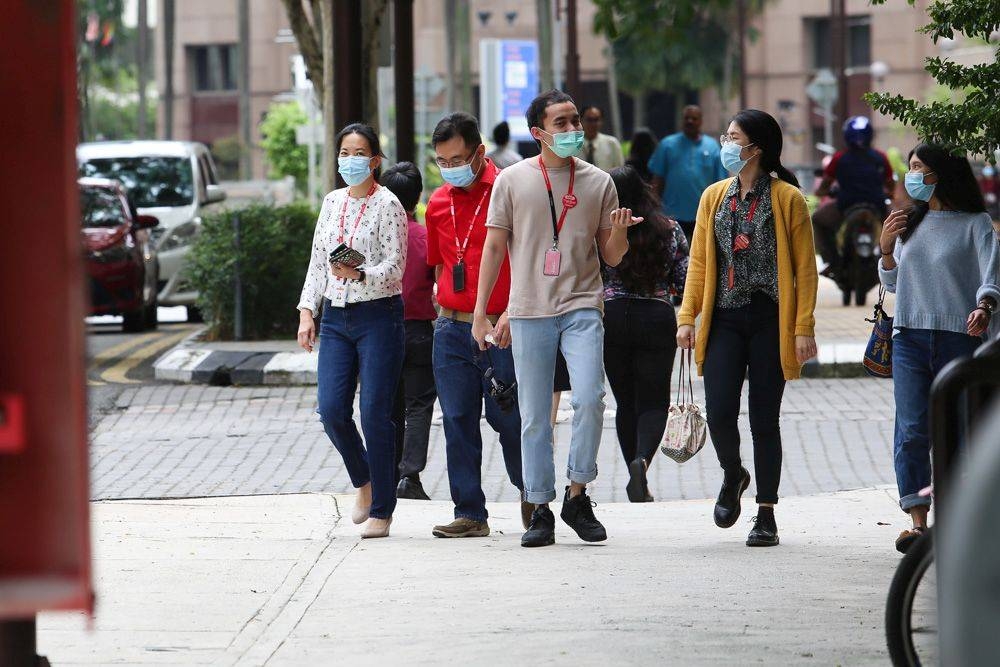
It demonstrates that such a system works, as workers do not need to be in the office to complete their daily tasks. This was an unexpected boon for families because the flexibility of working from home not only allows for more time spent with family but also reduces time spent commuting to offices.
Parents with children are eased of the burden of childcare as they have the option to come in after dropping off their children at school. The same is true for young people, who typically spend close to two hours stuck in traffic and on public transportation.
However, with the economy reopening and industries attempting to return to the norm of working in offices, most are opposed because the benefits of flexibility outweigh the cons. Employees now place a high value on flexibility in their jobs with most job seekers looking for work flexibility as a condition in their new workplace.
According to a recent change to the Employment Act on Flexibility Working Arrangements (FWA), employees who want to work on a flexible basis can seek the arrangement with their present employer.
This amendment was originally set to take effect on September 1, 2022, but after further consultations with industry participants and other stakeholders, the implementation date has been deferred to January 1, 2023.
Only one political party ― that is Perikatan Nasional ― that supports the working flexibility policies as mentioned in its manifesto.
It encourages companies to adopt it in accordance with suitable time and location to meet the definition of a full 45-hour work week in an effort to increase the participation of women and youth in the workforce.
This put PN as a responsible coalition that has taken steps in putting obligatory in the flexibility of working arrangements in a win-win situation for both workers and their bosses. This is in support to ease the employee’s burden returning to and back from work and other personal commitments.
Indeed, in today’s world of post Covid-19, flexibility and remote working in the workplace should be the new norm. Applying this in the Malaysian context, the government to be formed after polling day on November 19 must be willing to improve workplace conditions rather than remaining committed to the status quo.
More importantly, PN even supports seven of the United Nations’ Sustainable Development Goals such as ensuring healthy lives; achieving gender equality and empowering all women and girls, promoting elements of sustainability and inclusivity in economic growth, cities, consumption and production patterns as well as working towards mitigating climate change.
If the Covid-19 pandemic has taught us anything, it is that the future is unpredictable and rife with uncertainties. Hence, flexibility is key in adapting towards the future of Malaysia.
* This is the personal opinion of the writer and does not necessarily represent the views of Malay Mail.


