


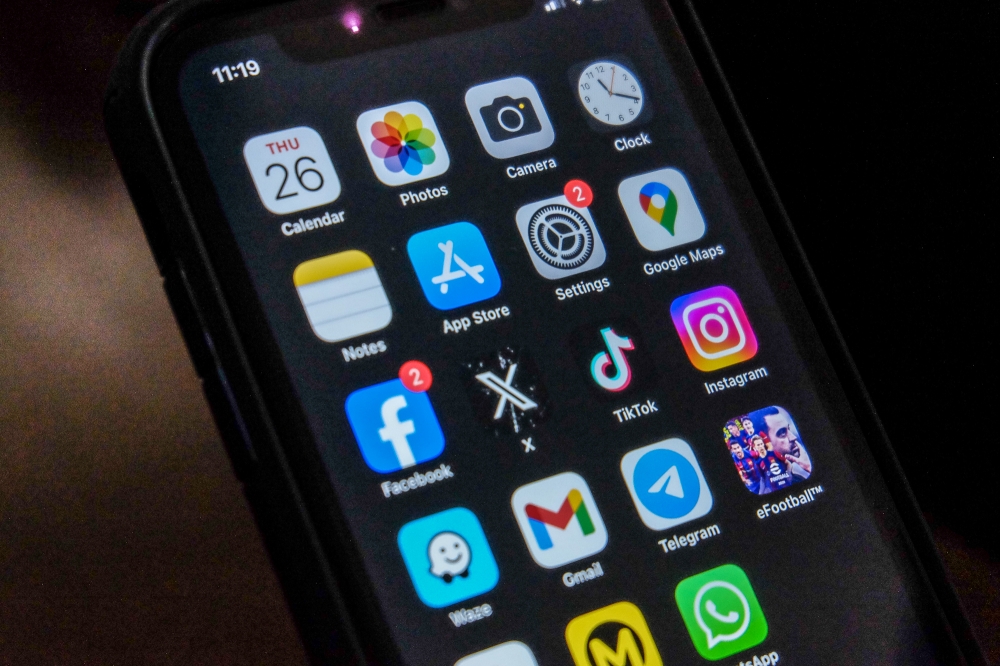
KUALA LUMPUR, Jan 2 — Did you know that the major companies providing all the social media and instant messaging services you love to use — such as WhatsApp, Telegram, Instagram, Facebook, TikTok and YouTube — are all automatically registered as licensees in Malaysia and have to follow Malaysian laws, from January 1, 2026?
The Malaysian Communications and Multimedia Commission (MCMC), which regulates and makes sure that these companies follow local online safety laws, explains that this is all aimed at making it safer for Malaysians online.
The two biggest online harms that MCMC wants to protect Malaysians from are: scams, and child sexual abuse materials (CSAM, formerly known as child pornography).
MCMC deputy managing director Eneng Faridah Iskandar said these social media platforms are the “last line of defence” that stand between Malaysians and the “common enemy”.
“We have a common enemy, which is the paedophiles and scammers, so we want these platforms to work with us,” she told Malay Mail in a recent interview.
On January 1, Inspector-General of Police Datuk Seri Mohd Khalid Ismail said police records showed that Malaysians suffered losses of RM2.77 billion from online scams from January 2023 to November 2025, while there were 688 cases of online sexual exploitation of children (January 2021 to November 2025) and 351 CSAM-related cases (January 2021 to October 2025).
What are the nine big harms online that social media firms will help fight?
Thanks to the Communications and Multimedia Act’s (CMA) Section 46A, all social media and internet messaging providers with at least eight million users — close to a quarter of Malaysia’s population — are now automatically licensees under the CMA in Malaysia.
This means the companies must now comply with Malaysia’s new law, the Online Safety Act 2025 (ONSA), which also came into force on January 1.
To put it very simply, ONSA tells social media companies what they must do to protect Malaysians from nine big harms online.
Out of the nine types of harmful content, ONSA says two of them — child sexual abuse materials (CSAM) and financial fraud — are “priority harmful content”.
Eneng Faridah said this means social media platforms must immediately take down these two types of content, and proactively filter and find and prevent CSAM and scams from being shared online.
“When you talk about it being ‘priority’, platforms have to take immediate action and proactive action.
“Platforms must look into their systems to see whether there is such content or they have to label it in such a way that if anybody attempts to upload it, it is rejected,” she said.
As for the seven other types of harmful content, she said platforms will be given the opportunity and time to evaluate if something is indeed “harmful content” before taking it down, following a user’s report.
With platforms benefitting financially from users in Malaysia such as advertising revenue, Eneng Faridah said they should make it safe for their users.
“So you have to take steps to ensure that the environment that we are in — not just ourselves, but our children — is safe for us to be in, by proactively dealing with this harmful content,” she said.
What duties social media, internet messaging platforms have now to protect users in Malaysia
ONSA lists eight specific duties for the platforms:
- Implementing measures to reduce risk of exposure to harmful content (without unreasonably or disproportionately limiting a user’s expression);
- Issuing guidelines to users;
- Enabling users to manage their online safety (with tools and settings);
- Enabling users to report harmful content;
- Giving user support (e.g. for users to get information on online safety measures);
- Protect child users’ online safety on their services (including preventing children from accessing suspected harmful content; controlling personalised recommendation systems for children; preventing adult users from viewing a child’s personal information; and limiting an adult user’s ability to communicate with a child user);
- Establishing a mechanism to block all users’ access to “priority harmful content” (CSAM and scams);
- Preparing and publishing an Online Safety Plan that explains safety measures.
After ONSA: More consistent protection for Malaysia’s users
Before the introduction of ONSA, Eneng Faridah said social media and internet messaging companies already had online safety measures for users.
But this was all done on a voluntary basis as the companies had no legal obligation to ensure users’ safety.
She said different platforms may have different levels of implementation of online safety measures or have different emphasis against different harms.
For example, when a user lodges a report of harmful content, a platform would check if the content breaches the platform’s community guidelines before deciding to remove, and different platforms would have different community guidelines.
But now with ONSA, there is a uniform or standard set of online safety measures that all these platforms have to do mandatorily, and they now have legal duties and responsibilities to keep their users safe.
“So this is a mandatory duty, because it’s a law. So it’s no longer a voluntary mechanism. So we hope by actually mandating the duties, they take more responsibility in terms of what needs to be done to protect all Malaysians,” she said.
She said MCMC is “very appreciative” of the “good things” that the platforms have already been doing previously, and that ONSA is intended to formalise and make sure all platforms have the same measures.
“They play a big role, we recognise that and we also recognise that they’ve done a lot of things to ensure safety.
“They are the last line of defence both facing the common enemy and also the users, which is why their role is critical, so we want to bring them into that framework. So then together, we can combat the common enemy in a more effective way,” she said.
Recommended reading:
- Make no mistake, downloading and viewing ‘child porn’ is a crime in Malaysia — here’s what the numbers tell us
- Protecting children in Malaysia: How they might fall prey to sexual crimes online (Part I)
- Parents in Malaysia, do you see these red flags? How to protect your children from online sexual abuse (Part II)


