


AUGUST 5 ― Article 43(2)(a) of the Federal Constitution states that the Yang di-Pertuan Agong shall appoint as prime minister to preside over the Cabinet a member of the House of Representatives who in his judgment is likely to command the confidence of the majority of the members of that House.
Article 43(4) says that if the prime minister ceases to command the confidence of the majority of the members of the House of Representatives, then, unless at his request the Agong dissolves Parliament, the prime minister shall tender the resignation of the Cabinet.
While the appointment of the prime minister lies in the judgment of the Agong, the resignation of the prime minister is dependent on the loss of confidence of the majority of MPs.
But the Constitution does not provide the mechanism to determine the loss of confidence. The mechanism is based on a constitutional convention ― that is, a vote on a motion of confidence in the House of Representatives.
The motion can either be tabled by the government (a vote of confidence) or by the official Opposition (a vote of no confidence). This is not to say that there are no other ways in which confidence can be voted on.
But the point is this: a written Constitution like the Federal Constitution gathers unto itself various sources of law some of which are implicit. These are unwritten sources in the form of conventions, prerogatives, discretionary and residual powers.
One can therefore look beyond the written law to help ensure the continuation of Constitutionalism and the rule of law. (see Zainun Ali JCA in Dato' Dr Zambry bin Abd Kadir v Dato' Seri Ir Hj Mohammad Nizar bin Jamaluddin (Attorney General of Malaysia, intervener) [2009] 5 MLJ 464)
In “The established convention on loss of confidence” I wrote on the established convention on loss of confidence which was acknowledged by Raus Sharif JCA in the above case ― the MB of Perak case.
The Court, though, may not have decided on the convention. As such, the statement on the convention is ― what lawyers call ― obiter dictum. The term is Latin for “something that is said in passing” or simply “other things said.”
Under the doctrine of stare decisis or binding legal precedent, obiter dictum (plural dicta) is not binding. It is the ratio decidendi (plural rationes decidendi) of a judgment that is binding.
The term means “the ground or reason of decision” or simply “the rule in a decision." It is the legal principle upon which the decision in a specific case is founded.
The rule in the MB of Perak case in the higher Federal Court when Nizar appealed against the decision of the Court of Appeal is this:
There is nothing in the Perak State Constitution stipulating that the loss of confidence in the menteri besar (MB) may only be established through a vote in the Legislative Assembly (LA).
Evidence of loss of confidence in the MB may be gathered from other extraneous sources provided, they are properly established. Such sources should include the admission by the MB himself and/or representations made by members of the LA that the MB no longer enjoys the support of the majority of the members of the LA. (Emphasis added)
On the facts of the case, there was evidence of such admission by Nizar himself and the loss of confidence of the majority of the members of the LA in the leadership of Nizar as expressed by 31 members of the LA.
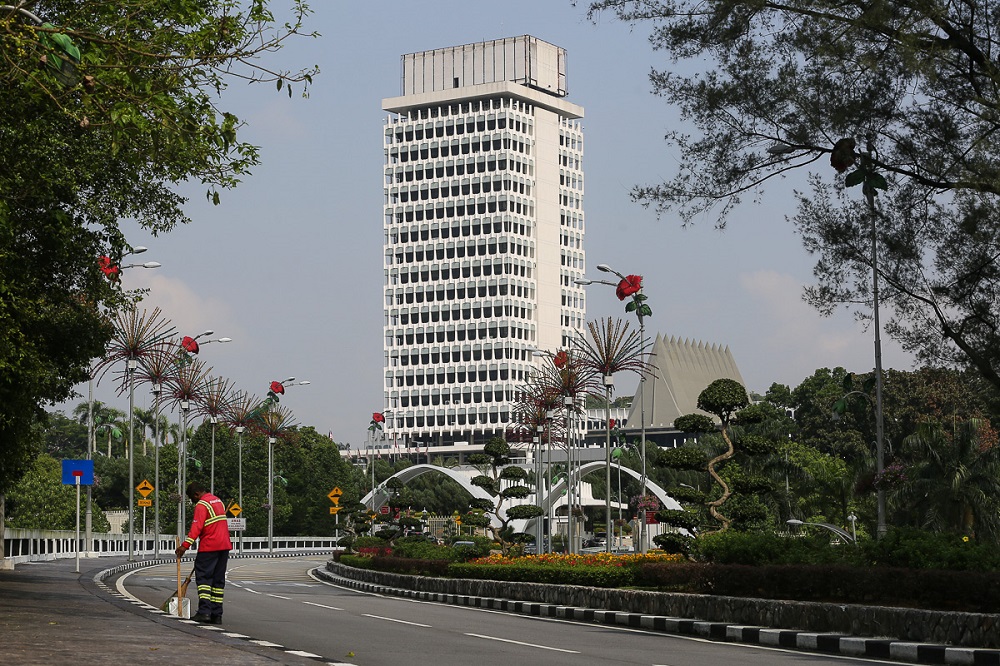
As there is similarly nothing in the Federal Constitution stipulating that the loss of confidence in the prime minister may only be established through a vote in the House of Representatives (Dewan Rakyat), the ratio in the MB of Perak case applies to establishing the loss of confidence in the Prime Minister.
So it is curious for views to be expressed that the loss of confidence can only be tested on the Dewan Rakyat floor.
A vote on a motion of confidence in the Dewan Rakyat is not the only mechanism to establish or determine the loss of confidence.
Demonstrations or representations made by MPs ― properly established ― of the loss of confidence in the prime minister out of the Dewan Rakyat is a decided mechanism.
* This is the personal opinion of the writer or organisation and does not necessarily represent the views of Malay Mail.


