




IPOH, April 18 — Tan Sri Darshan Singh Gill is a living of example of how passion can take one to great heights.
As a young man, it was by chance Darshan got involved in cycling.
“Close to my home in Silibin Road (Ipoh), races were held and I used to go and watch. I got interested and volunteered to help in organising the races. This was in the early 1970s before I left for London to read law,” recalled the 67-year-old Darshan.
“At school (Anglo Chinese School), I was active in sports but only represented my class and sports house.
“It was cycling that fascinated me and soon I became a member of the Perak Cycling Association (PCA).
“I was in London from 1971 to 1975 and graduated from the University of London, King’s College with a law degree and was admitted to bar at Lincoln’s Inn at the age of 28.
“I have to thank my elder brother Gurbax for paving the way for me to read law. My father, a temple priest, could only afford to send one of us to further our studies and my brother decided I should go.
“When I returned in 1976, I was asked to become PCA president,” said Darshan who is also a member of the Chartered Institute of Arbitrators (UK).
Upon assuming the president’s post, Darshan started revamping PCA to put the association on the right path.
He organised numerous events and championships and the quality of Perak cyclists improved.
But his most significant contribution was the building of the Rakyat Velodrome in 1989.
“I went begging door-to-door for funds to build the velodrome. The late Perak Sultan, Raja Azlan Shah, played a key role and was instrumental in realising the project.
“It seemed a tall order to see the project through when it was mooted in the 1980s but the foundation was finally laid in December 1986. We organised numerous fundraising events and the support from the rakyat was tremendous. That is why we decided to call it the Rakyat Velodrome,” remembered Darshan, who brought in German architect Ralph Schumann to assist in the drawing of the plan.
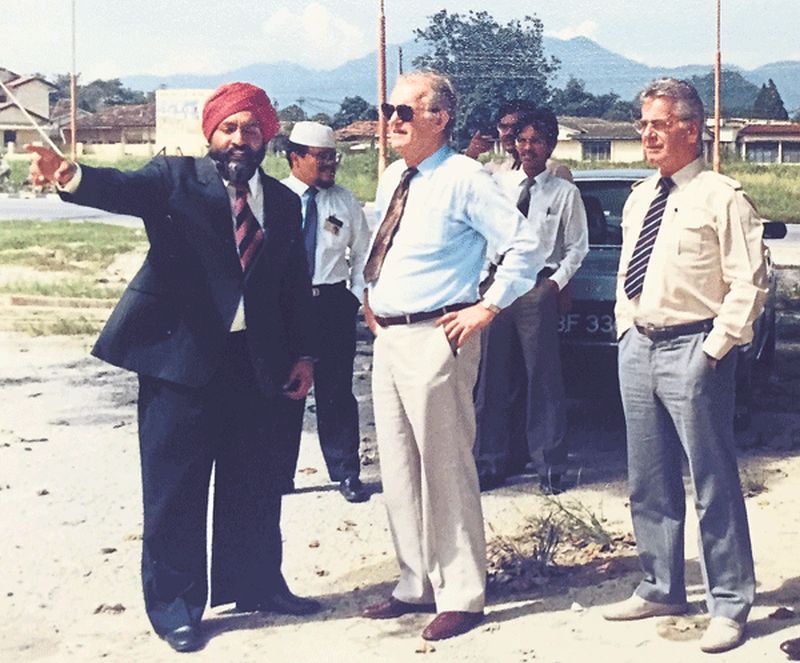
The timber 250m track venue was built at a cost of RM3.25 million and was officially opened by Raja Azlan, the Agong at that time.
Malaysia hosted the 1989 SEA Games and track events were held in Ipoh, where national cyclists won four gold medals.
Sadly the velodrome — the second best in Asia then — has deteriorated and needs to be repaired.
Darshan, a Malaysian National Cycling Federation (MNCF) council member since 1978, became president in 1989 when he surprisingly defeated incumbent Tan Sri Elyas Omar.
He served for a year before being named MNCF “life president”.
Darshan was also on Asian Cycling Confederation’s executive board (1990) and in 1993 was elected as the secretary-general. In 2001, he was made its president and held the post for nine years.
He was also the first Malaysian on the International Cycling Union board.
He was instrumental in bringing numerous top level cycling events to Malaysia, which included World Cycling Championship B (1997), Asian Cycling Championship (1993), Track World Cup (2000 and 2001) and the Sultan Azlan Shah Track Asia Cup (2006, 2007 and 2009).
The inaugural Tour de Langkawi was held in 1996 and Darshan played a key role.
Apart from cycling, Darshan was involved in athletics and was the vice-president of the then Malaysian Amateur Athletics Union for a term in the 1980s.
In 2010, Darshan was inducted into the Olympic Council of Malaysia’s Hall of Fame.
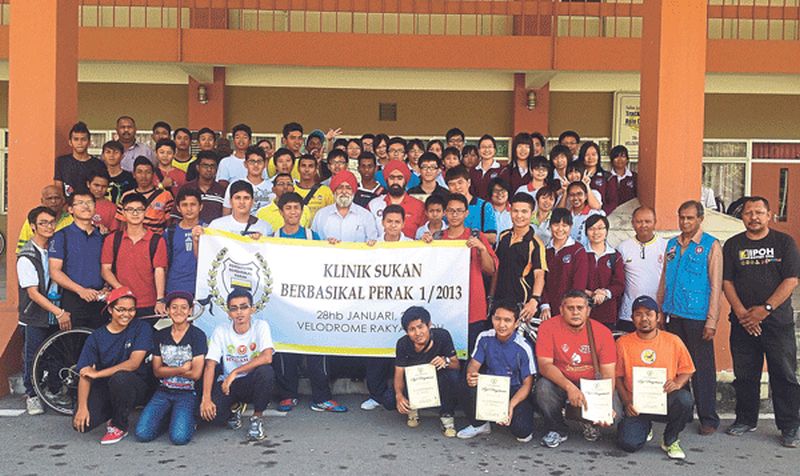
Darshan’s last involvement in cycling was when he relinquished the Perak Cycling Federation president’s post after 38 years in 2013 but his son Datuk Amarjit Singh took over.
Amarjit is also the vice president of MNCF.
Including Amarjit, all of Darshan’s children—sons Sukhjit Singh Gill and Manjit Singh Gill and only daughter Ranjit Kaur Gill— are lawyers.
Sukhjit, also known as Malaysia’s Bhangra ambassador, and Manjit are part of Goldkartz—a band that makes Punjabi-inspired dance music.
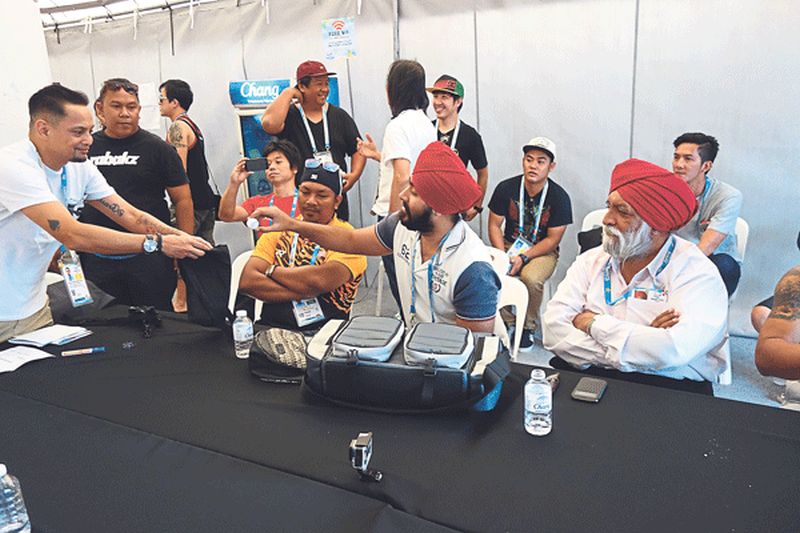
Darshan is now involved in extreme sports and is the vice-president of Asian Extreme Sports Federation, the governing body in Asia and also the vice-president of International Skateboarding Federation.
“I wanted to take a rest, but sports is in my blood and when the extreme sports enthusiasts who were cycling officials approached me, I decided to assist,” said Darshan, who was roped into the Malaysian Extreme Sports Association 10 years ago.
Darshan also holds numerous positions outside of sports one of which is as president of the Malaysia National Sikhs Movement, which organises various public service activities.
Asked if he had any disappointments in all his years in sports, he simply said: “Each came with its challenges, but I managed to overcome them to make pleasant memories.
“The toughest challenge was building the velodrome. Seeing it become a reality was the biggest satisfaction, especially with the rakyat’s involvement.
“The journey of having come this far from just being a volunteer at races is something I will always cherish.
“And I will continue to contribute to sports as long as my services are required and am physically able to do so.”


