


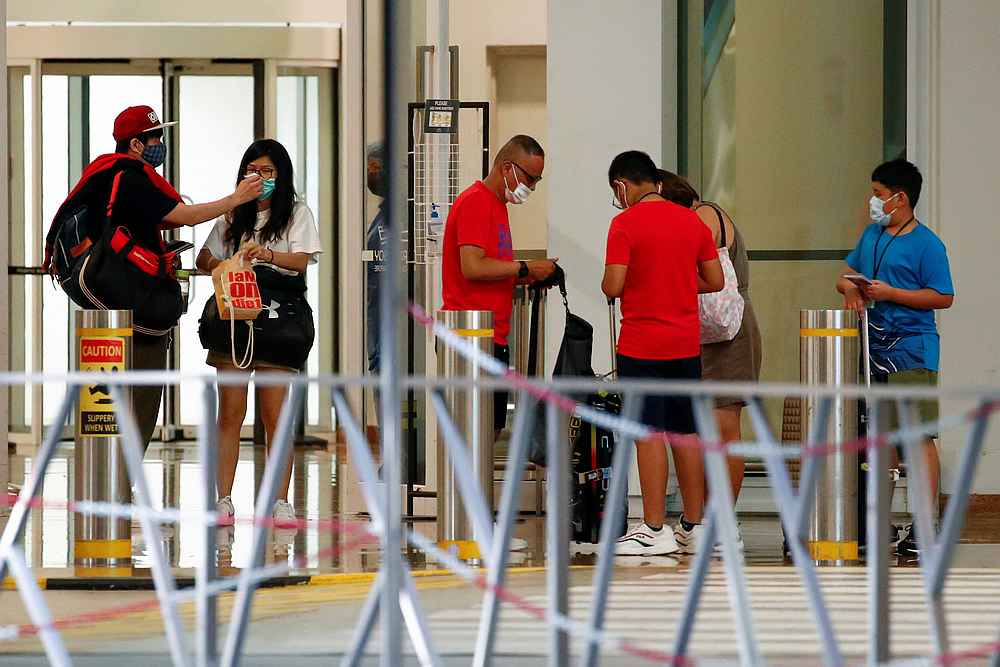


SINGAPORE, Dec 26 — A new year is in sight but old practices must hold firm as far as Covid-19 is concerned. So the days of safe distancing and wearing of masks when leaving home are going to be around for a long while yet, and such basic protective measures against the tricky coronavirus should be upheld as far as possible.
Responding to TODAY’s queries on how the pandemic might play out next year, Professor Leo Yee Sin, executive director of the National Centre for Infectious Diseases (NCID), said she foresees that “life will not return to the pre-Covid era” and that the availability of a vaccine in 2021 is “not likely to be the end game”.
It is not known yet how the Sars-Cov-2 coronavirus that causes Covid-19 may evolve — but it is likely to remain in the living environment, judging from its characteristics.
Prof Leo, who was instrumental in Singapore’s response to the 2003 outbreak of the severe acute respiratory syndrome (Sars), said: “In other words, we are probably not able to eradicate the Sars-Cov-2 like we did for Sars in 2003.”
As it stands, the global spread of Covid-19 shows no sign of slowing down.
While Singapore has in recent months maintained a low level of community transmission and Covid-19-related death rate, World Health Organization figures show that the virus has infected more than 75 million people and killed more than 1.6 million globally since the start of the pandemic almost a year ago.
What will happen in the short term
Prof Leo warned that the risk of Covid-19 cases going up in Singapore remains as long as the virus continues to spread in other parts of the world.
Looking into the near term, most temperate countries are now into winter and are reporting surges of Covid-19 cases. Although Singapore has maintained a low level of community transmission, we are not an isolated island cut off from the world,” she said, stressing that Singaporeans must not let their guard down.
Taking reference from the experience in other countries such as Australia and South Korea, Singapore may still have to adopt a risk- or situation-based approach to relaxing and tightening restrictions, Prof Leo said.
Although social restrictions may be progressively relaxed over time when the situation allows, fundamental safe management measures should not be dismantled, she cautioned. This includes physical distancing and the wearing of masks.
Dr Shawn Vasoo, clinical director of NCID, said that these safety regulations are likely to be required even after vaccination begins and likely to continue even after a significant proportion of the population is vaccinated.
Prof Leo said that it will take time to progressively vaccinate the population as well as for immunity to develop after completion of the dosing regimen.
Singapore received its first shipment of Covid-19 vaccine from Pfizer-BioNTech earlier this week.
Healthcare workers, seniors and the vulnerable are the first groups to get priority to the vaccines. The rest of the population will be able to be vaccinated by the end of 2021.
Vaccination is voluntary, the Government had said.
Vaccine hesitancy and virus mutation
Earlier this month at the 13th edition of Medical Fair Asia hosted by Singapore and held on a digital platform, those working in the region’s hospital, diagnostic, pharmaceutical, medical and rehabilitation sectors gathered to discuss the latest industry innovations and to network.
Among them was virologist Peter Piot, director of the London School of Hygiene and Tropical Medicine.
He was one of the scientists who discovered the Ebola virus and who himself contracted Covid-19 early this year. He said it is estimated that around 70 per cent of the population will need to be vaccinated to protect everyone — in other words, achieve herd immunity against Covid-19.
However, vaccine hesitancy could affect outcomes.
During his talk titled The Age of Pandemics, Prof Piot explained that the percentage of people who need to have antibodies in order to achieve herd immunity against a disease varies from infection to infection.”
For example, measles requires a minimum of 93 per cent (of the population to be vaccinated) and if you go below that, you get epidemics.
For pneumococcal disease, it can be around 50 per cent.”
Prof Piot, who is also the special adviser on Covid-19 research and innovation to the president of the European Commission, added: “It’d be very important that we vaccinate the percentage of the population (around 70 per cent in the case of Covid-19) that is needed to protect everybody for things to go back to normal.
“That’s why dealing with vaccine hesitancy is so important.
If, because of that, we drop from a coverage of 70 to 60 per cent, then we’re all in trouble. It is not just for the individual but for society as a whole.”
Giving his view on the vaccines, Dr Vasoo of NCID said it is anticipated that the number of infectious people and deaths from Covid-19 will fall once there is an efficacious vaccine that can generate immunity and prevent disease.
Prof Leo also said that vaccines could alter the course in reducing disease severity and demands on the healthcare system.
However, it requires longer term monitoring to see how the virus will evolve or develop mechanisms to evade the immunity build-up after natural infection or vaccination.”
Typically, there will be a period that could be several months to years when post-vaccination needs to be closely monitored,” she said.”
The respiratory surveillance system would have to incorporate Sars-Cov-2 together with the rest of the respiratory viruses that include the influenza virus.
“Whether the Sars-Cov-2 will attenuate (get weaker) over time and whether it will become the fifth human coronavirus that persists in circulation is yet to be seen,” Prof Leo added.
The United States’ Centers for Disease Control and Prevention (CDC) said that there are now four common human coronaviruses in circulation that usually cause mild to moderate upper respiratory tract illnesses such as the common cold.
Most people get infected with one or more of these viruses at some point in their lives.
Why covid-19 could be here for years
During his talk, Prof Piot said that whether the Sars-Cov-2 coronavirus becomes endemic (persisting in a population) just like the human immunodeficiency virus (HIV) depends on several factors.
For example, if people develop just short-term immunity to the virus after they are infected or vaccinated, they can become susceptible to it again — in contrast to lasting immunity.
Another factor is whether seasonality affects the spread, he added.
It has been predicted that winter in temperate regions can worsen the spread of the Sars-Cov-2 coronavirus.
Infections caused by other respiratory viruses such as influenza and some human coronaviruses are known to increase in winter.
Colder weather also drives people indoors, which may increase the risk of airborne transmission and through close contact with infected people and contaminated surfaces.
Prof Leo of NCID is of the view that all odds are stacked against eradicating the coronavirus.
She said that although both Sars and Sars-Cov-2 are zoonotic coronaviruses — meaning they are transmitted between animals and people — several major differences between the two make eradication of this latest coronavirus “highly unlikely”.
Prof Leo pointed out that in 2003, Sars rarely showed up without symptoms in an infected person and the virus replicated in the lower respiratory tract such as the lungs with increased infectivity during the second week of illness or pneumonia phase.
Additionally, fever — an easily recognisable symptom at the onset of illness — made it easy for close contacts to be identified for quick isolation.”
In 2020, this novel Sars-Cov-2 behaves very differently.
“Viral transmission occurs early during the pre-symptomatic phase and asymptomatic cases have been reported to be about 20 to 40 per cent or higher. Often, these transmissions occur in the community, particularly among households where safe distancing and universal masking are difficult to adhere,” she said.
What are the lessons to remember
At this stage, Prof Leo said that no one can be absolutely sure how the pandemic will end and when the next new pathogen will cause another epidemic or pandemic.
Dr Vasoo of NCID added: “What Covid-19 has shown is that coronaviruses have the potential to not only cause epidemics but a pandemic.
“Certainly other respiratory viruses such as influenza remain high on the list of potential pathogens which might cause another pandemic.”
One thing is certain, though. Being ready and flexible are crucial as everyone moves on to 2021.
Prof Leo said: “Covid-19 has taught us many lessons, yet it may not be the most lethal pathogen to mankind.
“No matter what system we have put in place, the more important thing is that the entire system must be flexible and be ready to take on whatever challenge, in whatever form and whatever shape.
“A vaccine is not the only answer to public health intervention.”
She emphasised that social responsibility and good hygiene practices must remain while moving forward.
Reminding people that the risk increases with increasing human interaction particularly in crowded areas and when safety guidelines are not practised by everyone, NCID urges everyone to apply this knowledge of the disease in their daily routines and examine the risk when engaging in activities or when coming into contact with people. This also applies when one is at home.
Prof Leo said: “We tend to let our guard down (at home) because home is a place to relax and interact with close family members.”
If you are unwell, stay away from family members, particularly senior members or those who are weak in immunity.” — TODAY


