


SEPTEMBER 4 — The fortnight quandary the West, that dominant third of the federation, experiences every year.
Merdeka on August 31, and 15 days lapse for Malaysia Day on September 16.
It’s a do over, a déjà vu, Groundhog Day, or better 50 First Dates — not sure if Malaya is Drew Barrymore or Adam Sandler in this romcom.
For folks to be all excited about Merdeka mid-August, go home after the parade, let the glitter fade and face paint wash off, and then get the email reminder seven days later asking Malayans to reignite the party feels for Malaysia Day in a week’s time, always spells dysfunction.
Our freedom anniversary ends August, and our nationhood anniversary kicks off in mid-September to remember 1963, except that we were already a nation in 1957. Well, WE does not mean all of US. Some of US are in the WE, and others are not.
In the peninsula, there’s neither an emotional nor even the functional appreciation about the mid-September mark. In Borneo they remain steadfastly unresponsive till September.
The West ignores Malaysia Day, and the East gladly frames Merdeka as premature.
Confused much?
Moved the safe deposit to the underground vault
Ever since 2010, when the country turned September 16 from a regional holiday into a national holiday, a debate commenced. Malaysia Day landed on an unexpected Semenanjung.
It never settled, because no visible effort was ever taken to reconcile it in the hearts and minds of all Malaysia about why there are two days to mark nationhood.
The rakyat will take a holiday when they get one, there is no doubt about it. However, Malaysia Day inevitably shapes public affectation of how the East and West measure 1957 against 1963, and how they evaluate their other partner’s measure of what is dear to them.
The celebrations force brothers on either side of the sea to ask whether the other side is filled with siblings or just convenient cousins. There are days, one looks to the other as third cousins twice removed through marriage.
The events since 2018 tell us, a failure to react to prevailing sentiments about nationhood, parity and symbols may have profound consequences for the federation in the medium term even if not adequately visceral in the short term.
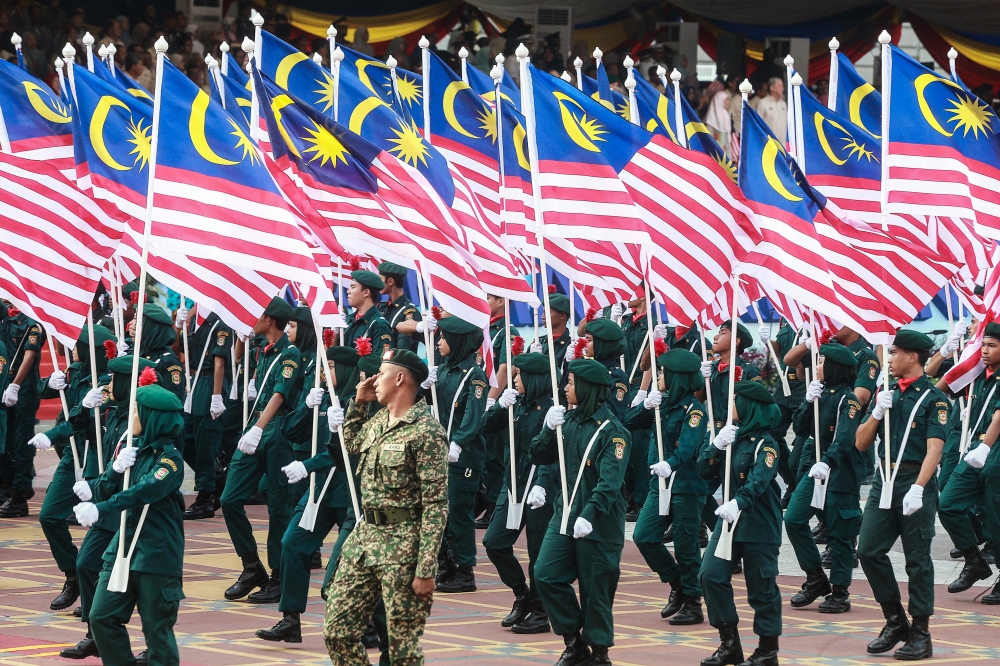
Double holiday quadruples the headaches
This year, the government nudges Semenanjung folks further by granting an additional holiday on September 15, converting it as a four-day weekend, Saturday to Tuesday.
It’s not polite to get two days of leave and not know why, more so, when visitors from lands far away ask them.
Most Malaysians awkwardly own up; they have no clue about the Merdeka-Malaysia Day kerfuffle.
They can distract themselves throughout the holiday by setting new video game records or movie marathons or driving around KL looking for yet another mall.
But a too long holiday naturally brings reflections on why did Malaysia Day emerge to begin with.
Why did reformatting Malaya into Malaysia generate a new holiday exclusively for the three new territories — it rankles certain readers when the entities are referred to as states — Sabah, Sarawak and Singapore? Why in 2010, after 45 years of this holiday existing only in Sabah and Sarawak did wiser heads extend it to the 11 states — not territories?
How would the people in charge want the rakyat to celebrate both days, ideally speaking?
Are we just patriots to walk around the neighbourhood with the national flags in our hands in late August, and repeat the exercise in mid-September?
Can that feel redundant?
In 1963, Malaysia, the unification of Malaya with other newly-free British colonies had a ceremony slated for August 31. Regrettably, Konfrontasi, delayed the initial ceremony to the middle of September.
Since unintentionally it was 17 days late, that commemoration bears more meaning to East Malaysians. Being a technical delay, Semenanjung never felt it necessary to observe Malaysia Day since it is only to signify more joining the renamed Malaysian Federation.
This is why the date was a celebration staple in the East and not the West.
Until Pak Lah lost badly in GE2008.
A whole different set of predicaments set off by Barisan Nasional’s loss of its two-thirds majority. East Malaysia used to augment BN, but now it propped up the government. BN needed Borneo to remain in power.
Malaysian governments are masters of placations and revisionisms.
Malaysia Day as a holiday for all of Malaysia was one of the appeasement strategies.
Which explains how historically and politically this turned out how it turned out.
It does not however, address the absence of a compelling narrative. To own both holidays equally across both sides of the federation.
Complexities and complicities rarely prohibit governments from holding contentious and certainly holidays with contradiction. Whether Thanksgiving, Columbus Day or Australia Day, keeping the holidays are as important as holding dialogue about their relevance.
This is what Malaysia needs, its people talking about the two holidays and not just observing them, since celebrating one and begrudgingly or indifferently taking the other holiday is the norm.
The umbilical cord
The two holidays are opportunities for national leaders to lead on discussing the federation. Unfortunately, national leaders are only apt to argue why their states do not get enough from the federation rather than speak — not lecture — about the value and commitment to the federation.
Difficult questions, not the easy ones.
Sarawak’s overrepresentation in Dewan Rakyat is wrong, how to fix it?
Borneo’s underrepresentation in the federal government’s senior management cannot be ignored, but corrections may undermine the Malay-first agenda.
Debates about Borneo rights in universities and campuses without censorship.
Should Malaysia Day, while an origin glitch, be held as superior to Merdeka Day?
They are discussed already by the rakyat, the problem is that leaders loathe public discourse and townhalls about Merdeka Day.
The list is long. There are soft and hard questions, but more importantly there are symbolic questions.
Just like two holidays are symbols, the whole notion of tracts of geography coming together as a nation is symbolic more than ever logical. This is why the dialogue is necessary, and the dialogue is led by leaders, and not left to civil society to figure it out.
Otherwise, those who lead are not brave to take steps into the unknown for their countrymen who look to them for leadership. They look to them for courage. So far, they fall short.
* This is the personal opinion of the columnist.


