













AUGUST 27 — Lying on a metal platform, arms over my head, topless while a strange machine rotates two discs overhead and around my body — this is not the sci-fi future I'd imagined.
It would have been nice to have a pamphlet even but this is KL General Hospital (HKL) where funding is so dire my hospital records are all in a single physical file, that travels to whichever department I'm currently getting treatment.
Digitalisation? Centralised record keeping? Apparently this is too much trouble and money to spend so I had better hope my file never gets caught up in something as sadly probable as an electrical fire.
What no one tells you (because the hospital staff are overworked and too busy keeping people alive) is that radiotherapy is a long, involved process.
1. There is a planning period
Your oncologist and the radiology department will discuss the pertinent details of your treatment such as how many days and the dosage of radiation needed to keep those pesky cancer cells at bay.
2. You will get tattoos
The first appointment you will have with radiology is what is called a simulation.
At HKL you're told to go directly to "Bilik 1" where some nice people at the computer take down your details and then usher you to where you need to go.
Unfortunately for women it often involves a pregnancy test and boy, do I hate peeing into a vial.
You will find out where you will get treatment and be put onto the treatment bed, a raised, adjustable metal platform and if you're a breast cancer patient you will feel rather exposed, lying there with your top off as multiple radiology staffers stare at your chest.
Mentally you have to let go and just imagine you're a marionette — not moving at all, and letting them position your body as they see fit.
The indignity of being scribbled on with markers and then tattooed (small, pinpoint tattoos you can hardly see and could mistake for moles) is something you just need to bear.
I just chose to disassociate through it all and mentally hum whichever song is my current hyperfixation.
3. You will have to wait a while to actually start
I called about a month after the simulation and was told to call back in another fortnight, and oh, by the way, the machine's out of order.
This, according to my research, is a common thing with those machines, even in more developed countries but won't likely affect your prognosis, probably.
It was a relief when I got a callback the week before I was supposed to check and I'm crossing my fingers the machine doesn't have any added downtime.
4. The first day of treatment takes longer
On the first day of radiology at HKL they tell you it will take longer "than usual".
It's another visit to Bilik 1, another pregnancy test and then you get told to wait for your name to be called.
Then you're ushered to the radiotherapy room.
You get a blue hospital gown, with ties at the back, which you get to put on a hanger with your name on it once you're done.
What's next: you lie on your back and get drawn on with markers again.
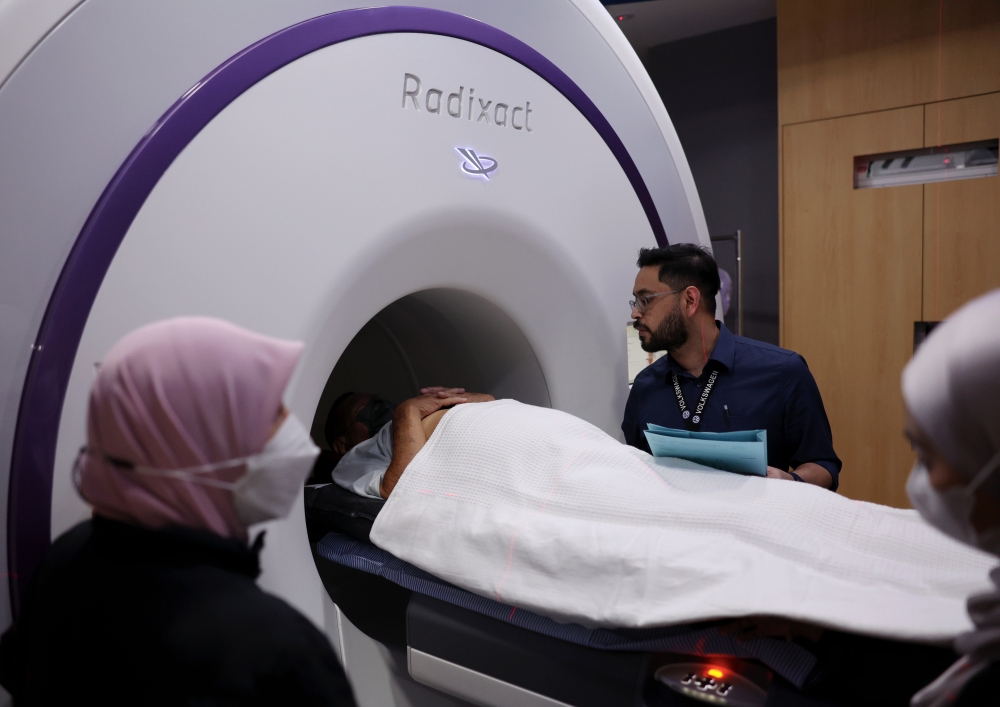
Your top is off but they put a blanket on you once they're done making sure your body is positioned precisely, torso and all.
With the lights off you lie there while the radiotherapy machine, HKL's old and not very fancy one, does its work.
There is a disc that shoots beams of radiation (that you can't actually see) and it orbits around you like the Earth does the sun and the whole process, markers and spinning discs included, takes maybe an hour or so.
Then it's over, you put the top back on on while the staff make sure you don't fall off and land on your head or something
It's then you get to dressing in your actual clothes and hang up your designated hospital shirt.
5. You learn waiting takes longer than the treatment
Radiotherapy means coming in every week day but you get a break on weekends or public holidays.
But it's a short period, the treatment, this time — you only need to lie on the metal bed for around 10 minutes and you can go home.
Every day instead of Bilik 1 you head straight to the counter, drop off your appointment book and wait to be called.
I get told while officially my appointment time is 9.30am I can come in at 2pm or so even because there will be fewer people around then.
On Mondays I'm supposed to see the dedicated doctor in radiology but this week my file is with Oncology due to my Wednesday immunotherapy, so the radiology staffers cheerfully told me I'll just have to report to a doctor then.
I also have an echocardiogram this Friday so I'm very glad for the invention of digital calendars; keeping track of all my medical appointments is tricky.
Am not looking forward to immunotherapy because I'll be stuck at Oncology until past 1pm then will have to take my shaky legs to the radiology building, crossing my fingers I don't fall into a ditch.
Fifteen days of this with weekends in between to recover and yes, it's very taxing.
I have to travel roughly 14 kilometres one-way to and fro from my house to the hospital, wait hours to be seen while also juggling other medical appointments and working full-time.
Honestly it's a lot.
Yet when I think about how each radiotherapy session costs just RM12 I'm glad I have cancer now, when the public healthcare system is still functioning against all odds despite being denied more funding.
Don't tell me there is "no money" for more healthcare when we get told very regularly in Parliament what is getting money (like that new megaproject).
For now I'll just daydream of a future where my doctors can just check their PCs for my records instead of having them fished out of an ageing, rusty filing cabinet.
Perhaps one day even, I will even get mobile reception in the Oncology specialist clinic but for now I'll settle for my radiotherapy machine not breaking down (again).
*This is the personal opinion of the columnist.