


NOVEMBER 26 — For over three years, supporters of Islamist party PAS has used its president Abdul Hadi Awang’s membership in the International Union of Muslims Scholars (IUMS) as a badge of honour.
According to them, Hadi’s appointment as one of the union’s vice-presidents is proof that he is recognised internationally as a respected Muslim scholar, or ulama, and is an equal among the best in the world, including IUMS chairman Yusuf al-Qaradawi.
But this week brings a test of faith. The so-called Anti-Terror Quartet — Saudi Arabia and its three allies Egypt, Bahrain and the United Arab Emirates — has added IUMS to its list of terrorist organisations.
“The two listed entities are terrorist organisations working to promote terrorism through the exploitation of Islamic discourse and its use as a cover to facilitate various terrorist activities,” said a statement by the Saudi Press Agency.
When Parti Amanah Negara vice-president and former PAS leader Mujahid Yusof Rawa demanded Hadi clear his name from the terror accusation this week, PAS lashed out.
In an anonymous statement, PAS labelled Mujahid “ignorant” and biased towards Saudi Arabia and its allies, and therefore fanning the flames of sectarian and racial divide that is threatening the Muslim community.
There may be truth in both sides. The latest announcement was just an extension of Saudi’s current crusade against its little brother Qatar, accusing the latter of protecting and financing terrorist groups.
IUMS, after all, is based in Qatar. But Yusuf himself has previously sympathised with suicide bombers, in addition to expressing opposition to Jews, Shiites,and Salafists — popular in Saudi.
Just like Qatar, PAS had tried to ingratiate itself with Iran in an attempt to cover both bases, along with Saudi. Now the chicken has come home to roost, and just like Qatar, global minnows like PAS find themselves caught in the middle between the two Muslim world influencers.
It is an awkward situation to be in for Muslims in Malaysia. Saudi Arabia has long been the pinnacle and ultimate authority of Islam for adherents here.
It is the cradle of Islam, Prophet Muhammad was born there and had spread the Muslim empire from there. The House of Saud is revered as the current Custodian of the Two Holy Mosques — protector of Masjid al-Haram in Mecca, and Masjid an-Nabawi in Medina.
In its criticism of Mujahid, PAS had accused Saudi of being among those working to preserve Israel’s influence in West Asia. It illustrates the utter confusion that some Muslims here face in coping with the fact that the Saudi that they admire has now aligned itself with the United States and Israel, both seen as enemies of the faith.
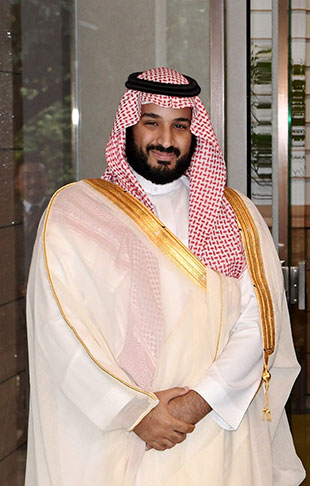
Meanwhile, some of the more liberal in Malaysia have been enthralled by Mohammad bin Salman, referred to by many as MBS, who was only recently elevated to crown prince in June this year.
Last year, he stripped the religious police of its powers to arrest Shariah offenders.
This year, he has been instrumental in allowing women to finally drive, and attend sports events.
Just last month, he vowed to return Saudi to moderate Islam, claiming the ultra-conservative state had been “not normal” for the past 30 years.
“We are simply reverting to what we followed — a moderate Islam open to the world and all religions. Seventy per cent of the Saudis are younger than 30, honestly we won’t waste 30 years of our life combating extremist thoughts, we will destroy them now and immediately,” he said in an interview with The Guardian.
Coupled with praises from the Western media, it is easy to see MBS’ reforms as a glimmer of hope for Muslims in Saudi, and subsequently worldwide as the prince shatters decades of orthodoxy.
But just like his disastrous foreign policy after he was appointed defence minister by his father the king and his recent anti-corruption drive, his so-called reforms are just part of the same plan — a power grab and a battle for the hearts and minds of Saudis especially the youths.
For long, Saudi has been administered through a compromise of power struggles between its senior princes and sons. Each would hold positions as ministers, holding power in different groups such as the National Guard, in order to keep the check-and-balance.
As soon as King Salman ascended the throne, Mohammad worked to dismantle this structure. Prince Muhammad bin Nayef was deposed as crown prince. Billionaire Prince Alwaleed bin Talal and 10 other princes were rounded up in a purge earlier this month. Prince Miteb bin Abdullah was sacked from leading the National Guard.
The end game here is apparent: that power will ultimately concentrate on the heir apparent.
However, MBS’ attempts at reform and rejuvenation may not sit well with everyone, especially with the older generation eg. his plan for a Red Sea beach resort where female visitors can wear bikinis, and even drink alcohol — two things strictly prohibited in the country.
Progressives in Malaysia can take some of the lessons here: that trying to shock the country into change may present a bigger struggle that would threaten to demolish any progress that has been made over the years.
One way to do this is to first introduce structural reforms and educate the public into a mindset change, as the younger generation discards outdated bigotry and prejudice.
So instead of pushing for equality in marriage, we can start by eliminating discrimination against sexual minorities and strengthening the institution of marriage for heterosexuals as well.
Instead of campaigning for unisex bathrooms for transgenders, we can educate parents on how to help their children feel comfortable in their own bodies.
Instead of pushing for the freedom of apostasy, we can first get the public to recognise atheists as just another part of a functioning society. And so on.
Reform is a long road, that much is true. And above all, we need patience and steadfastness.
* This is the personal opinion of the columnist.


