















- US data next week likely to dictate near-term currency movement
- Yen wobbles near 10-month low as intervention risk lurks
- Euro, pound stand tall against dollar
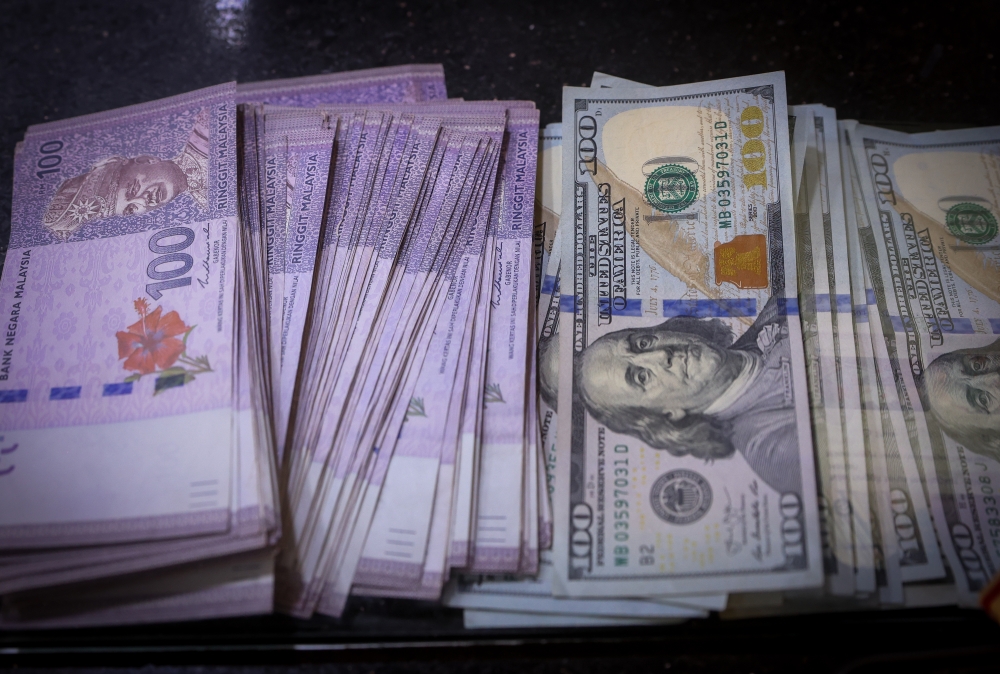
LONDON, Jan 2 — The US dollar made a slightly positive start to 2026 today after struggling against most currencies last year, while the yen inched back towards a 10-month low as traders awaited US economic data to predict interest rate moves this year.
A narrowing interest rate difference between the US and other economies cast a shadow over markets last year, resulting in sharp gains against the dollar for most major currencies, with the exception of the Japanese yen.
Worries about the US fiscal deficit, a global trade war and concern about Federal Reserve independence took a toll on the greenback, and those issues are likely to linger into 2026.
The euro was down 0.2 per cent at US$1.1725 (RM4.76) on the first trading day of the year after surging 13.5 per cent last year, while sterling last bought US$1.3455 following a 7.7 per cent increase in 2025. Both clocked their steepest annual increases since 2017.
Markets in Japan and China were closed on Friday, making for light trading volume and little movement.
“Market liquidity should improve next week alongside a fuller data slate,” said Jens Nærvig Pedersen, FX strategist at Danske Bank.
Next week’s data in focus
The dollar index, which measures the US currency against six other units, was up 0.2 per cent on Friday at 98.39 after registering a 9.4 per cent decline in 2025, its biggest drop in eight years.
Economic data including US payrolls and jobless figures are due next week, providing clues on the health of the labour market and where the Fed’s policy rate may end up this year.
Much of the focus at the start of the year will be on who US President Donald Trump chooses to be the next Fed chair as the term of current head Jerome Powell ends in May.
Trump flagged that he would make his Fed chair pick this month, with White House economic advisor Kevin Hassett the current favourite on betting site Polymarket.
Investors are bracing for Trump’s pick to be more dovish and cut rates, as the president has repeatedly criticised Powell and the Fed for not lowering borrowing costs more swiftly or deeply.
Traders are fully pricing in two cuts this year compared to one projected by a currently divided Fed board.
“We expect that concerns around central bank independence will extend into 2026, and see the upcoming change in Fed leadership as one of several reasons why risks around our Fed funds rate forecast skew dovish,” Goldman strategists said.
Yen remains the exception
The yen was at 156.86 per US dollar after rising less than 1 per cent against the greenback in 2025. It remained close to the 10-month low of 157.90 touched in November that drew policymaker attention and raised the prospect of intervention.
The Bank of Japan hiked interest rates twice last year but that did little to improve yen performance as the cautious pace frustrated investors, with speculators reversing significant long yen positions held in April.
There has also been growing investor unease about fiscal expansion under Prime Minister Sanae Takaichi, though she has sought to ease some of that concern.
Traders are pricing the next BOJ rate hike as being toward the end of 2026. Min Joo Kang, senior economist at ING, expects the most likely timing to be October.
“A further fiscal push could backfire on the economy, but the current government is expected to maintain its expansionary policy stance, posing a significant risk to the economy in 2026,” Kang said in a client note.
The Australian and New Zealand dollars started the new year on the front foot. The Aussie was 0.5 per cent higher at US$0.6706 after a nearly 8 per cent rise in 2025, its strongest yearly performance since 2020.
The kiwi snapped its three-year losing streak with a nearly 3 per cent gain last year. On Friday, it firmed a touch to US$0.5772. — Reuters