


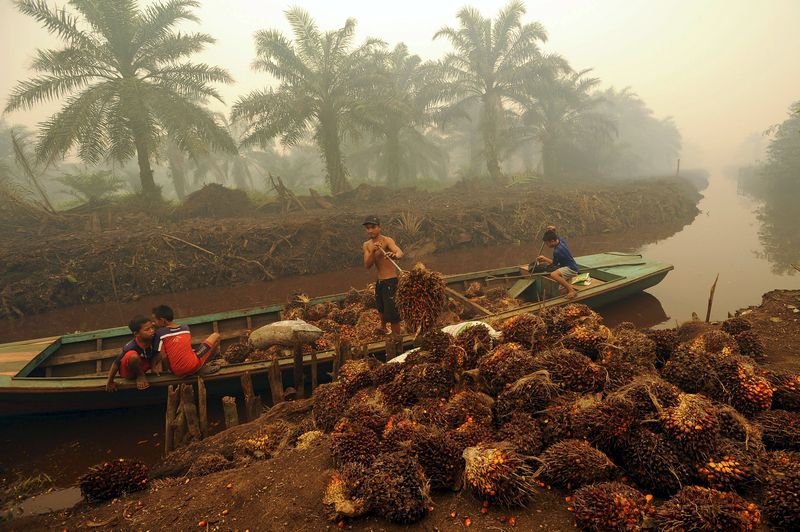
KUALA LUMPUR, March 5 — Palm oil output in top producers Indonesia and Malaysia will likely decline in the first quarter of the year, in line with seasonal trends as rains disrupt harvests, but will rise after mid-year to projected record highs, industry sources said.
Rising output could pressure benchmark prices of the edible oil, which hit a two-month high earlier in the year. Prices rose 2.7 per cent in February on rising demand after three consecutive monthly declines.
The production outlook will be among major themes to be discussed at a key industry conference taking place in Kuala Lumpur this week.
Yields in early 2018 are seen declining as recent rains plague harvests and increase the palm fruit's water content, lowering the oil extraction rate, according to Voon Yee Ping, a plantations analyst at Kenanga Research in Kuala Lumpur.
“I think so far the wet weather seems to have impacted Indonesia's side more than Malaysia,” she told Reuters. “Production-pattern wise, February is likely to show the lowest production for the year. But the higher moisture content does give rise to better production over half a year later.”
An Indonesian planter also told Reuters that while recent rains have impacted areas in South Sumatra and South Kalimantan, it will be supportive to production in the second half of the year.
“The seasonal monsoon period usually lasts until March. As far as production is concerned, this year's low production cycle is estimated to start in February and last through May,” he said. He declined to be identified because he was not authorized to speak to media.
“Production will then consolidate before coming back at full strength during the July to November period.”
Palm oil output this year is largely expected to surpass levels of previous years as it recovers from the 2015 El Nino, a dry weather event which can impact crops for up to two years.
Production will also rise on increasing harvested areas, as more young trees come to maturity in regions such as Malaysia's eastern Sarawak state and across Indonesia, said planters and analysts.
A Reuters poll last month forecast Malaysian palm oil output at 20.5 million tonnes this year, while Indonesia's production is pegged at 37.8 million tonnes.
The overall output rise in both countries is expected to push average prices down to RM2,620 this year, versus RM2,807 last year. — Reuters


