


KUALA LUMPUR, Oct 5 — The World Bank has maintained its forecast of Malaysia’s economic growth at 4.7 per cent for this year, slower than the 6 per cent gross domestic product (GDP) expansion last year.
The 4.7 per cent forecast was also predicted for next year, with the World Bank expecting Malaysia’s economy to grow 5 per cent in 2017.

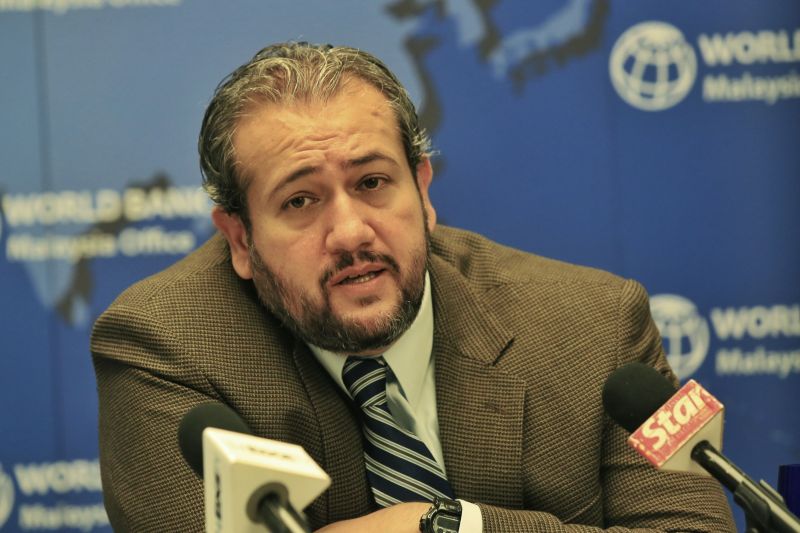
World Bank senior country economist for Malaysia Rafael Munoz Moreno said that at 4.7 per cent, it was still solid growth, which he attributed to strong domestic consumption.
“Growth in the country is probably going to be sustained by domestic demand. It is one of the bases for this very high 4.7 per cent we are forecasting,” he told reporters at the World Bank Malaysian office today.
Bank Negara Malaysia had earlier this year projected a growth rate of between 4.5 per cent and 5.5 per cent for this year.
The release of the East Asia Pacific Economic Update this morning attributed the projection of the slowdown to the weakening of global commodity prices, which has affected Malaysia as an oil exporter.
According to the report, Malaysia is expected to maintain the 4.7 per cent growth rate in 2016.
It also indicated that in light of the two possible headwinds of the gradual increase in US interest rates in the coming months and a slowdown in the Chinese economy, Malaysia along with the rest of the region need to prioritise prudent macroeconomic management and deeper structural reforms focused on encouraging private investment.
The report noted that Malaysia specifically has an urgent need to diversify public revenues.
World Bank Malaysia country manager Faris Hadad-Zervos maintained a positive outlook despite the slowdown, noting that Malaysia has taken proactive steps in line with the suggestions in the report.
“Policy actions in terms of GST and subsidy reductions are a very consistent, reasonable, and beneficial set of policies to tackle this issue of the resource constraints,” he said today, referring to the broad-based consumption tax, the Goods and Services Tax (GST).
“So the policy that have (sic) been undertaken are consistent with the needs at this point in time to maintain Malaysia’s very positive growth storyline,” he added.
The report also indicated that Malaysia needed to shift investment spending further towards skill-intensive production to reduce Malaysia’s continued dependence on hydrocarbons and to generate high productivity, high-income jobs needed for shared prosperity.
“This will require a base of more productivity-enhancing reforms, including modernising social policies toward income-targeted programmes focused on equality of opportunities, reforming the education system without increasing public spending, enhancing competition in the economy, and ensuring the sustainability of public finances by reducing dependence on energy revenues,” according to the report.


