


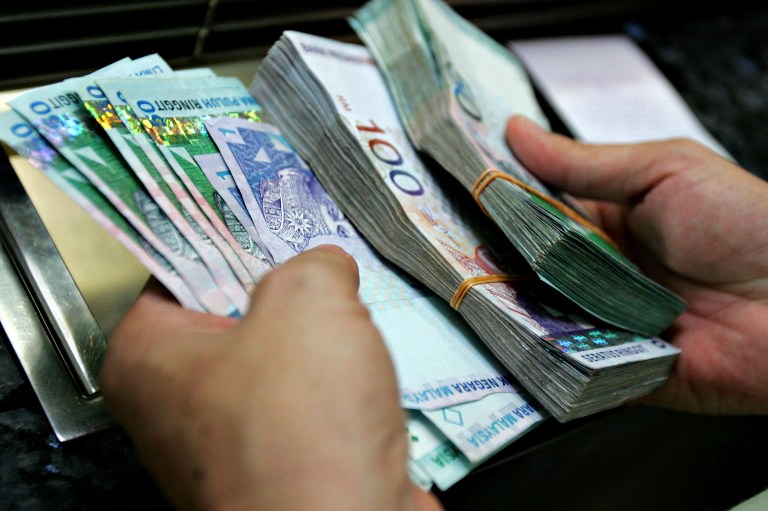


KUALA LUMPUR, July 8 — A gauge of volatility in Malaysia’s ringgit rose to a two-month high and government bonds dropped amid a probe involving finances linked to a state investment company.
A task force that includes the police and the central bank is investigating a money trail that allegedly showed funds connected with 1Malaysia Development Berhad (1MDB) ended up in Prime Minister Datuk Seri Najib Razak’s bank accounts, a claim he has denied.
The controversy has helped make the ringgit Asia’s worst-performing currency this year as a drop in Brent crude erodes earnings for the oil exporter.
Prospects the US will increase interest rates is also weighing on the currency.
“The situation in Malaysia is still uncertain given that the market is still looking for further developments regarding 1MDB,” said Irene Cheung, a currency strategist at Australia & New Zealand Banking Group Ltd. in Singapore.
“The other thing we’re watching is oil prices, which have stumbled again.”
One-month implied volatility, a measure of expected moves in the exchange rate used to price options, climbed 15 basis points to 10.97 per cent as of 10:59am in Kuala Lumpur. It earlier rose to 10.98 per cent, the highest since May 8.
A Wall Street Journal report on July 3, citing documents from a government probe, said about US$700 million (RM2.6 billion) may have moved through government agencies and companies linked to 1MDB before apparently appearing in the prime minister’s personal accounts. A legal letter has been sent to the publication, Najib’s spokesman Tengku Sariffuddin Tengku Ahmad said today.
Credit protection
The task force said yesterday it has frozen six bank accounts believed linked to the probe, without saying who they belong to. The extra yield investors demand to hold 1MDB’s dollar bonds due in 2023 widened seven basis points to 489, the highest since March, data compiled by Bloomberg show.
The yield on government bonds due in 2017 rose two basis points to a three-week high of 3.23 per cent, according to prices from Bursa Malaysia. The cost to insure the nation’s debt using five-year credit-default swaps climbed to 145, a level last reached in March.
The ringgit, which was little changed at 3.8070 a dollar today, has declined 8.1 per cent this year, according to data compiled by Bloomberg.
It fell to 3.8220 yesterday, the lowest level since September 1998.
The currency surpassed 3.8 this week at which it was pegged from 1998 to 2005. — Bloomberg


