


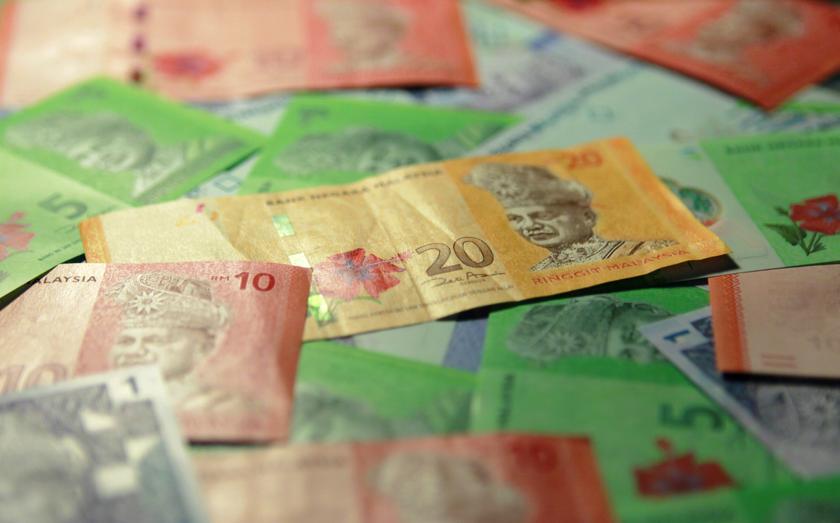


KUALA LUMPUR, Oct 21 — Malaysia’s ringgit dropped, leading losses in Asia, on concern the government won’t be able to contain its fiscal deficit and avert a credit-rating downgrade. Sovereign bonds rose.
Prime Minister Datuk Seri Najib Razak will table the 2014 budget in parliament on October 25 and policy makers may introduce a consumption tax to strengthen Malaysia’s financial position, according to an October 16 research note by DBS Group Holdings Ltd. Some investors will be “disappointed” if such a levy isn’t introduced, Dominic Bunning, a foreign-exchange strategist at HSBC Holdings Plc said today. Fitch Ratings cut Malaysia’s credit outlook to negative in July, citing rising debt levels.
“It definitely has to be a budget that is seen as positive by the rating agencies,” said Sacha Tihanyi, a senior currency strategist at Scotiabank in Hong Kong.
The ringgit fell 0.4 per cent to 3.1697 per dollar, according to data compiled by Bloomberg, after rising 2.3 per cent over the previous three weeks. One-month implied volatility, a measure of expected moves in exchange rates used to price options, rose eight basis points to 8.64 per cent.
The market is “very concerned” about a potential rating downgrade for Malaysia and Najib “needs to ensure that we don’t give any excuse to the ratings companies to do a downgrade on us because there will be hell,” Michael Lim Kheng Boon, a treasury director at RHB Bank Bhd. in Kuala Lumpur, said at a Bloomberg seminar today.
US report
The Malaysian currency weakened before a US jobs report that may revive speculation the Federal Reserve will reduce its asset purchases this year, according to Barclays Plc.
US employers added 180,000 jobs in September, after a 169,000 gain in August, according to a Bloomberg survey before data due tomorrow. The ringgit rose to a four-month high of 3.1413 per dollar on October 18 on expectations the Fed will delay cutting its stimulus.
“A stronger-than-expected non-farm payroll number is likely to disrupt the recent trend of US dollar weakness and lower US yields as the market again considers tapering in December,” said Hamish Pepper, a currency strategist at Barclays Plc in Singapore.
The Southeast Asian nation will probably announce an initial 4 per cent goods and services tax in this week’s budget that will generate RM20.5 billion, or as much as 14 per cent of total tax revenue, in the first year, Irvin Seah, Singapore-based economist at DBS, wrote in the report last week.
The yield on three-year government bonds due July 2016 fell one basis point to 3.15 per cent, the lowest since June 10, on speculation policy makers will take steps this week to rein in the fiscal deficit, according to CIMB Investment Bank Bhd.
Fitch Ratings has a long-term foreign-currency denominated debt rating of A- on Malaysia, the fourth-lowest investment grade. Southeast Asia’s third-largest economy has run annual budget deficits every year starting in 1998. — Bloomberg


