


BINTULU, July 20 — Licensed crocodile hunter Juni Kung has advised fishermen and other river users to avoid venturing out alone in crocodile-infested areas following a recent culling operation in the Kemena River.
Kung, 44, said the operation involved setting up baited lines along the Kemena River, from Sungai Kuala Segan to Sebauh, with the team monitoring the traps from about 5pm until returning to the Kampung Baru jetty at around 11pm.
He said one of the baited lines near the Kuala Binai area caught a crocodile, while another giant crocodile measuring 16.9 feet (about 5.1 metres) in length was spotted resting near a drain and did not take the bait.
“We found the giant crocodile and immediately took action. The other three smaller crocodiles were around 10 feet in length,” he said.
Kung said two of the crocodiles taken down were male, including the giant specimen.
He said crocodile sightings and encounters have become a growing concern among fishermen.
“Nowadays, crocodiles often disturb fishermen. People who go fishing or cast nets are becoming afraid. If they are alone, they do not dare to go out because crocodiles can chase and disturb them, even circling their boats,” he told The Borneo Post.
According to Kung, many complaints had been received from longhouse communities, prompting the team to continue conducting culling operations to address the issue.
He advised fishermen to carry out river activities in groups of at least two or three people for safety.
“Going alone is dangerous because if anything happens, nobody will know. Having two or three people provides some level of safety,” he said.
Kung said night operations were among the biggest challenges as the team had to carefully inspect fishing lines, riverbanks, and surrounding areas for crocodile activity.
“When we check the bait at night, we have to be alert and look around for crocodiles. If we spot one, we will take action. If the bait is taken, we have to track it down,” he said.
He explained that water conditions also affect the team’s ability to locate crocodiles.
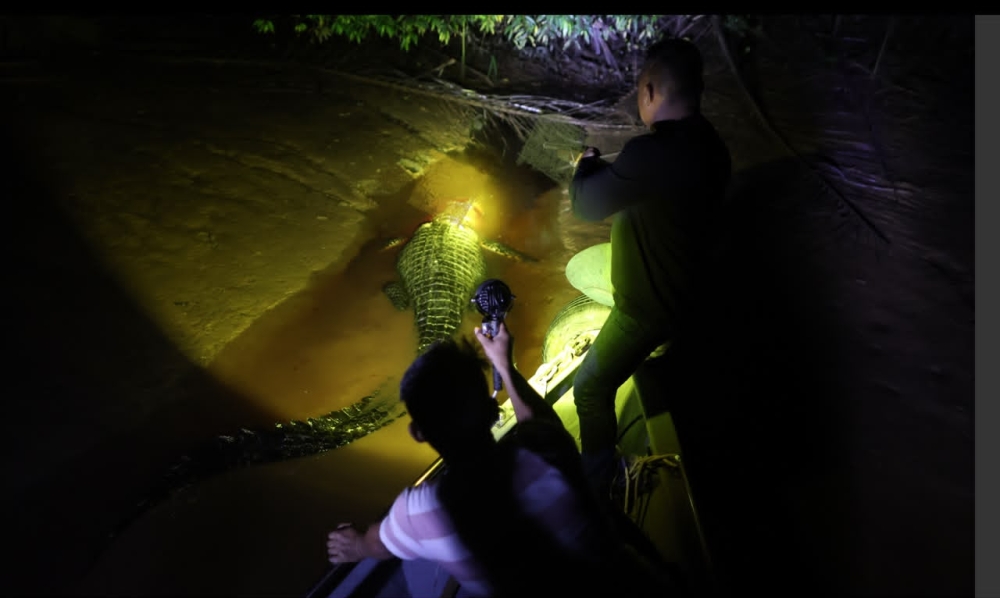
“When the water level is low, it is easier for us to search because crocodiles usually rest along the riverbanks. But when the water rises, it reaches the forest and trees, making it more difficult to find them,” he said.
Kung said bait used in crocodile operations usually involved chickens, either live or dead, as the smell would attract the reptiles.
“Crocodiles do not use their tongue to detect food. They rely on their sense of smell. If there is no strong smell, they may not detect the bait,” he explained.
He pointed out crocodiles are more likely to take the bait when it floats on the water’s surface.
The recent operation was carried out following increasing reports from residents in Sebauh and Tatau, where many had expressed fear due to frequent crocodile encounters and attacks reported in various areas, he said.
He urged residents to immediately report any crocodile sightings to him or other licensed crocodile hunters.
He also advised the public to be cautious and avoid fishing, casting nets, or setting traps alone in crocodile habitats.
“Many cases involved people who were alone and disturbed by crocodiles. Always bring someone along for safety,” he added. — The Borneo Post


