


KUALA LUMPUR, Feb 19 — As Chinese businesses expand in Malaysia’s food and beverage industry, industry voices say it’s time to shift focus from seeing them as a threat to recognising how competition can strengthen an already pressured sector.
Since the Covid-19 pandemic, the rapid rise of Chinese-owned restaurants has reignited debates about competition. Some local operators argue that foreign businesses face few barriers to entry while benefiting from state support, favourable policies and systematic resources.
Calls for state intervention, including targeted support measures and closer anti-monopoly scrutiny, have grown.
For Malaysia Chinese Restaurant Association president Gao Haoyun, protectionism is the wrong response — success depends on willingness to adapt, professionalise and compete in a rapidly changing environment.
“First and foremost, there is competition in everything you do. The question is whether local restaurant owners are willing to change their mindset and keep up with the times,” he told Malay Mail in a recent interview.
He likened the situation to China’s automotive industry: the country initially lacked expertise in car manufacturing but learned by opening up to Japanese and American manufacturers.
“It’s the same for restaurants. If you do not open your doors and let people who understand food and beverage management in, then tell me, how do you expect to protect the industry?” Gao said.
According to him, Chinese cuisine accounts for roughly 35 per cent of Malaysia’s food and beverage industry. A significant share comes from hotpot and Sichuan-style restaurants, followed by Chinese fast-food and snack outlets, as well as other regional cuisines such as Northeastern (Dongbei), Hunan and Xinjiang.
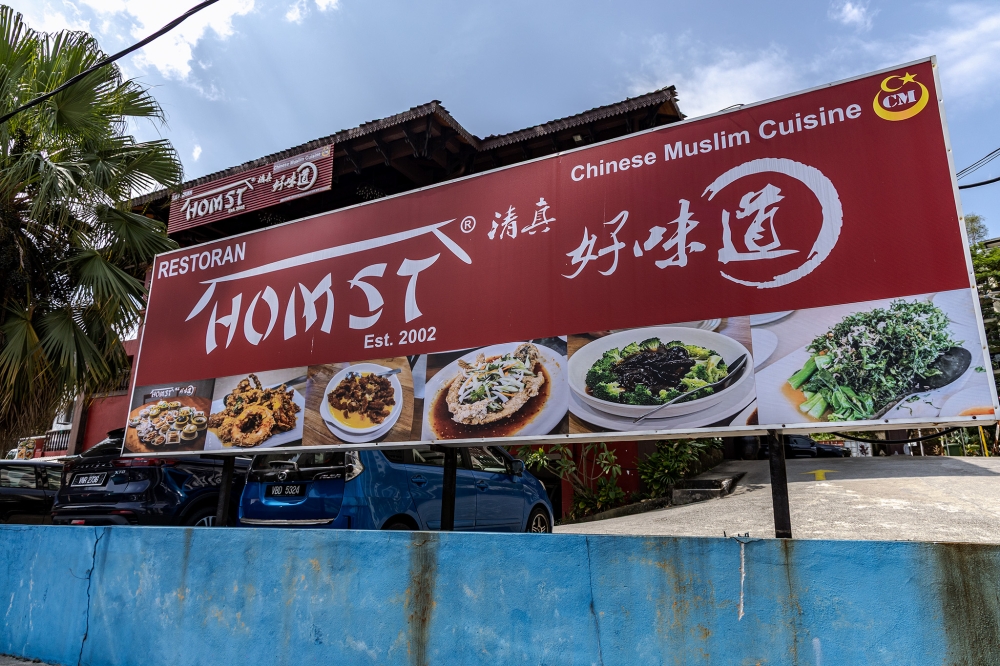
Competition is about strategy, not nationality
Gao stressed that the debate should focus on management and strategy, not ethnicity.
“You claimed they came to take your business away. But let me ask you, you both sell the same rice noodles at the same price, so why can’t you beat him? Then you say it’s because they are Chinese. That is wrong. They are people who understand systematic management, know how to market their business and know how to build better relationships with customers,” he said.
He also highlighted the wider impact of Chinese restaurants on the local market, noting that rents have risen sharply, labour costs have increased, and the supply chain for ingredients has improved — raising standards across the industry.
Looking at Malaysia specifically, Gao said even without Chinese restaurateurs, questions remain about retaining young talent.
“Have you noticed that younger Malaysians willing to enter food and beverage have mostly gone overseas? Those who go to Australia, Singapore… when you go to these countries, there is a lot of good food, but many of the people running it are Malaysians earning higher wages than here,” he said.
“It is not that Malaysia has no talent; it is that Malaysia has not retained talent.”
Gao said that if Malaysia could cultivate an environment that retains young professionals, they would have no reason to leave for opportunities abroad.
“When these people go overseas, aren’t they paying taxes to other countries? Isn’t it the same logic? So shouldn’t we reform, using the best solutions, to improve the development prospects of Malaysia’s food and beverage industry?” he asked.
Leveraging Chinese expertise to create Malaysian fusion
Gao said operators could leverage Chinese technologies, seasoning and expertise to create a distinctive Malaysian-style fusion cuisine — a potential culinary draw for tourism.
“With over 40 million tourists visiting Malaysia each year, such fusion could be similar to Nyonya or Peranakan cuisine — blending Chinese ingredients with Malay and Indonesian spices and cooking techniques,” he said.
“Every market has competition. Competition makes you stronger. Without it, you become lazier and the market becomes weaker. If one could make money just by lying down, why would they work so hard for it? And if our salaries cannot rise, why should I stay?”
He added that foreign labour inevitably fills the gaps left by talented Malaysians who go overseas, a scenario that would not benefit the country’s overall development.
“Are you willing to appoint a foreign worker as your head chef? Do you really want all the food you eat prepared by foreign workers? Can they truly replicate the flavours of traditional Chinese cuisine? Do they understand the eight Great Cuisines of China?” he said.
The eight Great Cuisines — Cantonese (Yue Cai), Sichuan (Chuan Cai), Jiangsu (Su Cai), Shandong (Lu Cai), Fujian (Min Cai), Hunan (Xiang Cai), Anhui (Hui Cai) and Zhejiang (Zhe Cai) — represent China’s most influential regional culinary traditions, each with distinct flavours, ingredients and techniques.
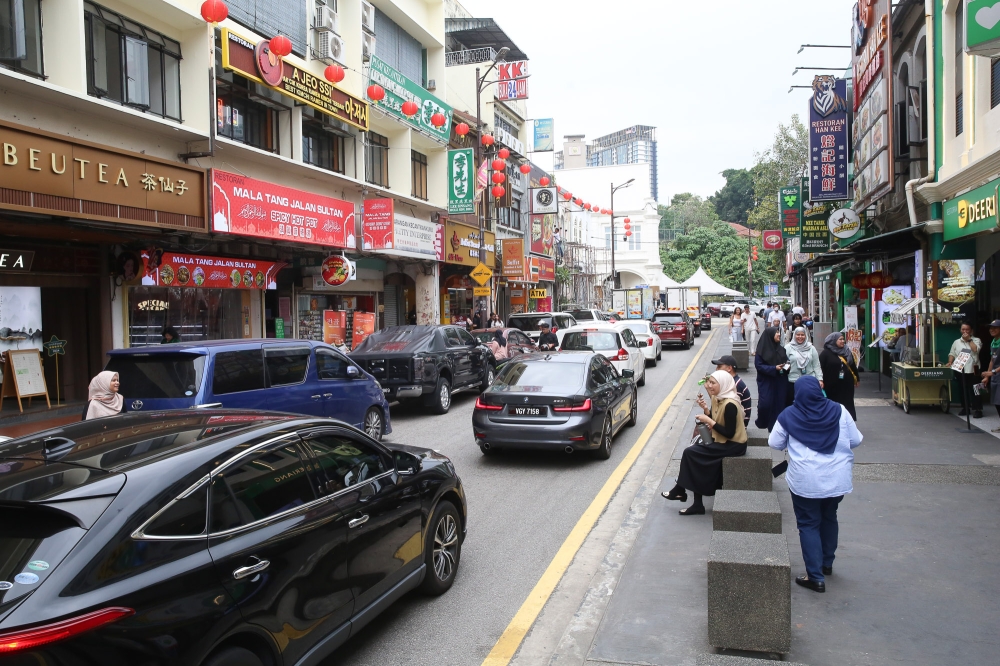
Developing local talent
“What we need is for Chinese Malaysians to master Chinese cuisine as a skill. Our arrival here is temporary, as people will eventually return home, but we see the potential for success in this market and aim to use what we have learned to grow here,” Gao said.
“Ultimately, this must include nurturing local Malaysian talent. It is neither realistic nor sustainable for the industry to be dominated entirely by Chinese operators,” he added.


