


KUALA LUMPUR, Nov 4 — Malaysia needs to introduce quotas for women in high-level jobs to overcome the problem of a lack of women in such positions, female federal lawmakers said.
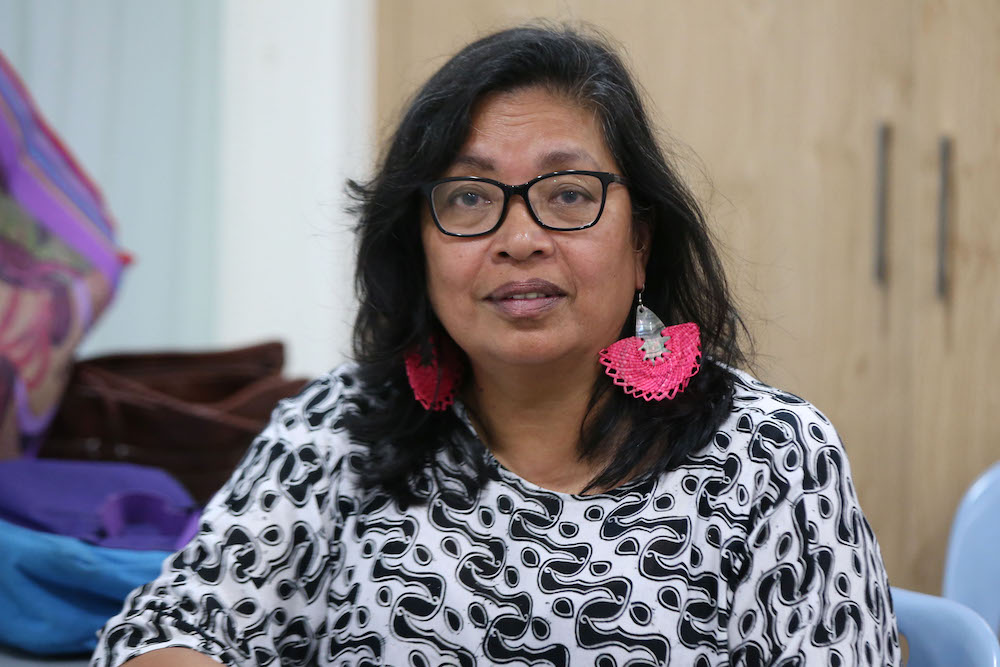
Petaling Jaya MP Maria Chin Abdullah expressed support for a quota for women, but clarified that it should only be a temporary measure to help increase the number of women in senior positions.
“Yes, a quota will definitely help to increase the number of women in high-level positions. The United Nations has suggested a 30 per cent quota of women at the decision-making level.
“The current trend shows that many women are unable to rise to the top alone and therefore the introduction of a quota system will help more women occupy high-level positions within an organisation,” she told Malay Mail.
She said a quota for women should not be a “blanket quota”, but rather a “quota based on those who can do the job.”
Maria said that introducing a quota for women will, however, require “political will”, highlighting that more men than women currently occupy top positions in politics — with only 14.4 per cent or 32 out of the 222 MPs being women and that Khazanah Research Institute’s latest report found that men account for 82 per cent of chief executives, senior officials and legislators.

Quota to ensure more women MPs, women-empowering laws
Batang Sadong MP Datuk Seri Nancy Shukri said that a quota for women was necessary both in politics and in companies, including the selection of election candidates.
“Now that we have a woman DPM, she should advocate a political quota system for women to be in political high-level positions. There are countries that we can use as role models and adapt them to our country’s needs,” she told Malay Mail.
“Quota systems for women as candidates would ensure women’s representation in Parliament so that they can support and push for good legislation, especially legislation affecting women,” she said when noting the need for more women MPs to enable the introduction of laws empowering women.
Nancy, who was formerly a federal minister, said that the 30 per cent goal of high-ranking women had almost been achieved at government departments and requires continued improvement, further suggesting new laws aimed at companies.
She said there should be “legislation requiring women involvement, for example, make it at least 30 per cent or more women [to] be placed in all top positions” in companies, noting that the previous Barisan Nasional administration had made it a policy for companies to have 30 per cent women in top positions to avoid being named and shamed.
The MPs were asked to comment on Khazanah Research Institute’s (KRI) latest report on Malaysian households, which had found that men continued to dominate high-ranking positions and were receiving higher pay than women for equivalent job positions.
Tokenism concern?
Women’s rights activist Ivy Josiah said the KRI report confirmed the “discrimination” against women that would see women remaining at the bottom if left unchecked, further arguing that having a quota does not mean ditching preferred candidates based on their capabilities.
“A mandatory quota for women in decision-making positions is not an affront to meritocracy... the market does not prioritise women.
“Quotas work. Besides, there are more than enough women qualified to take on top positions. Let’s not assume that every man appointed is qualified and when it comes to women, we are automatically viewed as less [capable],” she told Malay Mail.
Josiah said that the situation of men not making room for women at the top could be an “unconscious bias” and that gender equality can only be achieved through mandatory policies, adding: “We also need to share with the public the many findings that women in top positions and in the workplace are good for the bottom line and improve the work culture.”

Let competence prevail
Tan Sri Rebecca Fatima Sta Maria, who previously served as secretary-general of the Ministry of International Trade and Industry, said setting a target was preferable to a mandatory quota.
“It’s not about token — you don’t have 30 per cent, and then you fill in the 30 per cent because you have to, so you get a token woman. No, it’s not like that.
“That’s why we say ‘target is good, quota less good’... because at the end of the day, you want to make sure it’s competence that prevails, and not the numbers,” she told Malay Mail when contacted, noting that she herself was appointed based on her abilities and not her gender.
“Really, if you focus on competence, there are enough competent women out there. If you say quota, people feel obliged to fill in those numbers, which is not what you want,” she added.
In her case, she also had supportive bosses who recognised her talents and gave her a chance to excel, and a supportive family that understood the demands of a high-level position.
“You can be good but if your boss doesn’t recognise your worth, you will stay in the background all the time, you will have no opportunity to be in the front. And that can happen, that does happen. Good women, because they are quiet by nature, they become backroom girls, instead of being in the front,” she said.
Sta Maria advocated having policies instead of new laws to push for the appointment of women at higher-level positions, noting that both male directors and women already sitting on company boards should recommend other women candidates when new board directors are sought.
She said the 30% Club’s Malaysia chapter has put together a database with a significant number of qualified women candidates for board membership, but said they somehow do not come into prominence and company boards still tend to go back to male candidates.
“But I must say with the Securities Commission and Bursa Malaysia encouraging listed companies to take in more women, there is a greater effort by boards, chairmen of boards to go out and look for these women… it will take time to change but it is happening.
“And I think the 30 per cent Club is doing a good job in bringing to the surface or to showcase all these women, to put out all these names, so employers or boards can’t say we can’t find them,” she said.

Sta Maria linked the lack of women in high-level positions to current rigid workplace policies and gender roles, where women drop out and no longer remain in the workforce by the time it comes to promotion, while men get promoted as they tend to stay on.
“We, in the civil service, if you leave — this is regardless of male or female — and inevitably more women leave to take care of family, to look after children, to look after ageing parents. If you leave, you cannot come back.
“I have always pointed out the fact that you need to change that. You need to allow re-entry of women,” she said.
Sta Maria also suggested allowing flexible working arrangements where employees can be allowed to work from home with the aid of technology, which would then allow them to be present for their children or parents while still getting work done.
She said a woman tends to play multiple roles where they would have to go home after work to take on a different role of caring for their families, as compared to men who can socialise and network after work.
“Because of that, they are less visible, they don’t network enough, you don’t hear of the Old Girls’ Club do you? You have the Old Boys’ Club. Because they are less visible, that also impacts when it comes to promotion, then the opportunities appear to be less for women,” she said.
She also suggested quality day care be provided within communities, instead of just at workplaces, as this would cater to low-income families, especially single mothers who may rely more on public transport and face difficulties bringing their children to workplace day care centres.


