


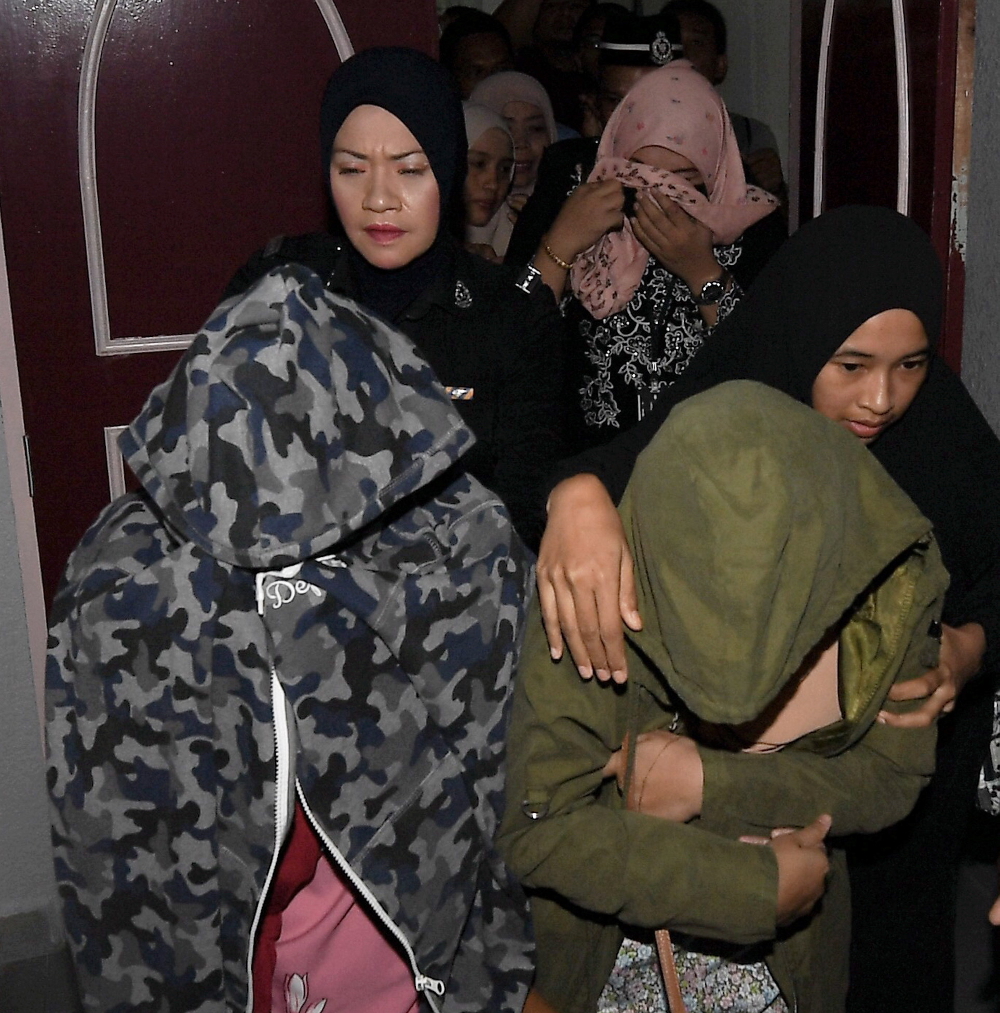
KUALA LUMPUR, Sept 18 — The federal government was unable to interfere in a recent Terengganu case in which two Muslim women were caned for alleged attempted lesbian acts, as the penalty was meted out under state Shariah laws, said the law minister.
Datuk Liew Vui Keong explained that this was due to the separation of the federal and state governments’ jurisdictions, and distinction between federal laws and state laws (which also covers Islamic matters).
“In this case, all Muslim-related laws are governed by the states’ respective jurisdiction, because all states have either the sultans or Tuan Yang Terutama and most of the laws are under them. And we are not able to interfere with the laws that have been passed by the respective legislatures in the respective states,” he said in an interview with radio station BFM today.
“So in this case, caning comes under Shariah laws in Terengganu, they already have a set of law that has been approved by the house in the state, so they exercised that function to punish those who have infringed that particular law.
“That is under their jurisdiction, we can’t do anything in that respect,” he said of the Terengganu case.
On the Joint Action Group for Gender Equality’s (JAG) insistence that the federal government should be able to intervene when a state law is in conflict with federal laws or the Federal Constitution, Liew said this was merely an opinion and should be decided in court instead.
“Who will decide if it has been in conflict or not? It will have to be brought to the court of law and then the court of law will have to decide whether that is so,” he said.
When asked if anything is being done to make state laws more consistent with federal laws and the Federal Constitution, Liew said: “Of course there is an effort that can be made, we can look into it. But we have this separate jurisdiction between Shariah laws and civil laws.”
Liew said the Federal Constitution provides that Shariah laws are enforceable only on Muslims, adding that Malays are constitutionally deemed Muslim upon birth.
However, he said the constitution also protects the religious freedom of non-Muslims.
As for laws on criminal offences, Liew said this would apply equally to both non-Muslims and Muslims.
“We have criminal matters which apply to all Malaysians, if you committed a crime like Dangerous Drugs Act, rape, violent crimes, breaking houses and stealing, you can come under criminal law under the Penal Code, so there’s no distinction in that case that you hear a Muslim, you are not liable for all that kind of laws — that is not true,” he said.


