













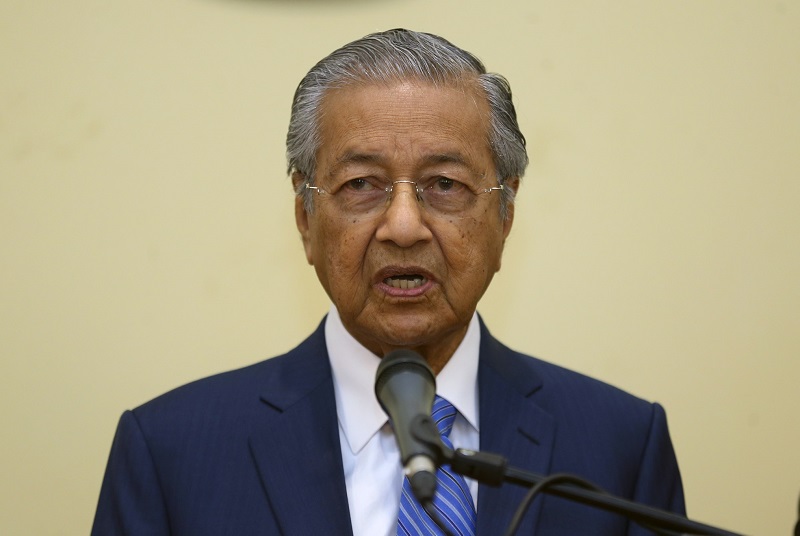


KUALA LUMPUR, May 28 — Investors from China should not be afraid of doing business with Malaysia under the Pakatan Harapan (PH) government led by Prime Minister Tun Dr Mahathir Mohamad, the South China Morning Post (SCMP) said today.
The English-language Hong Kong daily owned by the Alibaba Group also said that good bilateral ties can be maintained if Beijing and Chinese investors adopted a less aggressive stance towards the new government.
“Mahathir is known for being pro-Asia and during his time as prime minister from 1981 to 2003, forged good relations with China,” SCMP said in an editorial article.
“But there is no need for a change in Malaysia’s relations with China; the country needs Chinese investment and infrastructure expertise to develop and it is an important part of the ‘Belt and Road Initiative’.”
It added that the value of keeping harmonious ties “is understood by both sides”, noting that Chinese investors and government officials had been very concerned about the new PH government’s treatment of their projects in Malaysia due to Dr Mahathir’s remarks during campaigning for the 14th general election.
In the run-up to the May 9 elections, Dr Mahathir had raised concern about the Forest City property development in the southern state of Johor and the multi-billion ringgit East Coast Rail Link connecting the more rural east coast of the peninsula to the wealthier west coast. Both projects involved Chinese participation.
But SCMP noted that Dr Mahathir had last week said Malaysia is open to investment from all countries, regardless of their political leanings, even if he did not directly address the issue of Chinese development projects, which some Malaysians worry could affect their nation’s sovereignty.
In his early days after taking office as seventh prime minister, Dr Mahathir said he would review all Chinese projects, but SCMP noted the former has also affirmed that he will respect agreements signed.
Dr Mahathir first became PM in 1981 and was known during his first 22-year tenure for his “Look East” policy that sought to propel Malaysia towards industrialisation by emulating its Asian powerhouse neighbours then, specifically Japan, compared to other developing nations which were inspired by the UK, European nations and the US.