


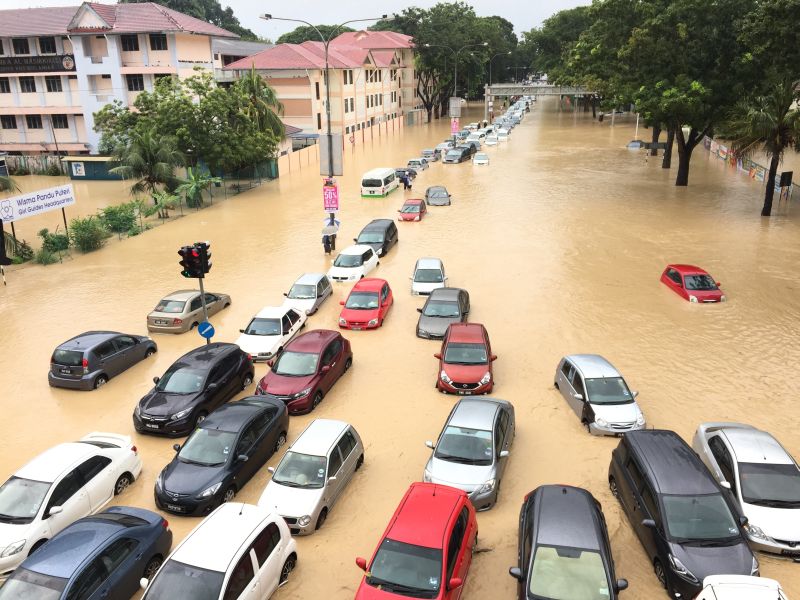
GEORGE TOWN, Nov 2 ― Penang was hit by a total 119 flash flood incidents between 2013 and last month, state executive councillor Chow Kon Yeow told the state legislative assembly sitting today.
The local government and flood mitigation chairman said there were a total 22 flash flood incidents in 2013, 20 incidents in 2014, 26 incidents in 2015, 30 incidents in 2016 and 21 incidents this year as at October 15.
He said the state government has taken steps together with the Drainage and Irrigation Department (DID), Penang Island City Council (MBPP), Public Works Department (PWD) and district and land offices to resolve flood issues in the state.
“There are three main approaches taken by the state government to resolve floods in the state,” the Padang Kota assembly said in reply to an oral question.
The first approach involved clearing and cleaning of main drainage systems using the Art Gully Emptier.
The local authority will upgrade drainage and pump stations at flood prone areas and at the same time install thrash screen and drain scupper to trap rubbish in drains.
“The MBPP has conducted maintenance works on 28 main drainage systems four times a year and at the same time MBPP has also cleaned 161 premises and structures in several phases under the Sungai Pinang Flood Mitigation Plan to overcome pollution issues,” he said.
In the second approach, Chow said the state government has introduced a new condition under its guidelines for new development projects in George Town.
All developers are required to upgrade the main drainage systems around the development site.
In the third approach is the implementation of the state’s flood mitigation projects to resolve flooding issues in the state and reduce the impact of floods in the state.
On the recent flash floods on September 15, Chow said a total 119 areas in the whole state were hit by flash floods involving a total 5,498 victims.
He said the cause behind the flash floods were due to high rainfall on that day, the high tide and a side effect of the Doksari typhoon.
“Some of the rivers and drainage systems in villages and residential areas were unable to accommodate the large amount of rainfall,” he said.
He said there were still utility infrastructure that were build low across rivers and main drainage systems that blocked the flow of the water on that day.
“There were still a lot of domestic, industrial and agricultural waste that were dumped into the rivers and monsoon drains causing these drainage systems to be clogged,” he said.
He said the state had approved a RM300 million allocation to immediately conduct flood mitigation projects in flood hot spot areas in the island


