


 KUALA LUMPUR, Sept 7 — Healthcare practitioners and consumers should take cognizance of the various phases of dengue attack, failing which could lead to fatalities.
The vice-president of the Malaysian Pharmaceutical Society, Bharati Suresh Chand, said there were a few areas where information about dengue was lacking and that was where most healthcare professionals and consumers overlooked the symptoms of the disease.
“A lot of patients, when they have a fever, only know about the high fever symptoms of dengue. But there is a phase in dengue, called the critical phase, that comes after the febrile phase.
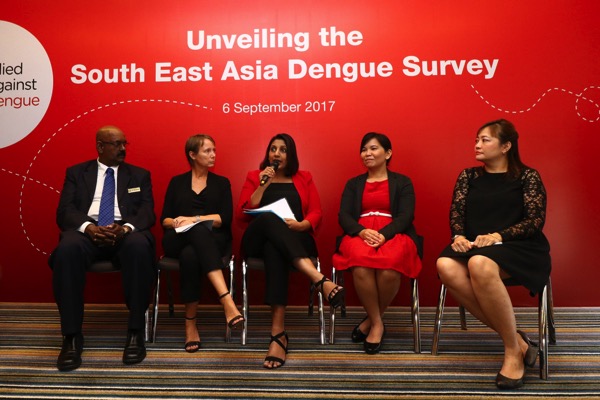
“When you go into the critical phase, your system shuts down and there is no fever. So there is a possibility when a patient walks into the clinic or pharmacy, and we as healthcare professionals only look for the fever, we may think and exclude dengue,” she said during a panel discussion at the ‘Unveiling of the South East Asia Dengue Survey’ programme yesterday.
The febrile phase, lasting from three to seven days, is when the patient develops a sudden onset of high fever, which is often accompanied by headache, myalgia, and gastrointestinal symptoms.
It was unveiled earlier at the event, organised by Allied Against Dengue, that 80 per cent of the 500 Malaysian respondents surveyed were worried about dengue but only a quarter of them felt prepared or understood the disease.
According to the South-East Asia Dengue Survey that was commissioned by GlaxoSmithKline (GSK) Consumer Healthcare, despite the widespread concern, understanding of the risks, symptoms and management of dengue was severely lacking.
“Just over half of individuals surveyed described themselves as knowledgeable in recognising the symptoms and only 33 per cent are aware that there is no cure,” the survey said.
This particular dengue survey is a first-of-its-kind commissioned by GSK Consumer Healthcare, and its results have made people realise just how crucial dengue awareness is.
United in their efforts to address the educational needs across the region, Allied Against Dengue (AAD) coalition yesterday announced the joining of four new partners in their mission of increasing advocacy on dengue prevention and management through engagement, empowerment and education.
The partners are UCSI University Malaysia, Caring Pharmacy Group Berhad, Apex Pharmacy Marketing and MIMS Health Today.
“This is something we all need to work together to get the message across,” said GSK’s South-East Asia Area Marketing Director for Pain Relief and Respiratory, Heather Pelier, who related the struggle she went through with her son who was infected with dengue 18 months ago.
“When you’ve lived through it, and seen what it’s like first-hand, you would want to make sure you know what you can do to manage and prevent it,” said Pelier.
“Dengue is a viral fever, and we do not want anyone to be further infected by it. We need to give them the confidence to be able to say, ‘I have all the tools and understanding in my hand to be able to counteract this problem,” she added.
Also present were UCSI deputy vice chancellor (academic and research) Associate Prof Dr Yeong Siew Wei, Guardian Health and Beauty Sdn Bhd marketing director Christina Low, Cedric Chua from Apex Pharmacy Marketing and Laura Lai from Caring Pharmacy Group Berhad.
President of the Malaysian Medical Association Dr Ravindran Naidu said the media plays a major role in disseminating the information to the public.
“We should start it from schools so the children know how to control, prevent, and take action when dengue strikes.
“The public, healthcare professionals and pharmacists need to constantly keep a lookout for the signs and symptoms of dengue,” said Dr Ravindran, who believes children should be enlightened about the dangers of dengue from a young age.
Given the distinct awareness of the impact of dengue and its severity, it comes as no surprise that about 90 per cent of individuals who participated in the survey were keen to learn more about the disease.
This was particularly so for those who have been personally affected or if the topic of dengue is highly visible in the media. Around half of them believed that sufficient levels of information was not readily available for them.
The latest venture of AAD to garner social empowerment against dengue is the AAD Run, set to take place on September 17.
“The AAD Run will bring together all parties to demonstrate the strength of our collaboration, with proceeds of the race contributing to future initiatives to drive dengue education and awareness across Malaysia,” Pelier said.
“By joining forces to leverage our capabilities and taking action, we come ever closer to defeating dengue.”


