


KUALA LUMPUR, Nov 25 ― Pakatan Harapan needs to come up with a united manifesto addressed to Malay and Bumiputera voters for the 14th general elections, political analysts suggested after the entry of Parti Pribumi Bersatu Malaysia (PPBM).
The analysts polled by Malay Mail Online said the federal opposition pact has failed to take into account the Bumiputera in its previous incarnation as Pakatan Rakyat (PR), which has been the decisive reason the country’s largest demographic group continues voting in the Barisan Nasional (BN).
“The next important step is to come out with a common narrative. This is where the challenge is ― to make different opposition parties with different background, dynamics and agenda to come up with common manifesto that can balance Malay and non-Malay narratives,” said Universiti Kebangsaan Malaysia’s (UKM) political analyst Dr Faisal Hazis.
Faisal, an associate professor with UKM’s Institute of Malaysian and International Studies, said that while PR had focused on national issues such as good governance and inclusivity, a huge section of the Malay voters did not buy into the centrist message.
“A way if they want to make an impact is to address the Malay issue,” independent analyst Khoo Kay Peng added.
“If they can assure the Malays, that they have a strategy to help the Malays better, get more prosperous, have better standard of living…that would be the ultimate to create a huge impact in the next election.”
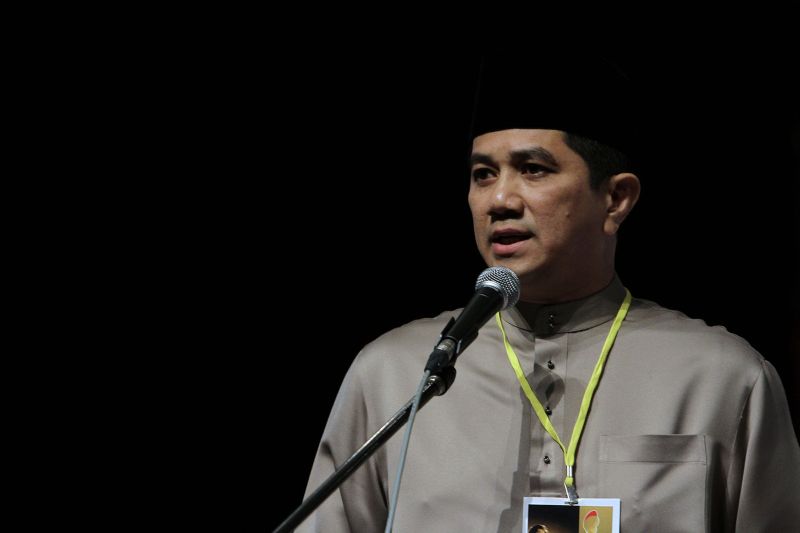
PKR deputy president Datuk Seri Azmin Ali said during the recent inaugural Pakatan Harapan convention that PPBM will be incorporated into the pact soon, pending some details that need to be ironed out.
Azmin also said the member parties will come up with a unifying logo, name and common objectives to go toe-to-toe against the ruling BN coalition at the 14th general elections due by 2018.
PPBM’s membership is only open to Bumiputera, and has been forced to deny accusations of racism over its Bumiputera-centric focus.
However, Faisal warned that Pakatan Harapan may inevitably lose some non-Malay votes in its ramp up its pursuit for Malay votes, especially from the rural and conservative demographic.
“If you slant too much on Malay narrative, you might lose the non-Malay votes. At the same time, you can succeed if you can tell non-Malays that whatever happens, their fundamental rights would not be compromised and their rights as Malaysians would not be affected.
“They might lose some non-Malay votes, but at least they would retain the non-Malay votes. Just gain as many Malay votes as possible,” Faisal added, referring to the pact.
Khoo downplayed the possibility that Pakatan Harapan may have to appease Malay-right demands that would be at the non-Malays’ detriment, since there is little that the Malay majority has not achieved in the country.
“The Malay rights things that can be demanded have maxed out,” Khoo said, mentioning that Malays have dominated the civil service and government-linked companies.
“There is very little else that the Malays can demand. Any more than that, it won’t be consistent in an open economy and globalisation,” he added, saying that more extreme demands would drive away foreign direct investment that would impact the whole country.
Instead, Khoo suggested that Pakatan focus on empowering the Malays and Bumiputera by unlocking their capabilities and competitiveness.
Universiti Sains Malaysia’s (USM) Dr Sivamurugan Pandian predicted there is still a long journey ahead for the fledgling Pakatan Harapan to achieve consensus among its component parties, compared to the established BN.
But ultimately, the deputy dean of USM’s School of Social Sciences suggested PPBM will be the decider whether the Bumiputera agenda is included in the manifesto.
“It depends whether PPBM is going to emphasise on that, on the Bumiputera agenda,” the associate professor said, adding that the onus will be on PPBM to accept what was already in Pakatan’s previous common policy framework.
“These are details that needs a lot compromise and sacrifice. BN has done it a long time ago.”
Prior to the 13th general elections, then PR ― which comprised PKR, DAP and PAS ― had launched Buku Jingga (“Orange Book” in Malay) as a long-term administration master plan and framework on how it would govern Malaysia should it take over from BN.
The policy in the manifesto was agreed on by the three component parties during the Second Pakatan Rakyat Convention in Penang on December 2010. It also outlined a proposal 100-day reform plan starting from the day it takes power.


