













KUALA LUMPUR, Aug 27 — It will be very difficult for the opposition parties to ensure straight contests against Barisan Nasional (BN) as they are unlikely to sacrifice their current seat distribution, pundits say. Analysts who spoke to Malay Mail Online believe that seat negotiations among opposition parties for the next general election will be an uphill task, given the fact that new party Parti Pribumi Bersatu Malaysia hopes to parlay with PAS — a party which had gone against Parti Amanah Negara (Amanah) and Pakatan Harapan in the last two by-elections.
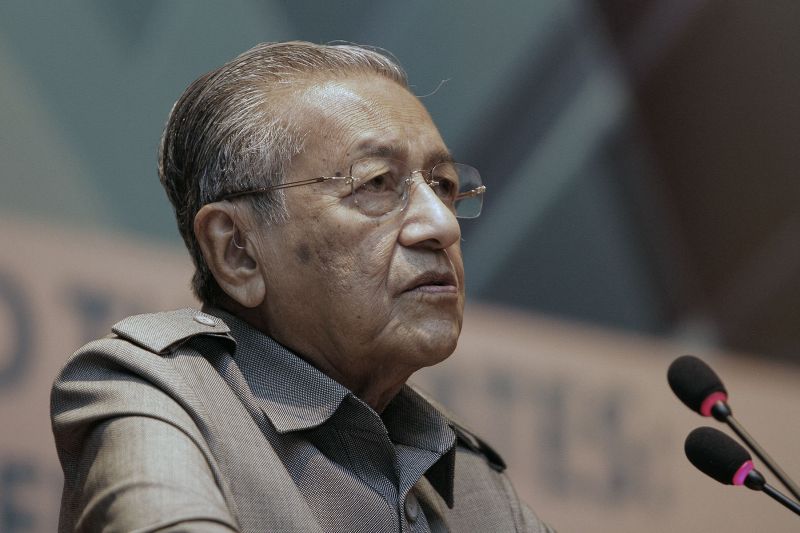
“I don’t think they can get their act together, as especially Dr Mahathir has a very strong will, and not being used to acceding to others’ (including friendly party’s) demands, not the least in seat distribution,” Dr Oh Ei Sun, a senior fellow at the S. Rajaratnam School of International Studies in Singapore said, referring to Parti Pribumi protem chairman Tun Dr Mahathir Mohamad.
Oh said that Parti Pribumi’s planned entry into the 14th general election will further complicate matters as they will be gunning for rural Malay seats currently held by PAS, PKR and even Amanah.
“There is virtually not even a good case scenario especially in the Malay seats, as there are simply too many suitors going after too few targets, and no party seems to be willing to budge,” he added.
Professor Ahmad Fauzi Abdul Hamid of University Sains Malaysia’s (USM) political science department said that Parti Pribumi’s possible alliance with PKR and PAS will leave Amanah to be the biggest loser in the next GE.
“In rural areas, Pribumi stands a better chance of eroding Umno’s and PAS’s support base due to the Mahathir factor and the national profile of its leaders such as Tan Sri Muhyiddin Yassin. So where does this leave us with Amanah? Amanah may have outlived its usefulness as a potential countervailing power to PAS.
“This is a pity since it has in the past provided some of the most articulate Malay opposition parliamentarians that we have seen in recent times, but Malaysia’s electoral dynamics might force its protagonists to accept its effective dissolution in the larger interest of creating the impression of a more viable opposition front capable of replacing a BN government,” he told Malay Mail Online.
Another analyst, Dr Lim Teck Ghee, feels that Parti Pribumi will have little to bring to the negotiation table among opposition parties except for a few well-known leaders as it has no party machinery and an agenda which is no different from Umno’s.
The Centre for Policy Initiatives director said that Parti Pribumi will need to depend on the generosity and goodwill of other parties to permit it space in an already overcrowded opposition field. “It looks like the opposition will not be able to engineer straight fights in the coming election especially since PAS is not about to mend fences with the DAP and Pakatan Harapan,” Lim told Malay Mail Online.
Dr Ooi Kee Beng, deputy director of Singapore-based Institute of Southeast Asian Studies’ Yusof Ishak Institute, said that opposition parties now have no choice but to try their hardest to unite ahead of GE14.
“If they don’t agree, they won’t have a chance of winning more ground. In fact, I would expect them to lose ground if they do not show that they are above party interests.
“But if BN stays united, Pakatan Harapan can in the best case retain their state governments and may be win one or two more (seats),” he told Malay Mail Online.
Ibrahim Suffian of independent pollster Merdeka Center said that the likely scenario will be for each opposition party to make its own arrangement with one another.
“It’s likely that each party will make its own arrangement in some coordination with the other but Pakatan Harapan is not a functional coalition.
“Complications may arise between PAS and Amanah as the two can’t reconcile so easily,” he told Malay Mail Online.
On Sunday, Muhyiddin said that Parti Pribumi is looking to contest in several PAS and PKR areas and will be looking to negotiate deals with both parties.
The Parti Pribumi protem president said this was done in order for the party to be a part of a coalition to remove BN from power and to form a new government.
“Good news is that I met some of the leaders, the response has been positive. Way forward is for us to form a government.
“We cannot be just the opposition, we need to replace the current BN to form a better future for Malaysia,” Muhyiddin had said.
The Pagoh MP added that his party would even be open to negotiations with PAS despite other opposition parties like DAP and Amanah having a fallout with the Islamist party.
When asked if Parti Pribumi was looking at urban seats, Muhyiddin curtly said there was a “strategic and tactical reason” behind the party’s Bumiputera-first agenda.