


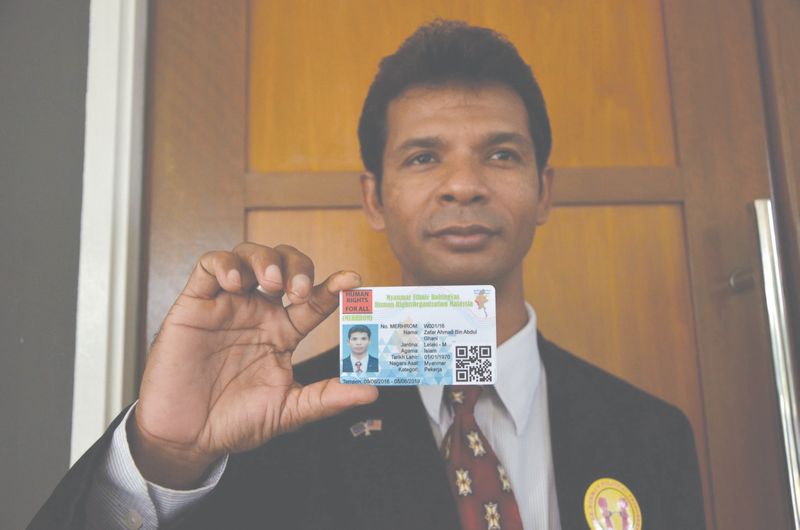
PETALING JAYA, Aug 5 — A non-governmental organisation here has begun issuing pictured identification cards to migrants it says it has vetted to protect them from abuse.
Myanmar Ethnic Rohingya Human Rights Organisation Malaysia (Merhom) had issued up to 100 cards since June in an effort to provide the ethnic minority with documentation.
The organisation’s president Zafar Ahmad Abdul Ghani told Malay Mail they had previously issued letters to those who went through the association’s vetting process, and had decided to introduce the ID card as it was easy to carry and resistant to damage.
“It is hoped the Malaysian government will accept these cards as a temporary measure," he said.
“These cards are only issued to Rohingya who have escaped persecution from Myanmar. This is not a substitute for documents issued by either the United Nations or the government.”
“The cost is borne by the cardholder who pays RM100 per card and they are printed by a local NGO,” Zafar said.
He admitted Merhom was not registered with the Registrar of Societies but said he did not view this as a problem as the NGO was “serving the community.”
Nevertheless, he insisted the card was necessary as members of the community were vulnerable if they did not have identification of any kind.
“The authorities may use the lack of documentation to pressure them. They may go into hiding or take unnecessary risks because they are afraid,” he said.
“Human trafficking syndicates can take advantage of them and smuggle them anywhere with ease as there is no means to keep track of them.”
Zafar urged the authorities to reconsider current policies barring migrants from working as a means of supporting themselves.
“We did not come here to live on welfare. If the opportunity to work is provided, it will free up resources for the NGOs to help more needy migrants,” he said.
He also said most Rohingya here were merely “waiting it out” and intended to return home as soon as conditions in Myanmar improved.
“Whether it is to return home or travel to a third country, most of us want to move on. We appreciate the safety and shelter in Malaysia but it is not home,” he said.
“It does not matter if the government will not recognise the identity cards. It is just to keep tabs on members of the community. We do our own vetting and issue cards at our discretion.”
On July 20, Minister in the Prime Minister's Department Datuk Seri Shahidan Kassim said the Cabinet had called on the United Nations High Commissioner for Refugees (UNHCR) in Malaysia to stop issuing refugee identification cards to walk-in applicants.
Shahidan justified this saying the increasing mumber of cardholders could threaten national security and create social problems.
He also questioned how such documents could be issued without the knowledge of the Immigration Department and police.
Shahidan, who is also responsible for National Security Council affairs, said the government had not endorsed any such card as a valid identification document.
“Identity cards, such as those issued by the UNHCR, come with commitments. The cardholders are entitled to certain protections and access to services,” he said.
“These cards are issued to individuals without the consent of the authorities. They are not valid for any purpose.”
Shahidan said there were concerns the cards would set a dangerous precedent and questioned the quality of background checks conducted by the issuing NGO.
“What checks have been done to guarantee the details on the issued card corresponds with the details of the individual and how has the NGO vetted these details?”


