


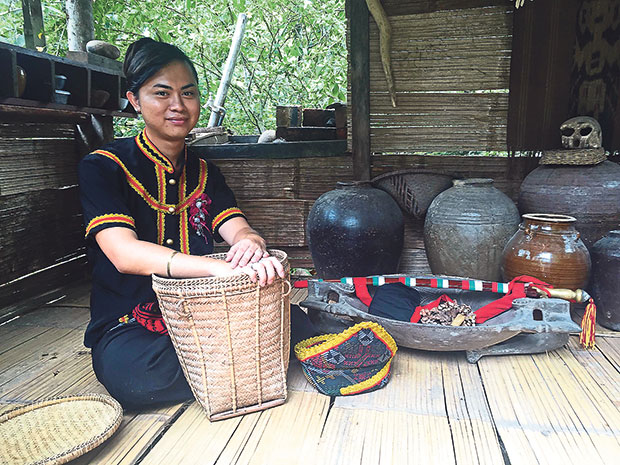


KOTA KINABALU, June 12 — Adam Gontusan grew up like any other urban child in the heartland of the Kadazans of Sabah — Penampang — listening to pop music, studying in an all boys’ school, going for National Service and diligently attending church every Sunday with his family.
But now the 25-year-old assistant manager at a cultural village attraction has an unusual and unique expertise that none of his peers can lay claim to — delving into the netherworld.
On weeknights and weekends, Adam studies the ancient craft of the Bobohizan — the spiritual healers, shaman, or high priestesses of the Kadazans of Sabah.
The Bobohizan, sometimes known as Bobolian or Tantagas, is primarily a spiritual leader or ritual specialist, but in the old days, served as village elder, herbalist, advisor to the village chief and midwife among her many roles. They are also usually women.
Nowadays, their services are almost only relegated to ritual performers although they are sometimes called on for “spiritual cleansing” purposes.
It is not simple nor for the faint-hearted, but Adam decided to devote his life to learning the craft from an older generation who are fast dying out, taking along with them most of the magic of the centuries-old civilisation.
Adam tells us in his own words, about his unconventional persuasion:
I first heard about Bobohizans from my father when I was just seven or eight years old. My grandmother would consult them for any illness in the family or spiritual concerns. Then she converted to Christianity and the visits became less and less until they eventually stopped altogether.
Usually the work of the Bobohizan is passed down the generations, but you still need to have a “calling.” The Bobohizans will know if you have the potential for it as they mentor you. It is very hard work learning all the inait (prayer rituals and chants) which can only be passed on orally and never written down as it will lose its effect. You have to learn from being close to your mentor, observing them, listening to them and following them when they do their rituals.
Unlike some other people, I wasn’t born with the gift of the “third eye.” I learnt how to “open” it during this process of learning. Sometimes people say they can “feel” spirits nearby, but when I say the prayers, suddenly I can see the spirits around us very clearly. I think it’s good that I can close and open my “third eye” instead of it always being open.
Kombuongo (pellets made from a swamp grass and fashioned into a wand of sorts) is the most important paraphernalia for a Bobohizan. It is where their guiding spirit — called divato — resides and this is how they will communicate with other spirits when they enter the other realm.
In Penampang, it’s only me and another friend who are continuing this practice. The last of the pre-war generation of Bobohizans has passed on and the ones who are left are very old now and unable to perform any rituals. Like many in recent generations, I was born and raised in the Catholic faith but I don’t think learning to be a Bobohizan is bad. Some people say it’s evil but I think it is something good — it’s a cultural tradition and belief that needs to be preserved.
People are starting to be interested again in these traditional beliefs, but they keep their new religion too. Bobohizans also believe in a god — Kinoingan. During prayer and chantings, they also call on god. So we all pray to a god, just have different ways.
These days we only perform special rituals, especially for the Harvest Festival but in the old days, Bobohizans were very busy. Every day people would ask them for cures for illnesses and they need to go to the jungle and look for different types of herbs — not just any day, they need to observe the moon and go on the right day so the herbs have the best effect. I have also gotten rid of a lot of bad spirits.
The scariest experience I’ve had was quite recent — I was performing a momihangga (cleansing of a compound) because the home owner said they were disturbed by a spirit walking around the house. They said the spirit was very strong and the moment I entered, I could feel it. When I started the ritual, the moment when my third eye opened, I saw the tunbalun — a vampire-like ghost everywhere. But it was not super scary because I often meet them in other places. But when I was walking outside the house, over to a small river to present the the offering, I saw the ogongazou (a big demon ghost) and it startled me. It was big and hairy with a long tongue and sharp ears, like the evil ghosts you see in movies. I ran back to the house and told the owner I could not do this ritual alone.
Sometimes when I watch horror movies like The Exorcist, The Conjuring and especially Insidious, I think it is really very similar to what I go through. The way the protagonist or hero enters the spirit world and meets a lot of people, and you have to ask them where to find the person you are looking for, but sometimes the spirits make fun and lie to you so you are lost. It is so close, and very real, I don’t know how they do movies like that unless they have experienced the real thing.
I’ve been actively learning for about six years now, but am still an apprentice. I think what I know now is only 2 per cent of what a Bobohizan from the old days would know. I have a lot to learn, and it’s not easy in this day and age. I’m lucky that my day job is closely associated to my calling, but someone holding an office job would find it disorientating.


