


KUALA LUMPUR, Nov 13 — Malaysia’s economic outlook is still vibrant and will stay that way as long as political and business conditions remain stable, the International Monetary Fund (IMF) said.
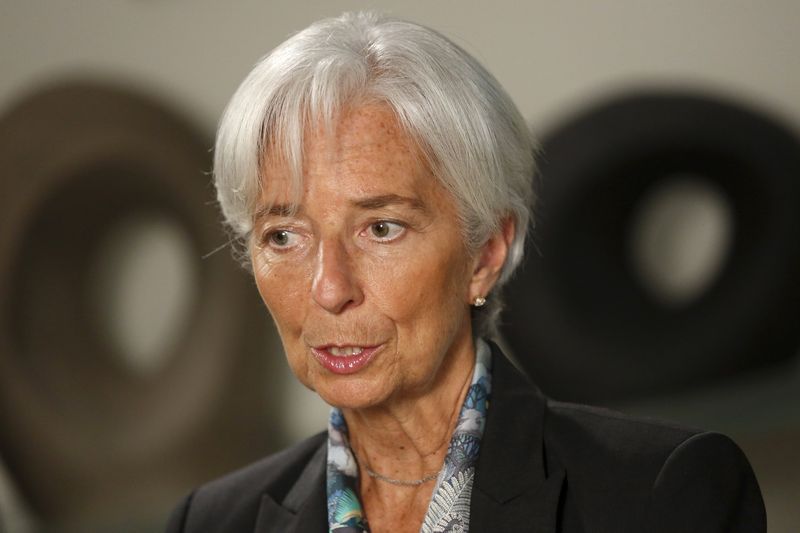
In an interview with local daily New Straits Times (NST) published today, IMF managing director Christine Lagarde said that China’s slowdown has had an impact on all countries but only those with strong fundamentals, like Malaysia, have been able to weather the storm.
“Asia in general, and certainly Malaysia, are countries where there are reasonable growth and vibrancy, yield, and if there is political stability and a business-friendly environment, economic activities, capital and investments will continue to move too.
“Everyone took a hit but those who recovered were the strongest and the authorities used the tools in a judicious way, as in Malaysia’s case,” she was quoted as saying.
Lagarde was quick to remind Malaysia, however, that it needed to prepare for future “volatility.”
“The slowdown in China and its multiple transitions, lower commodity prices and anaemic demand around the plant and transition of monetary policy by the biggest central banks are some of the risks on the horizon.
“We have to draw lessons from those moments and be prepared for what comes next. We have been used to low volatility for many years and volatility is coming back and we have to get used to it and respond to it,” she said on the sidelines of the Islamic Finance Conference in Kuwait, organised by the IMF.
The IMF chief also noted that China was going through a transitional period and countries who have the Asian giant as part of their main supply chain will need to ensure its economy is solid and diversified, in order to be able to adjust to changes.
“It may be that the Chinese supply chain will be slightly different in the future than from what it has been so far.
“So the more solid and more diversified economy, in terms of destination of trade relationship with other countries, the better hedged it is against a significant variation of one of the largest economic players,” she said.
Despite the IMF’s optimistic outlook, international news wire Reuters reported economists as saying today that weak private consumption is expected to have pulled down Malaysia’s third-quarter economic growth rate to the slowest pace in over two years.
Malaysia had robust growth in the first half of 2014, but collapsing global crude and commodity prices, along with a slowdown in China and political uncertainty at home, have impacted its economy.
The median forecast in a Reuters poll of economists is for annual growth of 4.7 per cent in July-September, which would be the lowest since the second quarter of 2013.


