












KUALA LUMPUR, Nov 5 ― In this second instalment of the unfinished memoirs of Tun Dr Ismail Abdul Rahman, Drifting into Politics, Malay Mail offers readers a peek at the humourous manner in which the young man who was to become Malaysia’s second deputy prime minister took to tertiary education in Singapore and later Australia. Despite Dr Ismail’s stern exterior, he had a jocular streak which endeared him to many.
CHAPTER 2
I entered the medical college in Singapore ill-prepared for it. The only students who were prepared were from schools such as the Penang Free School, St John’s and Victoria Institutions in Kuala Lumpur, and the Raffles Institution and Anglo-Chinese School of Singapore. These students were taught physics and chemistry in school, two subjects which were and still are essential for first year study in medicine. As for myself, when I first attended lectures in physics and chemistry, I did not even know what friction or oxygen meant. I was very frustrated and became even more so later on when I learnt that the annual examinations were held not only on a competitive basis, but also in such a way that only a certain number of students would be allowed to progress to the next stage.
In addition to this restrictive practice on academic life, there were other restrictions which were peculiar only to centres of higher learning in the colonies. Students in medical school in Singapore were not treated as grown-ups but rather as schoolchildren. It was therefore not surprising that the professors adopted the attitude of schoolmasters towards their students who, in turn, were expected to behave like schoolchildren. An example was their having to ask the permission of the professor if they ever needed to perform a simple act.
There was one amusing incident I can recall. It was my practice, whenever I could afford it, to go with a few friends to a cabaret where we danced with the hostesses by paying with coupons. Invariably there was strong competition to dance with the currently popular hostesses. Clients were allowed to approach to the hostesses only when the music began to play. Consequently, at the first sound of the band playing, there was a mad rush in the direction of the popular hostesses. One evening, I was in the midst of one of the rushes. To my surprise, I found myself standing directly in front of the most popular hostess. As I was dancing away, I happened to look behind and saw a face red with anger. It was the face of one of my professors, who had expected me to step aside and give way to him to dance with the hostess. The next day happened to be the day on which I had to present myself to the professor for an oral examination on the anatomy of bones. He naturally gave me a difficult bone to identify and describe and when I could not, he made the sarcastic remark that if I were to concentrate more on bone anatomy rather than surface anatomy I would make a success of myself as a medical student.
 This infuriated me so much that I retorted that as far as surface anatomy was concerned, I could give him a whole lecture on it. Needless to say this was held against me when the time came for me to sit for the annual examination in anatomy.
My days at the medical college came to a dramatic end. I went in as a scholar from my home state and I had to appear periodically before the state chief medical officer to explain my progress or, as the case was now, my lack of progress.
One day after the third year annual examinations, I had to appear and explain why I failed. Not only was the official academic record read out to me but a detailed history of my personal life as well, including the number of times I spent at the cabaret during the previous years. This angered me so much that I told him that I was no longer prepared to continue my studies in what was obviously a college run by the Gestapo.
My decision to go Australia was a fortuitous one. I unsuccessfully tried for a place in Hong Kong. Someone suggested Rangoon but I was not enamoured of the idea. So, I tried for Australia.
My trip to Australia was a unique one in many ways. I had not received a reply from the Australian government to my letter asking for permission to stay and study at the University of Melbourne. The shipping line naturally would not take the responsibility to accept me as a passenger to Melbourne because without immigration permission to land in Melbourne, it would have to transport me back to Malaya at its own expense. I offered the solution by paying for return passage from Malaya to Melbourne.
I was travelling in tourist class and for the voyage from Singapore to Darwin, there were only four of us — two Scottish planters from India, an Indian magician, and me. I shared a cabin with the magician. He was a comical man. Tall, with a turban on his head and eyes the size of ping pong balls which sparkled with humour. He was a delightful companion. He would begin the day with a heavy breakfast by eating his way through the menu instead of, as if customary, choosing only one dish. This performance was repeated at lunch and dinner. In other words, food flowed through his gustatory organs like magic. He also told me that he was one of the very few men who could make Hitler laugh. He had performed in Berlin in front of Hitler. One of his acts consisted of him producing Deutschmarks from nowhere and on seeing this, Hitler laughed and wanted to consign him to the mint. Somehow, he managed to wriggle himself out of that dilemma.
I arrived in Melbourne on July 4. Surprisingly enough, I was easily cleared by the immigration officers. I had not made any hotel booking when I got into a taxi, I just asked the driver to take me to a place where I could get a room. I managed to get into The New Treasury Hotel in Spring Street. The next day, I took a taxi to the university.
The registrar informed me that the university was not prepared to credit me for the three years which I had spent in Singapore. Instead, it would grant me credit for one year as a medical student but I would have to sit for the first year examinations at the end of the year. I had no alternative but to accept these conditions even though it meant that I had wasted three years of my life and that I had to pass their first year medical examinations after only three months of study. That I managed to pass within the stipulated time speaks much for the teaching of Melbourne University.
Life at the University of Melbourne was very unlike life at the medical college in Singapore. Where there was bullying in Singapore, there was in Melbourne an atmosphere of equality between professors and students. There was an atmosphere of freedom in Melbourne. I regarded my three years in Singapore as years of drudgery while the years in Melbourne were the happiest in my life.
It was at the University of Melbourne that I managed to find ways and means to express myself. My attitude towards the opposite sex was very different from that held by many Asians of my time. While I had always been attracted by the act of sex, I regarded it not as an end in itself. I often wondered how many friends could treat sex as though it were the same as the act of eating. That they can do it without being emotionally involved seems quite practical to me and yet I cannot see it in his way. I regard sex as the finest expression of one’s love for the opposite sex. Emotion plays a very important part.
For example, I do not think I could ever derive real satisfaction from prostitutes. Sometimes, when I look back to the days when I thought of patronising the prostitutes, I would have struck them as a comical figure. What they want is money for goods delivered; I want some expression of love.
It was not until I was in Australia that I managed to get any sexual satisfaction. There were three girls in my life in Australia; we separated in the end for various reasons. The first was a cultured, vivacious girl from a middle-class family. We were lovers for about a year. We separated because our clandestine affair was reported to the girl’s mother by a mutual friend, a fellow Malayan student. We finally broke it off because neither of us was financially independent enough to marry. The second was a nurse. Our relationship was not deep. We were drawn together because of our related professions and we were not surprised when it ended. The thirds was a German girl. Our affair was based on intellect. It was a happy moment in my life. Our love was not clandestine. The girl’s parents knew of it and they appreciated the situation. We broke up because we both realised that mixed marriages do not often succeed.
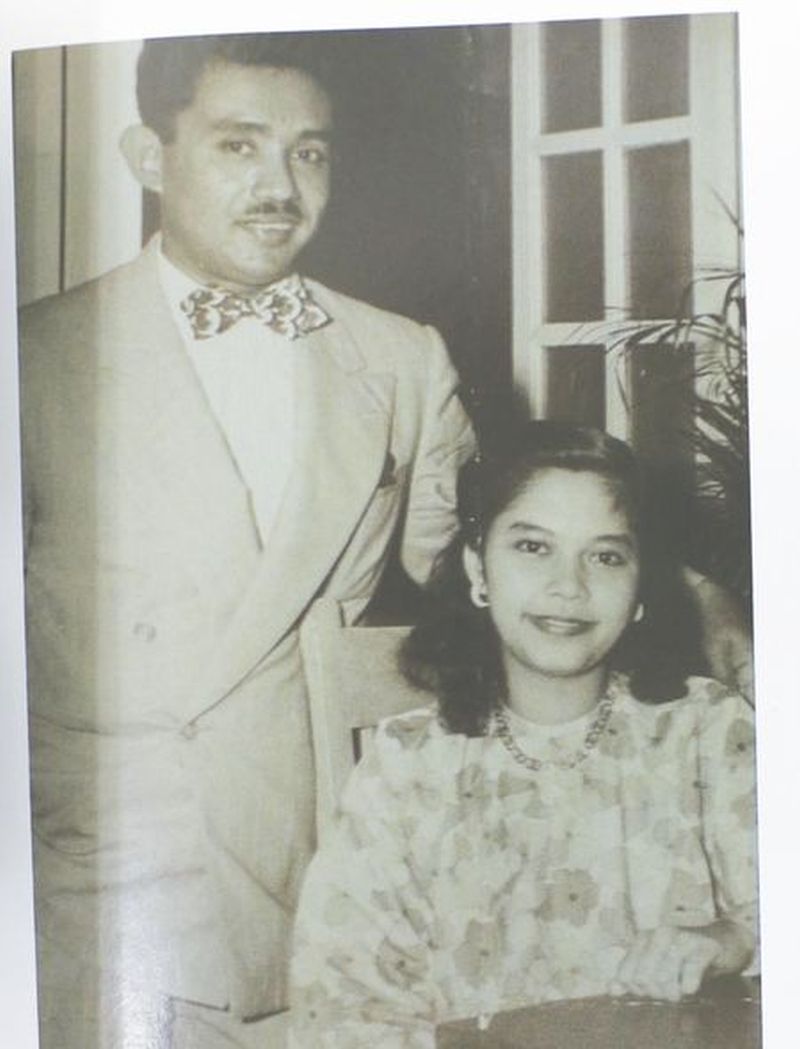
It was because of these happy episodes in my youth, when love was fulfilled for its own sake that my marriage owes its success. My wife was educated only up to secondary school level and was denied a higher education because of her marriage to me. We have been married for seventeen years and love has never dimmed but rather has become more bright as the years went on.