


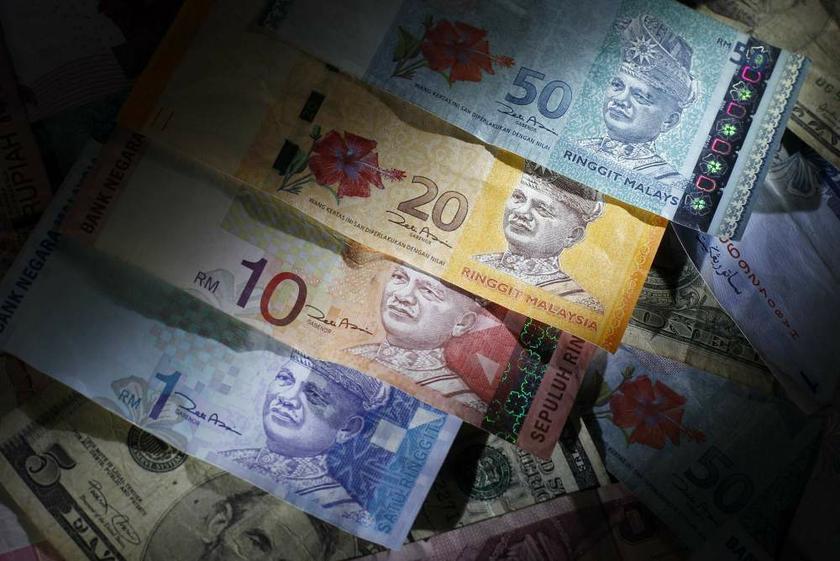
KUALA LUMPUR, Sept 25 ― High household, public and external debt in Malaysia leaves the country vulnerable to a currency crisis with the ringgit's decline despite the measures implemented since the Asian Financial Crisis, according to economists.
In a report on the CNBC website, the analysts said that while the local conditions have sufficiently changed to make a repeat of the same crisis unlikely, Malaysia was still at risk following the sharp drop in the value of its currency.
“Some leverage indicators are much higher than in 1997, including household, public and external debt,” Hak Bin Chua, from Merrill Lynch in Singapore, was quoted as saying in the report.
“The ringgit depreciation has not strengthened exports or improved the trade balance at all.”
Hak pointed out that local household debt was now at 86 per cent of GDP, versus 46 per cent in 1997 when the crisis struck.
Malaysia's debt-to-GDP ratio also hovers near the official debt ceiling of 55 per cent beyond which the government must seek parliamentary approval, but critics contend that it has since exceeded that using contingent liabilities that are not included in the official figures.
“The current currency crisis may not be a repeat of history and 1997, but it sure rhymes and is probably far from being over,” Hak was further quoted as saying.
The ongoing political crisis over 1Malaysia Development Bhd (1MDB) that is linked to Prime Ministe Datuk Seri Najib Razak is also an added negative, Hak said.
Global media have also increased their coverage of the controversy, reporting of investigations into the state-owned firm, Najib, and related entities in several countries.
“Politics will become more significant for the currency if policy risks and economic costs start to materialize,” HSBC analysts was quoted as saying, although they did not quantify the magnitude of the risk.
Bank Negara Malaysia Governor Tan Sri Zeti Akhtar Aziz also said this week that the lack of clarity over the 1MDB controversy was contributing to the ringgit's problems.
Yesterday, CIMB Group chairman Datuk Seri Nazir Razak warned that negative coverage over Malaysia's crisis was worsening the market's view of Malaysia beyond the country's fundamentals.
Data from Moody’s Corp yesterday suggested that Malaysia along with five other developing nations deserve to follow Brazil’s downgrade to “junk” status. According to a Bloomberg report, Malaysia is A3 at the company, though traders see it six levels lower at Ba3.
The ringgit is currently trading at 4.38 to the dollar, below the 3.80 peg implemented during the 1997 crisis.


