


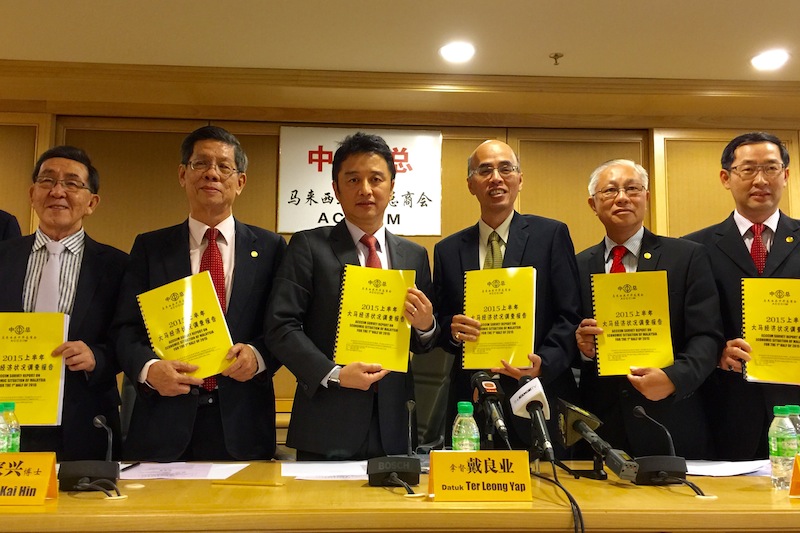
KUALA LUMPUR, Sept 15 — The government’s introduction of stricter policies, a new consumption tax and enforcement of floor wages were among the chief complaints by Malaysia’s ethnic Chinese businesses who saw their profit margins plunge in the first half of this year, a recent survey report showed.
The study by the Associated Chinese Chambers of Commerce and Industry of Malaysia (ACCCIM) among its members also showed they were growing increasingly pessimistic that the country’s economy will bounce back soon; many predicted the situation will improve only in 2017.
“Many businesses have put forth their grouses, mainly in relation to factors such as rising costs of doing business in Malaysia, and the ever increasing compliance requirements to be adhered to by businesses,” said a report on the survey.
According to the survey, the community said laws such as the Competition Act 2010 and Anti-Profiteering Act 2011, and policies such as minimum wage and the Goods and Services Tax (GST) have added to their burden of doing business.
This comes as 90 per cent of the respondents said the GST has caused their sales to fall by 6 to 17 per cent since its implementation on April 1.
Over half of 67 per cent of those surveyed said their profit margins have shrunk due to GST.
Other top major factors adversely affecting their businesses were rising operating cost and raw material prices, domestic competition, and the worsening domestic political situation.
With falling ringgit, 93 per cent of respondents said they had to increase their selling prices since costs have risen, but 60 per cent said they had benefited as they now earn more after converting foreign currencies received from their customers to ringgit.
ACCCIM said the situation has been exacerbated by some exporters who delay converting foreign currencies they received in order to benefit from falling value of ringgit.
“If those exporters would not delay converting foreign currencies to ringgit, it could speed up this conversion. That would help a lot in terms of ringgit stabilisation. We hope the government can do something about it,” ACCCIM president Datuk Ter Leong Yap told reporters after launching the report.
The survey was completed by 365 businesses who are members of ACCCIM from sectors such as wholesale and retail (30.1 per cent), manufacturing (18.4 per cent), professional and business services (10.1 per cent) and construction (9.3 per cent).
About 14.2 per cent of the respondents were from large companies, while about 78.1 per cent were domestic market-oriented, ACCCIM said.


