


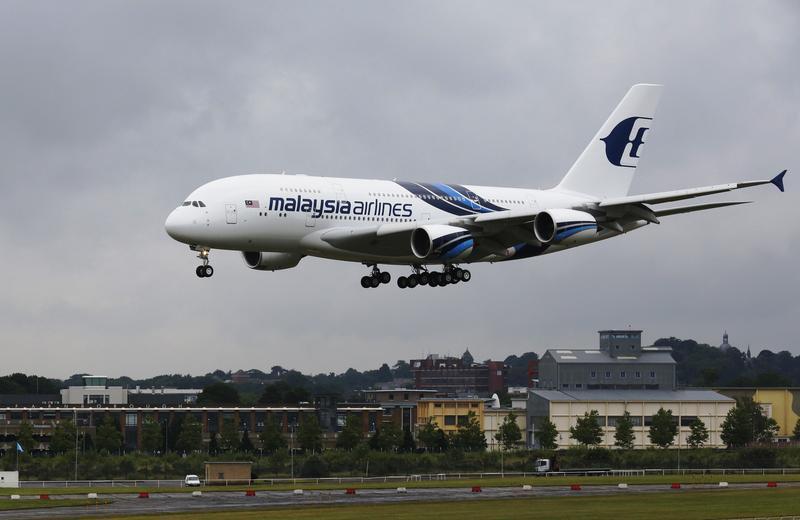


DOHA, June 11 ― A new study by a team of mathematics led by professor Goong Chen at Texas A&M University in Qatar proposes answer to the mysterious disappearance of Malaysia Airlines flight MH370.
In findings presented in the April 2015 edition of Notices of the American Mathematical Society, Chen and his team suggest that the plane may have entered the water at an angle of close to 90 degrees, with large, heavy portions of the plane, notably the wings, breaking off on impact.
This model suggests that the plane would have sunk belly up, keeping the fuselage intact and limiting the creation and spread of debris, with the heavier portions sinking directly to the bottom of the ocean and leaving little to no evidence behind, potentially explaining why the plane left no debris or an oil patch, usually considered telltale signs of a crash-landing in water.
The team used supercomputers in Texas and Qatar to run five different landing scenarios, including one replicating the “miracle on the Hudson landing” in 2009, considered the most successful water landing in aviation history.
However, Chen considered this landing, called “glide ditching,” an unlikely outcome, given its higher rate of survivability and the creation of larger debris fields on failure.
A flat landing was ruled out as it would have caused the plane to bounce, breaking up the fuselage and creating a wide path of debris and oil that could have been easily identified by searchers.
Chen’s team also dismissed a less dramatic nose-first diving entry as the stress placed on the plane by impact would have ruptured large sections of the plane, creating significant amounts of debris. The report, however, stressed that no conclusion on MH370s fate could truly be reached until the plane’s black box is located and decoded. ― Reuters


